

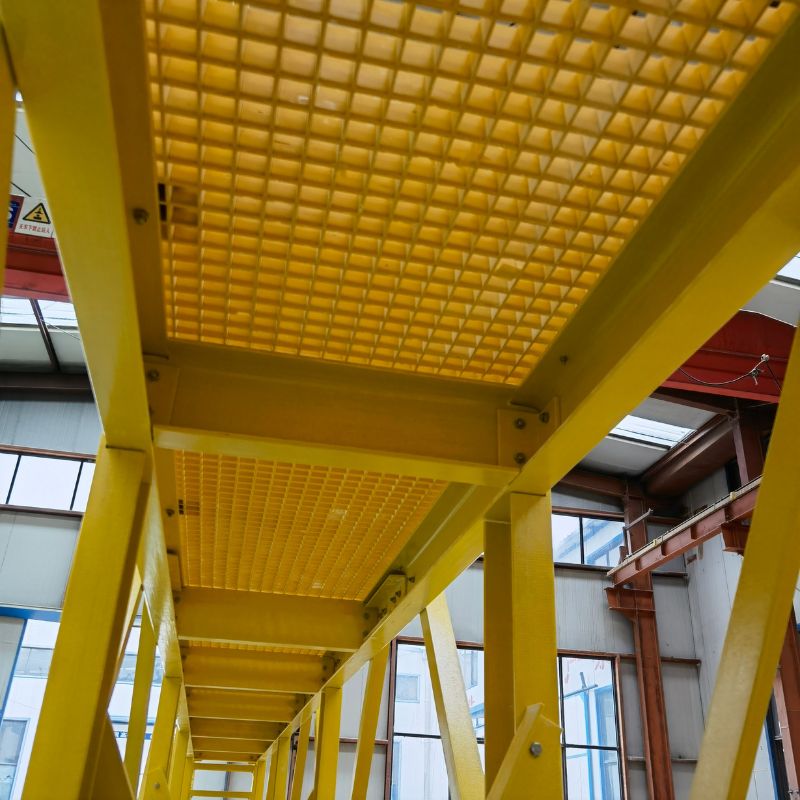
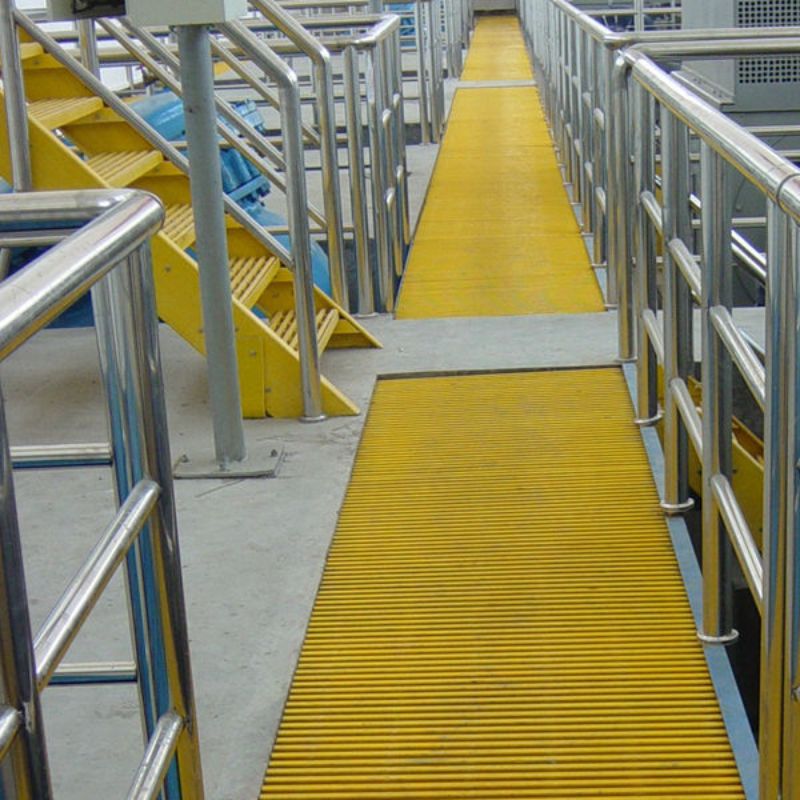
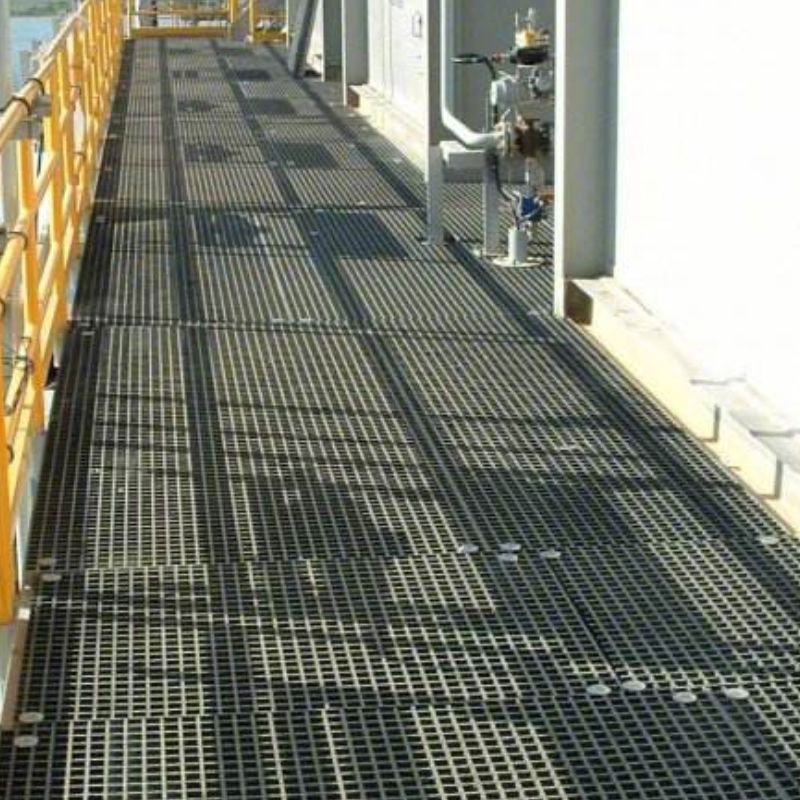
Why Choose Our FRP Walkway
FRP Walkways: Durable, Safe, and Fully Customizable Solutions for Industrial Applications
- The structure is designed based on engineering loads, with excellent load-bearing capacity, capable of supporting heavy equipment.
- It does not rust or peel off, and can maintain a stable appearance in acidic, alkaline, salt spray, and humid environments.
- FRP is a non-conductive material and can still maintain insulation even in a humid environment.
- Lightweight, modular prefabrication is possible, and it requires less manpower for transportation and installation.
- The maintenance cost is extremely low. There is no need for regular painting or anti-corrosion treatment. Daily maintenance only requires simple cleaning.
Your Reliable FRP Walkway Supplier in China
As a professional FRP walkway manufacturer, we will provide you with products of high batch consistency and stable quality. We have precise cutting equipment that enables you to customize grilles of various types, sizes, colors, and thicknesses.
The load-bearing capacity of the FRP walkway is designed and verified based on engineering standards. Its performance, like slip resistance and fire resistance, has clear technical guidelines. We can offer you support in terms of testing or technical documents and promise the actual performance of the walkway.
Types of Our FRP Walkway
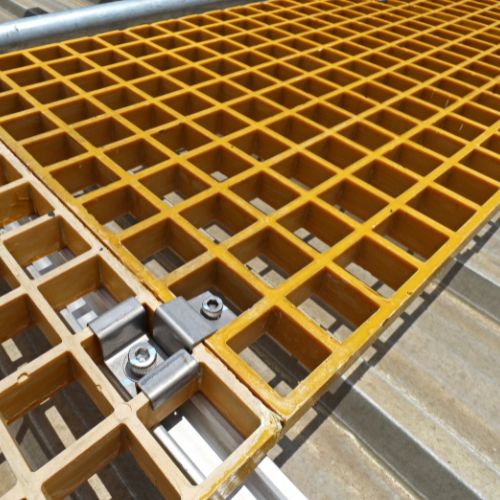
Molded FRP walkways are typically manufactured by compressing fiberglass cloth and resin in a mold under high temperature and high pressure to form a grating. It has uniform strength, good drainage, and high safety.
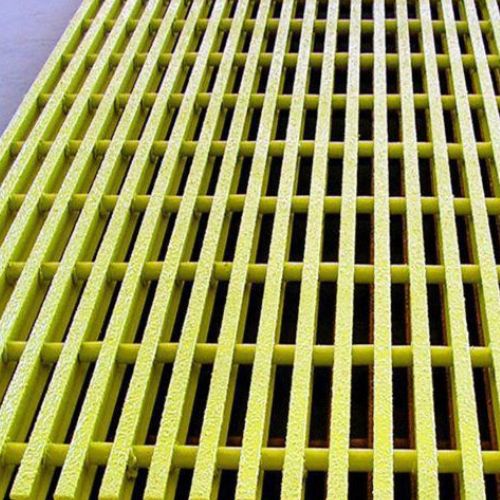
Pultruded FRP walkways are formed by continuously pultruding fiberglass and impregnating it with resin, then cutting it to size. This structure allows it to be easily thickened or reinforced to meet different load requirements.
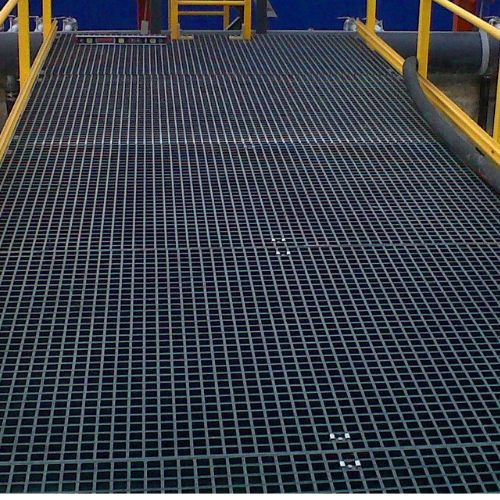
Anti-slip FRP walkways generally achieve a very high coefficient of friction by incorporating quartz sand or special anti-slip textures on the surface. Even in wet or oily environments, it ensures that personnel will not slip.
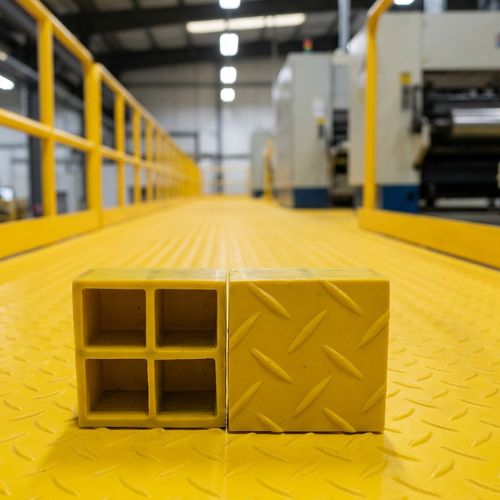
A Solid Top FRP walkway refers to a molded walkway covered with a solid panel, with an added anti-slip layer or texture. It features a closed surface that prevents objects from falling and liquids from penetrating.
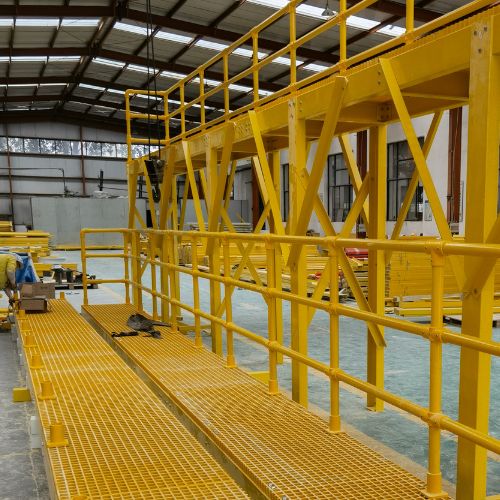
Fire-Retardant FRP walkways are made using a flame-retardant resin system that according to the standards such as ASTM E84 and EN 13501. It has a high fire-retardant rating, which meets the fire safety regulations for specialized applications.
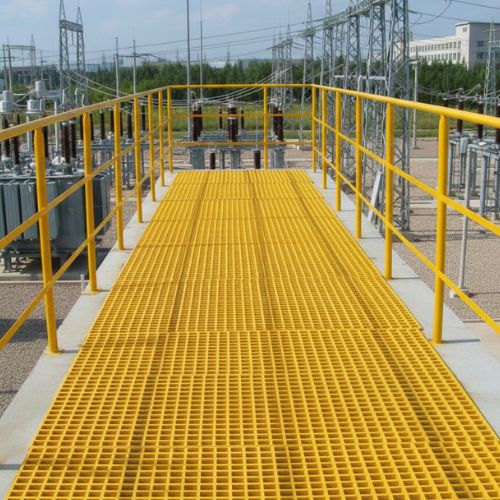
Heavy-duty FRP walkways usually use a high-compressive-strength resin and add additional ribs or support structures to achieve extremely high load-bearing capacity.
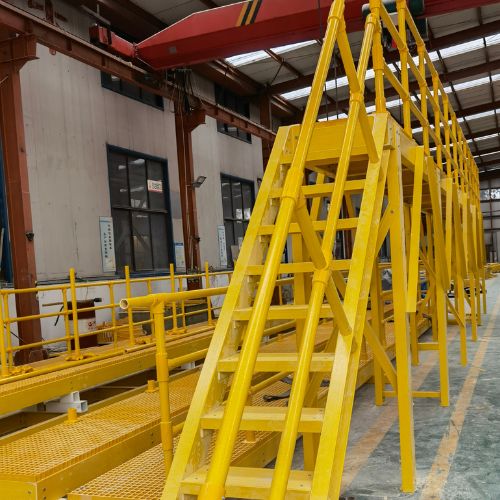
Corrosion-Resistant FRP walkways use high-grade epoxy or vinyl ester resins. They usually have higher resin content and densely layered fiberglass. It is designed for highly acidic, highly alkaline, and salt-spray environments.
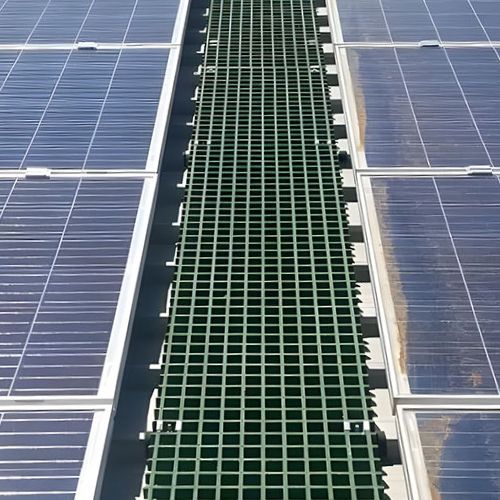
We can also provide customized FRP walkway systems according to your specific requirements. All aspects of the walkway, including dimensions, structure, load-bearing capacity, anti-slip performance, and handrails, are highly customizable.
Features of Our FRP Walkway

Even when exposed to acids, alkalis, salt spray, humidity, or marine environments, it remains intact for long periods.

Traditional steel may bend or deform. FRP walkways will remain stable over long-term use, resisting collapse and deformation, and can support equipment, forklifts, or heavy materials.

It has a special anti-slip treatment; even in high-humidity, oily, or humid environments, it can effectively prevent slipping.

It meets international fire-retardant standards. Even under high temperatures or direct flame exposure, the flame spread rate will be very low.

Once installed, FRP walkways can last for more than 20 years, and you don’t need to frequently maintain or replace them. This greatly reduces long-term costs.

For different projects, we can provide FRP walkways with various materials, finishes, anti-slip properties, fire resistance, and load-bearing capacities.

FRP walkways have lower thermal conductivity. Its surface temperatures are rarely affected by the environment, which enables you to walk on the walkway in a comfortable and safe manner.

FRP walkways are made of lightweight, high-strength materials. They can be installed quickly, which greatly reduces construction time and costs compared to metal ones.
Give You A Safe and Comfortable Walking Environment
In industrial environments, walkways are a critical component that affects both work efficiency and safety. Uncomfortable walkways, such as those that are hot, slippery, or unstable, can all reduce work performance and even cause falls or injuries. Our FRP walkways are specifically designed with workplace safety in mind, which ensures reliable slip resistance, fire retardancy, load-bearing capacity, and electrical insulation.
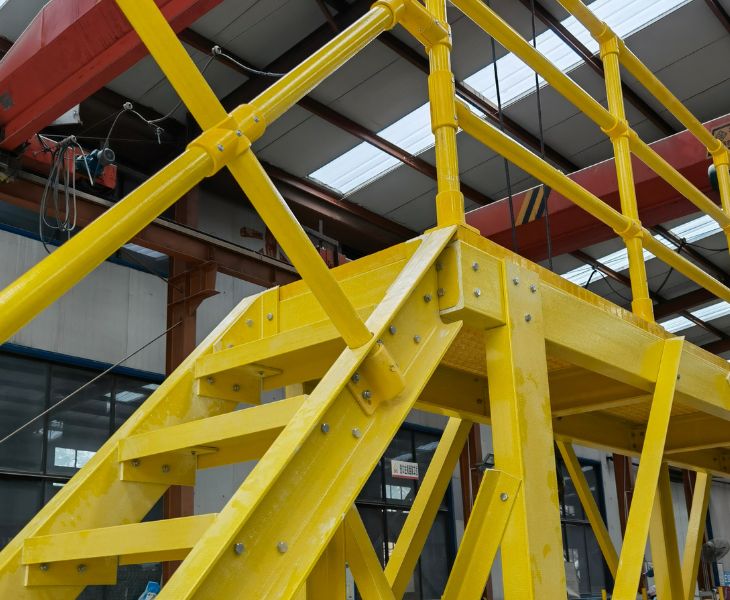
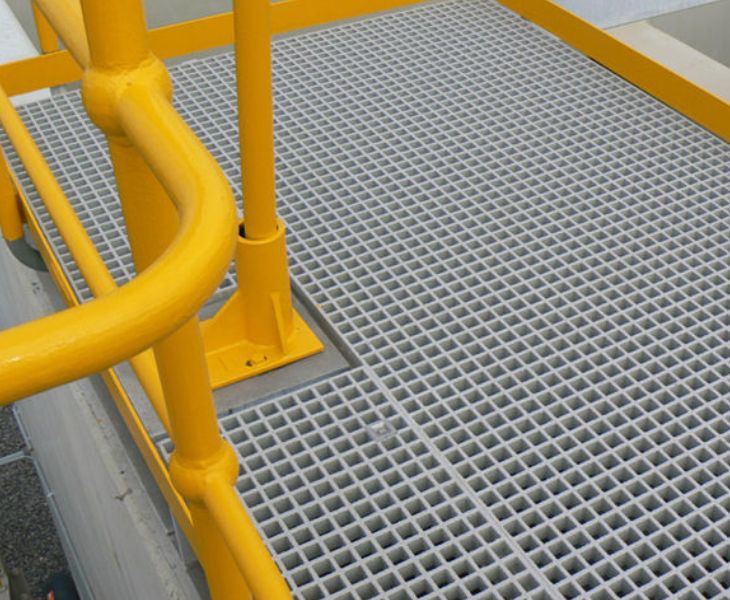
Maintains Appearance Over Time
Industrial walkways are often exposed to UV radiation and chemical substances, such as acids and alkalis. If you use metal or wood walkways, they are likely to corrode after a period of use. While FRP walkways use high-grade resin systems that have the advantages of UV resistance, chemical corrosion resistance, and remain colorfast and crack-free; our superior manufacturing process minimizes dust accumulation and liquid penetration, which keeps the surface intact. Therefore, your project site can stay clean and professional throughout.
Does not Easily Deform Under Heavy Load
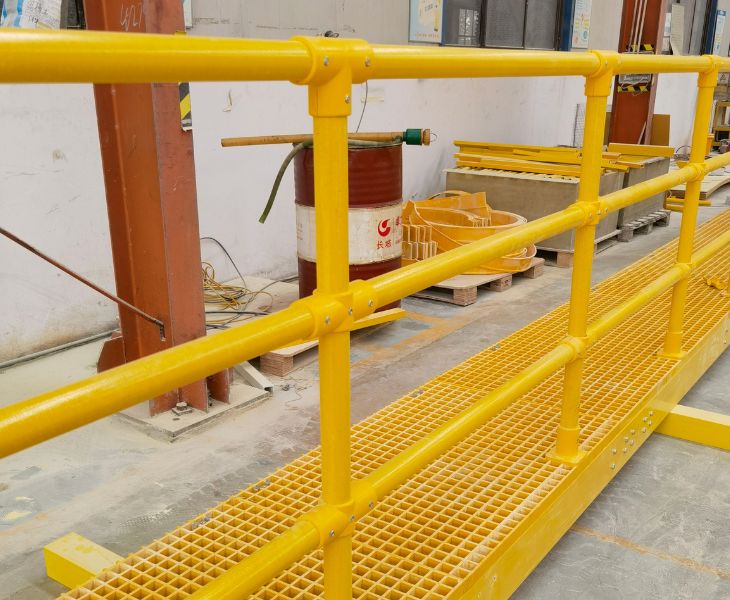
In some industrial applications, like industrial plants and logistics centers, walkways will unavoidably be subjected to heavy loads. Steel, wooden, or low-quality FRP walkways cannot endure the heavy loads of large machinery, which will result in denting or edge lifting.
In contrast, our FRP walkway uses high-modulus, industrial-grade resin and high-density glass fiber to reinforce the FRP structure; additionally, for the thickness, rib spacing, and span, we will conduct structural calculations based on the project and promise a reasonable value.
Applications of FRP Walkway

In factories, walkways need to be installed in operational passages between production lines, maintenance corridors, and other similar areas. This requires the walkway to support frequent movement of personnel, tools, and materials while maintaining slip resistance. Additionally, for walkways that need to be used long-term, frequent replacement is not suitable.
FRP walkways, based on their advantages of slip resistance, long service life, and high load-bearing capacity, are well-suited for use in various factories.

Chemical plants may contain highly corrosive media such as acids, alkalis, solvents, and salt spray, and may also have relatively high humidity. In such environments, walkways need to have strong corrosion resistance. FRP material is inherently corrosion-resistant and does not require periodic anti-corrosion coating, which is an ideal choice for chemical plants.

Walkways need to be installed at the top, middle layer, and perimeter of the cooling tower. These places usually have extremely high humidity and are filled with chemical agents. Due to its long-term corrosion resistance, mold resistance, and high slip resistance, FRP is highly suitable as a material for walkways in cooling towers.

On offshore platforms, such as deck walkways and pipeline maintenance passages, walkways need to be exposed to seawater immersion and UV radiation for extended periods. To address these risks, we can customize FRP walkways with the corresponding features and provide you with a safe and reliable working environment.

Walkways experience high pedestrian traffic. Also, whether installed inside or outside the factory, can to some extent reflect your company’s image. The low thermal conductivity of FRP ensures a comfortable walking feel; its high load-bearing capacity allows it to support more people without deformation; it also offers a neat appearance. Therefore, FRP material is an ideal choice for a pedestrian passage.

When conducting maintenance or repair work on power facilities or working around them, there is often a risk of electric shock. FRP walkways are not only fully insulating, but also slip-resistant and fire-retardant. Moreover, due to their lighter weight, FPR walkways are suitable for installation on cable structures.
Compared to steel or aluminum walkways, FRP walkways offer superior corrosion resistance, slip resistance, durability, and lower electrical conductivity. In addition, FRP is much lighter than steel, but it provides comparable load-bearing performance.
Yes. FRP materials have the advantage of not onlyresisting ultraviolet rays, but also being resistant to acid and alkali, salt spray, and various chemical media corrosion. Moreover, even under outdoor or extreme conditions, FRP walkways can still maintain a long service life.
The FRP walkway itself has excellent weather resistance and does not need frequent repair. It will not rust or flake off, and it doesn’t require regular application of anti-corrosion paint or replacement of layers. All you need to do is regularly clean the surface dust and oil stains, and check if the bolts and brackets are loose.
Yes. When designing FRP walkways, we gave full consideration to their anti-slip properties, especially in environments that are damp or have oil stains. We use special molded textures, sand finishes, or striped surfaces to enhance friction and reduce the risk of slipping during use.
We use high-performance industrial resins for the FRP walkway, which can withstand extreme high or low temperatures. It can endure high-temperature environments for a long time without softening or deforming. Moreover, even if exposed to the sun for a long time, it will not fade or age.
FRP walkways need to comply with various international and national standards during production and acceptance. These include fire and flame-retardant standards, like ASTM E84, EN 13501-1, and GB/T 8624-2012; load-bearing standards, like ASTM D638 and ISO 178; and corrosion resistance standards, like ASTM D543 and ASTM G154. In addition, you also need to prepare other necessary certifications, such as ISO 9001, CNAS, and SGS.
What is FRP Walkway?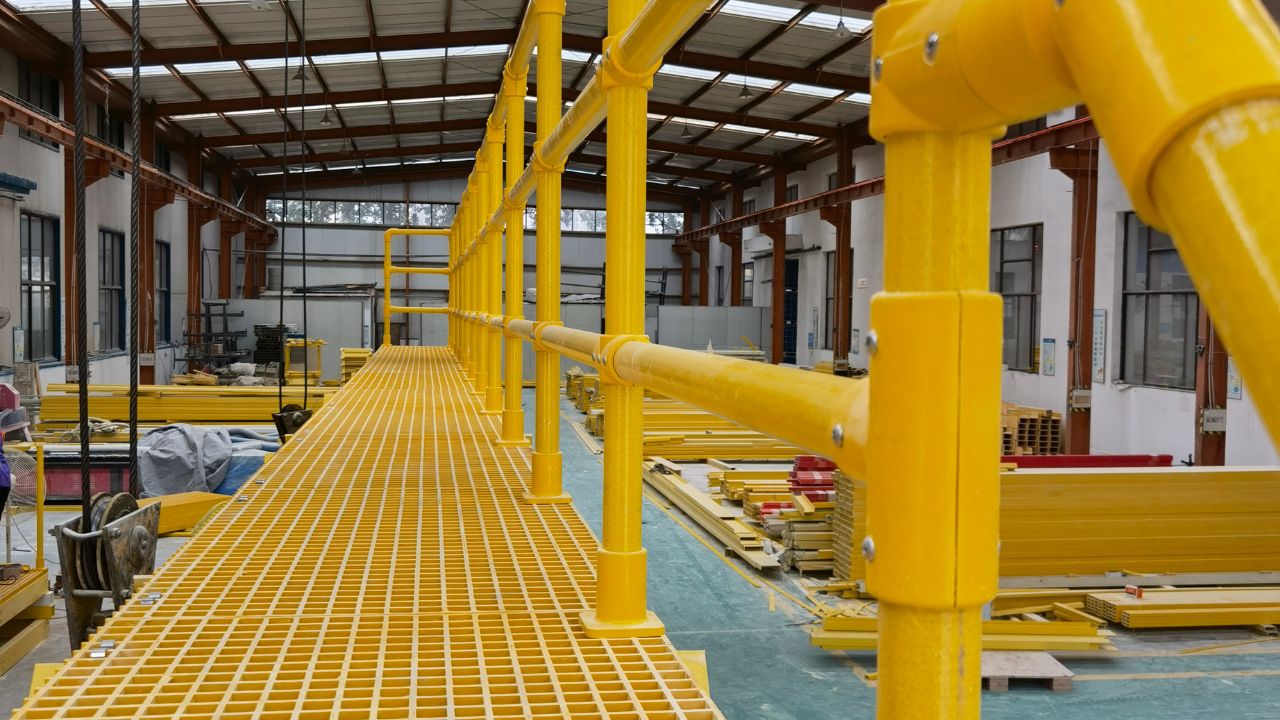
The FRP walkway is made of fiber-reinforced plastic. It is a pedestrian passage system, used for industrial or commercial purposes, such as chemical plants, sewage treatment plants, and power facilities. Compared with steel and aluminum walkways, FRP walkways have the advantages of corrosion resistance, good insulation performance, fire resistance, and slip resistance.
Manufacturing Process of FRP Walkways
The common core raw materials used to make FRP walkways include resin, curing agent, accelerator, calcium powder, and color paste. During production, at first, these materials need to be mixed in specific proportions and form a consistent resin paste; then, the mixed resin paste will be poured into the prepared molds.
After that, the operator will use pressure to compress the resin and glass fibers within the mold. Through this, the bonding strength between the fibers and the resin can be enhanced. The mixture will be heated under high temperatures to fully crosslink and cure the resin.
After curing and cooling, the FRP walkway will be removed from the mold and trimmed, cut, and polished by the operator. Finally, after performance testing is completed, the finished product will be delivered to the customer.
Factors Influencing the Performance of FRP Walkways
The Quality of the Raw Materials
The use of raw materials is directly related to the performance of FRP: The type of resin determines the corrosion resistance, weather resistance, heat resistance, and flame retardancy of the FRP; the strength of the glass fibers determines the FRP’s load-bearing capacity and impact resistance. Moreover, raw materials such as flame retardants and UV-resistant colorants determine the FRP’s fire performance, material lifespan, and other properties.
Structural Design
For different projects, we need to design them differently based on their specific circumstances. The thickness and reinforcement design of an FRP walkway need to be planned so that it can meet various loading requirements. Also, different perforations, molded textures, and edge treatments can affect various aspects of the walkway’s performance, such as drainage and slip resistance.
External Environmental Factors
The external environment will also have an impact on the performance of FRP to some extent. Low-quality or inappropriate resins may be corroded by chemical substances such as acids and bases; extremely high or low temperatures may cause the FRP to deform or crack. Therefore, the raw materials for FRP must be selected with consideration of environmental factors.
Maintenance Frequency
In terms of cleaning, if the frequency of cleaning is too low, the dust and chemicals will accumulate in large quantities on the surface of the walkway. This will cause the resin surface to age. Regarding regular inspections, if loose fasteners or structural damage can not be detected in time, the walkway may experience localized deformation, creating safety hazards.
Tips for Customizing FRP Walkway
Clearly Confirm the Usage Environment
Before customization, we recommend that you clearly define the walkway’s operating environment. You need to confirm whether it will be used indoors, outdoors, in coastal areas, or in chemical environments, and whether it will be exposed to high humidity, high temperatures, or direct UV radiation.
In addition, you should confirm whether it will be in long-term contact with acids, alkalis, salt spray, or other chemicals. Then, we will select different resin systems and manufacturing processes.
Confirm the Walkway’s Load-bearing Capacity
Before anything begins, you also need to estimate the walkway’s load-bearing capacity. You can inform the manufacturer whether the walkway needs to support multiple people simultaneously, whether equipment, tools, or materials will be pushed, and whether it needs to face concentrated or impact loads. Then, we will design the load-bearing standards and control the deflection based on your specific requirements.
Determine the Slip Resistance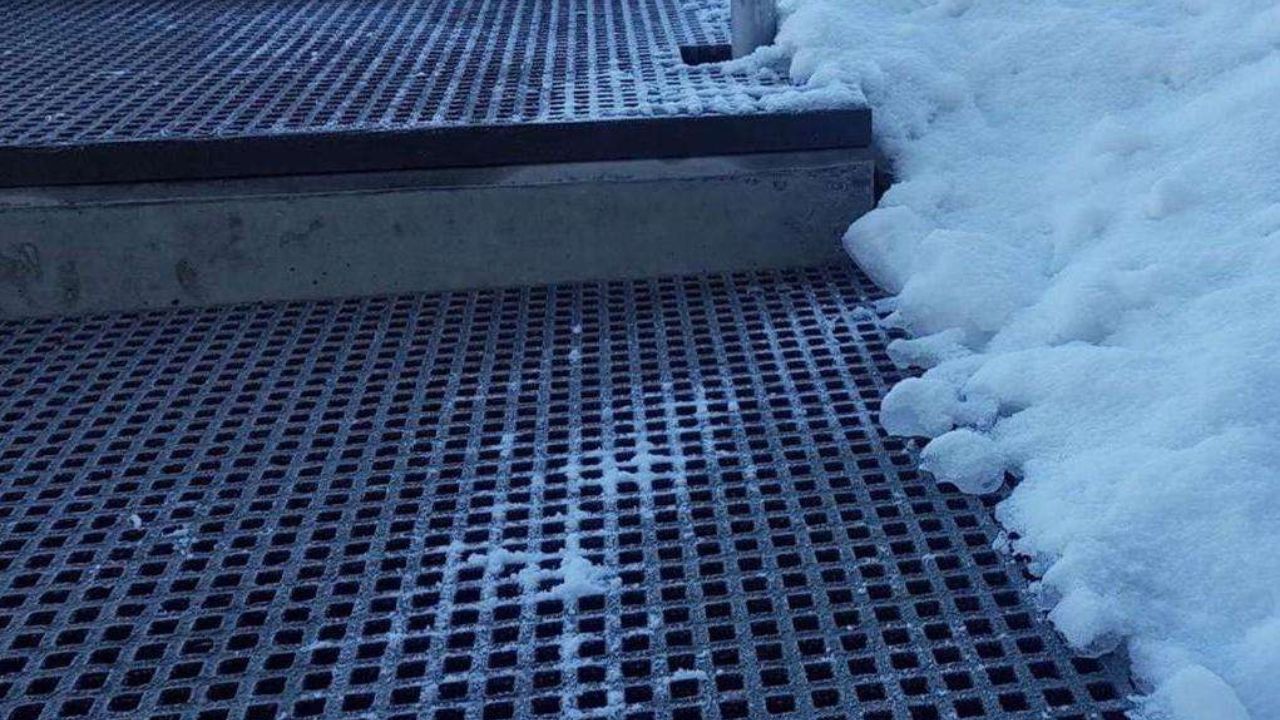
In some cases, higher slip resistance is not always better: in environments where cleanliness is highly required, a higher coefficient of friction will make cleaning more difficult. You need to determine the slip resistance of the FRP walkway based on the specific usage conditions, for example, whether it will be exposed to water, oil, or chemical liquids for extended periods, and whether the convenience of cleaning is a requirement.
Confirm Safety Standards and Fire Rating
In the event of a fire, a non-flame-retardant walkway may spread the flames. The fire standards of the walkway are very important, especially in chemical, power, and public facility projects. You need to understand the local fire standards, such as ASTM E84, EN 13501-1, or GB/T 8624-2012, to determine the level of fire resistance required at least. Then, after the sample is completed, request the flame retardancy test report from the supplier to confirm.
Choose an Appropriate Color
A more attractive walkway color is not always better; different colors usually represent different functions. Yellow or orange often indicate safety passages or warning areas; red represents danger or emergency equipment zones; green or gray represents normal traffic or equipment areas. By using color classification, the efficiency of your factory can also be improved accordingly.