
Why Choose Our FRP Flange
FRP Flange Manufacturer
- Our FRP flanges run stably under high pressure and high temperature conditions, ensuring your pipeline system operates safely even in extreme conditions.
- All FRP flanges have passed ISO 9001, ISO 14001, and ISO 45001 certifications. Carry out full-process quality control from raw material inspection to finished product shipment.
- We offer a one-stop service covering product selection, solution design, drawing confirmation to on-site installation guidance and after-sales response.
- Standard specifications are available in stock and can be delivered quickly within 24 hours. Customized products can be delivered within 7 to 15 days based on requirements.
Your Reliable FRP Flange Supplier Partner
Our FRP flanges show excellent corrosion resistance, pressure stability and a several decades lifespan. Whether you are in the chemical, petroleum, wastewater treatment, or power industries, our FRP flanges can offer the best pipeline connection solutions. Choose our FRP flanges to provide your project with stable support, reducing maintenance costs and extending the service life.
Types of FRP Flange
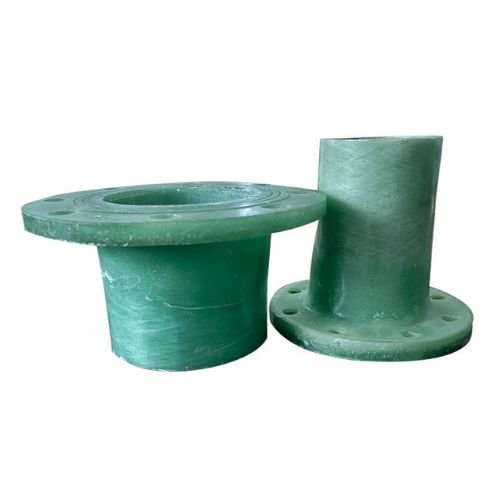
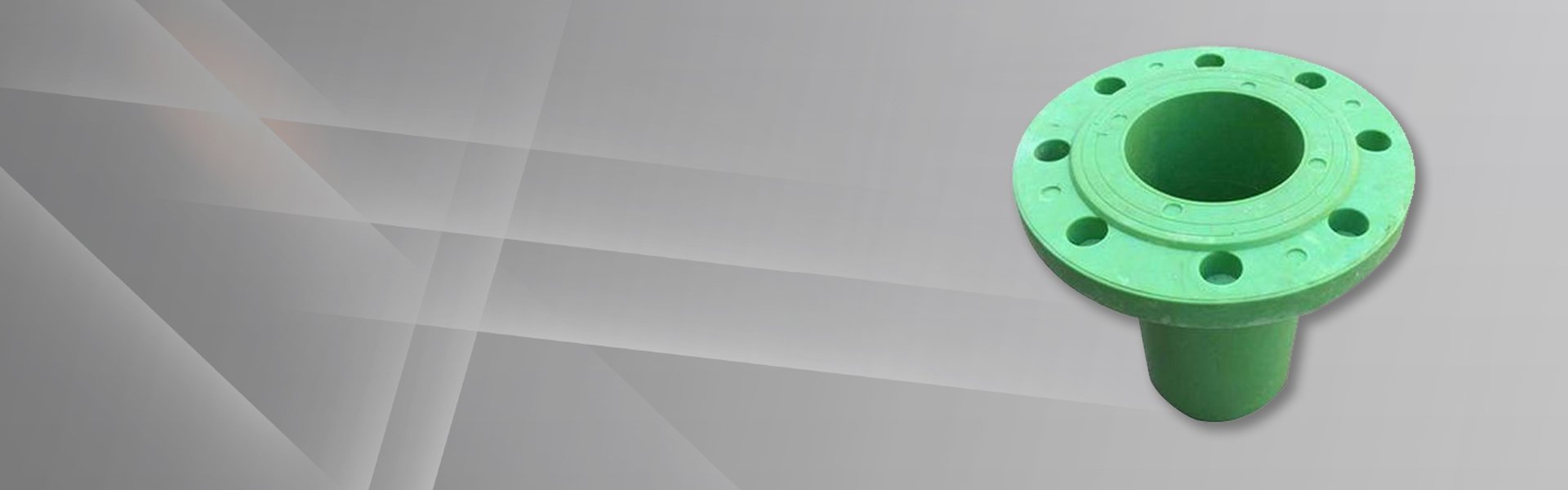
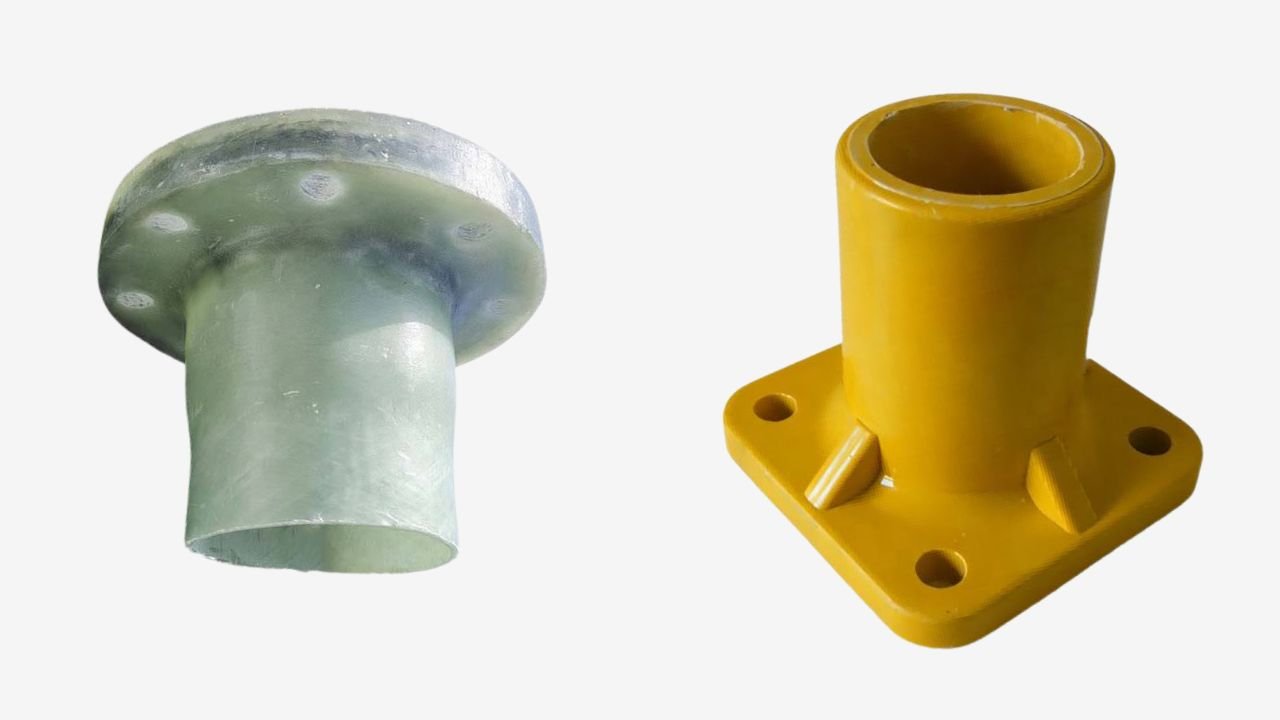
Adopt an integrated molding structure to make no joint gap between the flange and the pipe body avoiding leakage. Its same thermal expansion coefficient as the pipeline prevents seal surface cracking, loosening, or stress concentration caused by frequent temperature fluctuations.
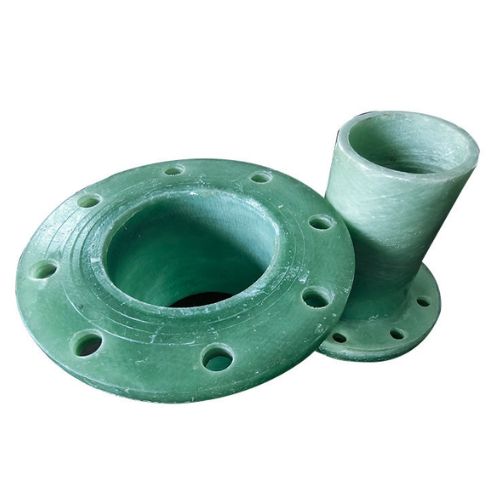
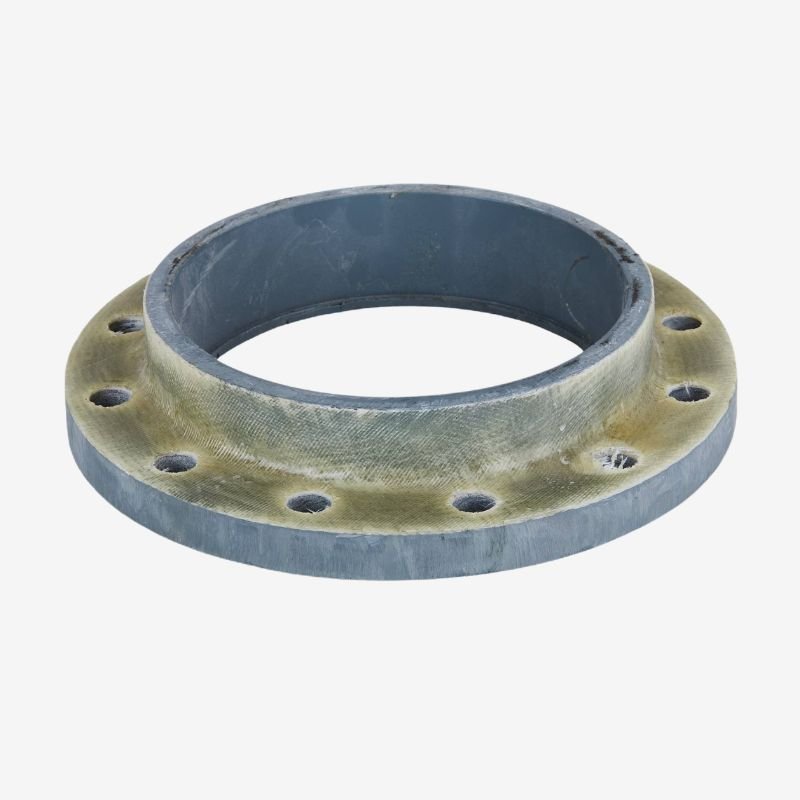
It is a common choice for projects that prioritize installation efficiency. Installed at the pipeline’s end with 360° free rotation. This structure does not require precise hole alignment and enables separate transportation of the pipe and flange, reducing your costs and handling difficulties.
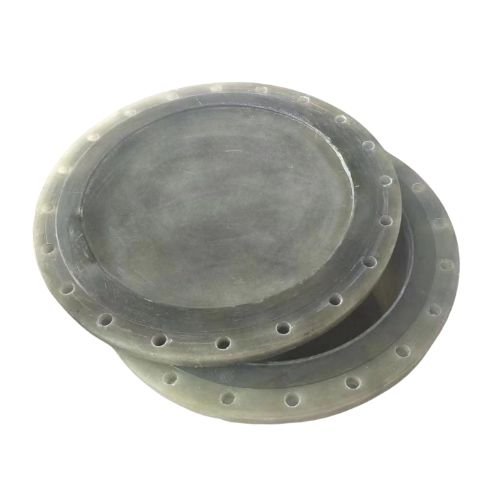
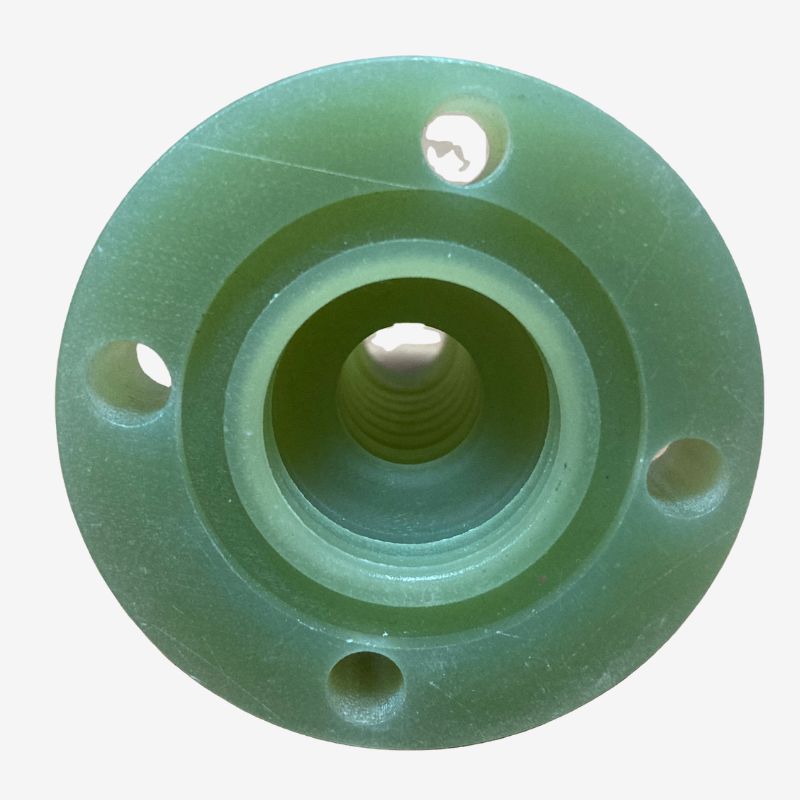
Have a solid structure without a through hole. It is made by mold pressing and has a dense structure and stable sealing performance. It is usually used for pipeline end sealing, system maintenance isolation or reserved interfaces.
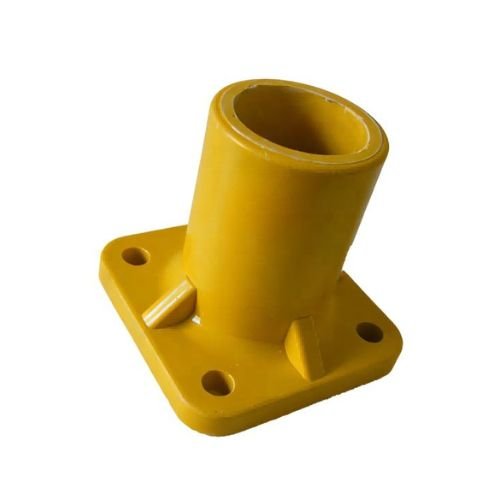
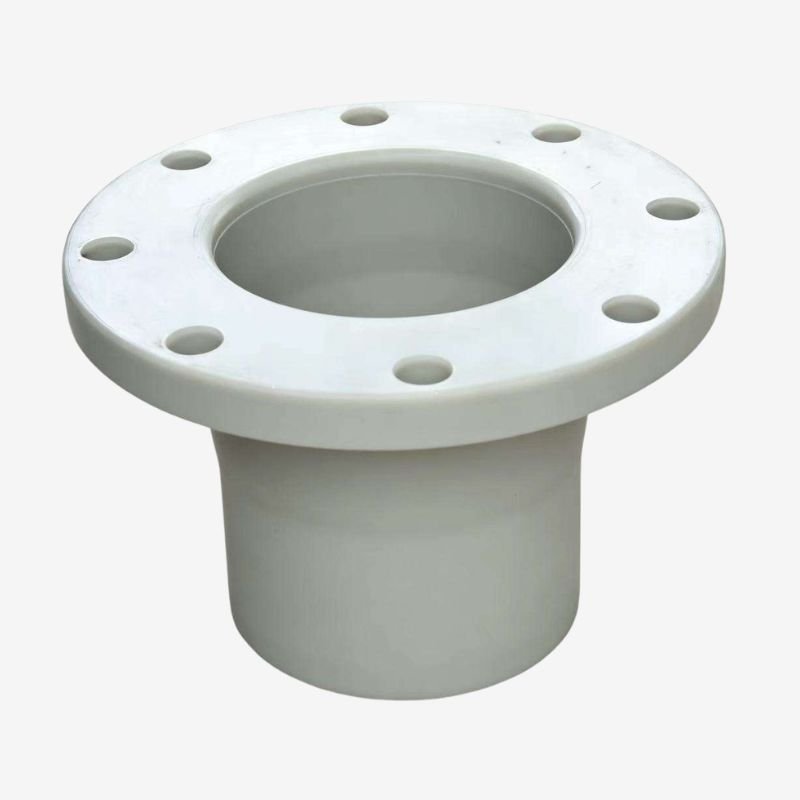
Take a square sealing surface design with bolt holes arranged in a square pattern. Provide you good structural strength and sealing stability. It is mainly applied in industrial ventilation systems, FRP square pipe load-bearing pipelines, and square chemical equipment interface connections.
Features of FRP Flange

The FRP Flange is not conductive and there is no risk of electro-corrosion or stray current. It is suitable for electrical applications.

The FRP flanges’ weight is usually only about 1/4 of that of steel flanges of the same specification and 1/10 of that of cement pipe fittings.

On-site installation does not require special tools or hot operations. Compared to metal flanges, the construction efficiency can be increased by more than 30%.

Even when exposed to acids, alkalis, salts, chemical media, and humid environments for a long time, FRP flanges will not rust, corrode, or delaminate.

The resin-enriched inner lining layer combined with the high-density structural layer design achieves dual leak prevention inside and outside to keep your system stable operation.

FRP flanges require almost no regular maintenance under normal use conditions, decreasing the shutdown frequency, convenient to control long-term operation and maintenance costs.

FRP Flange is particularly suitable for corrosive environments, high-humidity conditions, and applications demanding a balance of weight and strength.

Under normal operating conditions, FRP Flanges’ service life can reach from 15 to 20 years. Even in highly corrosive environments, it can still be used stably for 10-15 years.
Customization Capacity
We offer non-standard customization for FRP Flange, including non-standard nominal diameter, nominal pressure grade, as well as square, special-shaped, and special sealing structure designs. You may select the corresponding resin system based on the specific medium and operating conditions, to deliver outstanding FRP flanges’ corrosion resistance and structural stability in actual use. We also provide FRP pipes and fittings to guarantee high compatibility between flanges and the overall pipeline system in dimensions, structure, and performance.
Testing And Quality Control
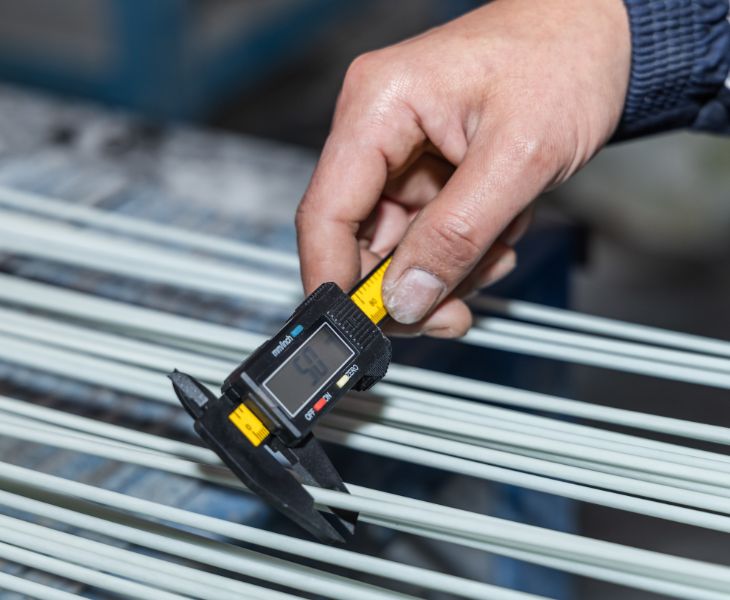
Before raw materials in every batch undergoes testing for three critical indicators including viscosity, solids content, and acid value, then prior to entry into the factory, ensuring material stability and consistency from the source. The finished FRP flange is tested for size, appearance, mechanical performance and sealing performance before leaving the factory. Complete material reports and test certificates are provided with each shipment to facilitate your project acceptance, quality audits, and traceability.
Implementation Standards
The FRP flanges’ design and manufacturing strictly follow standards such as GB/T 9119, HG/T 21633, and CJ/T 328, as well as international standards such as ASME B16.5, EN 1092, DIN, and ISO. No matter whether your project is for the domestic market or international engineering, we produce according to the corresponding standards to ensure that the FRP flange can smoothly connect with the existing pipeline system, reducing your project risks caused by standard mismatches.
Applications of FRP Flange

In operating conditions involving prolonged exposure to highly corrosive media such as strong acids, strong alkalis, and organic solvents, FRP flanges effectively prevent metal corrosion, leakage, and frequent replacement issues. This helps reduce maintenance costs and enhances the reliability of continuous system operation. Therefore, FRP flanges are widely used in connections for FRP process piping, acid and alkali storage tanks, and chemical solvent transfer pipelines.

In thermal power plants and thermal power stations, FRP flange is mainly applied in FRP desulfurization pipeline assemblies, desulfurization towers’ inlet and outlet connections and the circulating cooling water pipelines due to its corrosion resistance, high stability and low maintenance.

Compared to metal flanges, FRP flanges can offer you a lower corrosion failure and seal aging risk. Therefore, it is widely adopted in seawater transportation pipelines at ports and docks, anti-corrosion pipelines on marine platforms, and connection parts of marine FRP equipment.

FRP Flange is commonly used in the municipal FRP sand-filled pipelines connection, urban water supply and drainage networks and seawater desalination transportation systems.
FRP flanges are usually lighter and have higher corrosion resistance than PTFE flanges, and they also have a price advantage. FRP flanges perform well in highly corrosive environments and are suitable for projects requiring high strength and wear resistance.
If you are facing common corrosive media, it is recommended to choose FRP flanges, as they can maintain long-term stability in more challenging environments.
Compared with metal flanges, FRP flanges are lightweight, corrosion-resistant, heat-resistant, insulating, and easy to process. They are particularly suitable for high corrosive environments and projects requiring low maintenance costs, offer you a longer service life and lower maintenance work.
It is simple and flexible to install FRP flanges. You can choose connection methods such as bolts, clips, or welding according to the on-site situation, and the installation process does not require special tools.
If your project has special requirements, we also offer customized installation plans and on-site services to ensure a smooth and worry-free process at every step.
What is an FRP Flange?
An FRP flange is a pipe connection component which is made of glass fiber reinforced plastic. It is mainly used to securely connect two sections of pipes or pipes with equipment.
FRP Flange is often used to replace metal flanges to address issues such as rapid corrosion, frequent maintenance, and short lifespan, helping you to enhance the overall stability and operational lifespan for the pipeline system.
The Composition of FRP Flanges
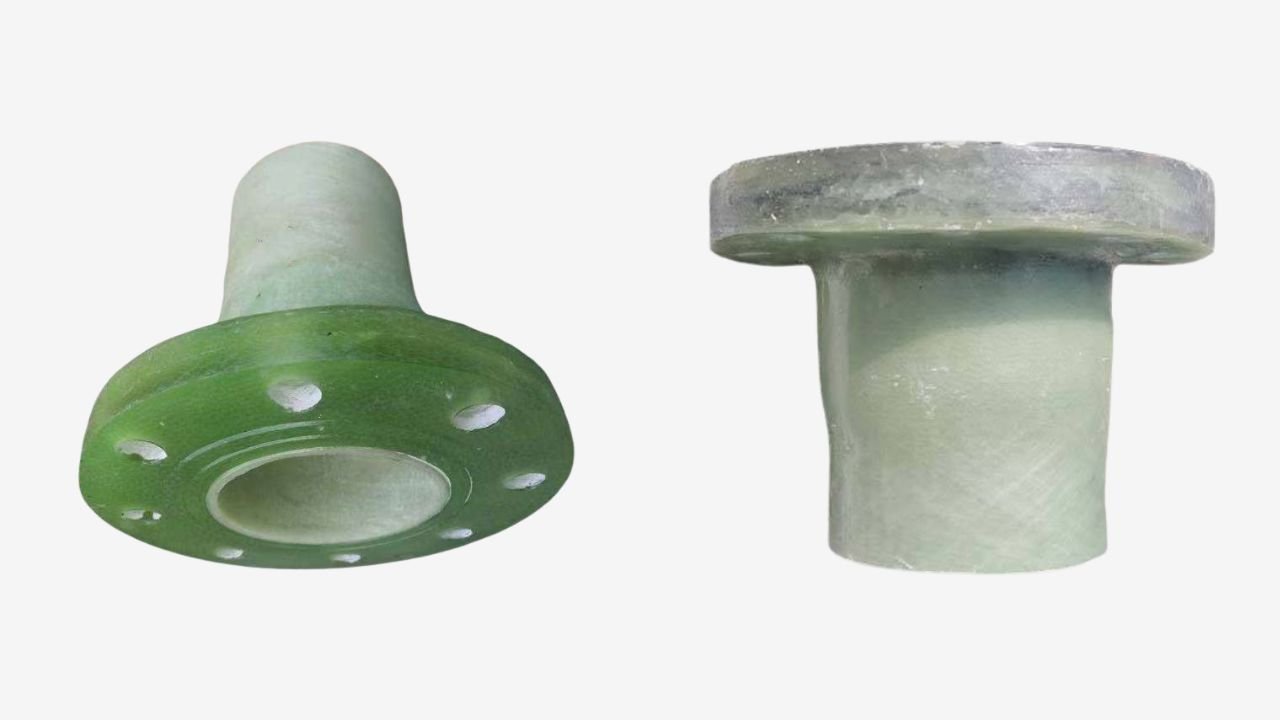
FRP flanges usually consist of a flange ring, which is fixed at the interface end of the pipeline or equipment. It is connected to the other side of the flange through bolts or clamps to achieve the pipeline system sealing.
In practical applications, a complete flange connection usually also includes components such as bolts, nuts, and sealing gaskets. These components are often used in combination with different materials to meet the dual requirements of structural strength and sealing performance.
FRP Flange Forming Process
Different forming processes directly affect your FRP flanges’ structural strength, service life and applicable working conditions. You can choose the appropriate forming method according to the project scale, medium characteristics and delivery time requirements.
Molded FRP Flange
The molded FRP flanges are formed by curing glass fibers and resin together under high temperature and pressure within standardized molds, resulting in a plate-like structure with uniform thickness. It forms the flange and tube as one piece and enables continuous distribution of glass fibers and fabric to create a dense structure with uniform stress distribution. With high strength and stable forming properties, they are commonly used for standard specifications and mass production.
Bonded FRP Flange
It separately processes the flange ring and the flange pipe, and then bonding them together using a special resin. This structure has a wide range of applications and flexible processes. If the projects are large-diameter, small-batch or multi-specification, the bonded FRP flange is a common and mature solution for you which significantly reduces mold costs while ensuring performance in engineering projects.
Wound FRP Flange
Wound flanges are integrally wound with FRP pipes during the molding process without welded or bonded joints between the flange and pipe for superior structural integrity. This design ensures uniform stress distribution and excellent erosion resistance, ideal for applications demanding high structural integrity and long-term operational stability, such as industrial piping systems for continuous media transport.
Hand-Layup FRP Flanges
Hand-layup FRP flanges are made by manually laying glass fiber, applying resin, and then curing at ambient temperatures. This flexible process is particularly suited for non-standard dimensions, irregular shapes, or flanges requiring interfaces with specialized equipment, offering an effective solution for customized and complex structural requirements.
Key Parameters of FRP Flange
Nominal Diameter
The FRP flanges’ mainstream nominal diameter range is DN10 to DN4000 mm, which can cover most industrial and municipal pipeline applications. When you are selecting, its nominal diameter should be consistent with the interface of the corresponding FRP pipeline or equipment to avoid on-site renovation or rework due to size mismatch. If your project has non-standard sizes or special interfaces, we can also customize production based on the actual drawings.
Nominal Pressure
The FRP flange common nominal pressure grades are PN 0.6 to 4.0 MPa. It is particularly important to note that the nominal pressure of the flange should not be lower than the design pressure of the corresponding pipeline system. At pump outlets, valve fronts, or locations with significant pressure fluctuations in the system, it is recommended that you select a higher pressure grade FRP flange to enhance system safety redundancy and reduce long-term operation risks.
Sealing Surface Type
The sealing surface type directly determines the sealing effect and long-term stability for your FRP flange connection. You need to select it based on the medium, pressure grade, and installation conditions.
Flat type (FF): The FF is a smooth flat surface with a simple structure, convenient installation, and lower cost. This is commonly used in low-pressure or situations with relatively conventional sealing requirements.
Raised surface type (RF): The RF is a circular raised platform above the flange surface, with more concentrated bolt preload, which is conducive to improving sealing performance, often used in medium-pressure pipeline systems.
Tongue and groove surface type (TG): One pair of flanges are tongue surfaces and groove surfaces, and the gasket fully embedded in the groove for positioning, providing you the best sealing performance. This is suitable for high-pressure or critical pipeline positions with high sealing requirements.
It should be noted that corresponding gaskets should be selected based on the sealing surface type. For example, the concave-convex and tongue and groove surface flanges require pair with positioning type gasket to avoid gasket displacement.