
Why Choose Our FRP Tee?
Corrosion Resistant FRP Tee Manufacturer
- All FRP tees have passed the ASTM fire resistance test.
- We can provide ISO9001, ISO45001, ISO14001 certificates for your FRP tees.
- We have comprehensive quality inspection equipment from raw material to factory to guarantee the quality of FRP tees.
- A computer controlled winding process is adopted to make FRP tees with high process precision.
Professional FRP Tee Supplier in China
We have more than 20 years experience in manufacturing FRP tees. Our factory specializes in the development and production of FRP tees, as well as professional testing methods to guarantee the quality of the FRP tee you purchase, providing you with a high quality, low maintenance FRP tee that will last for decades.
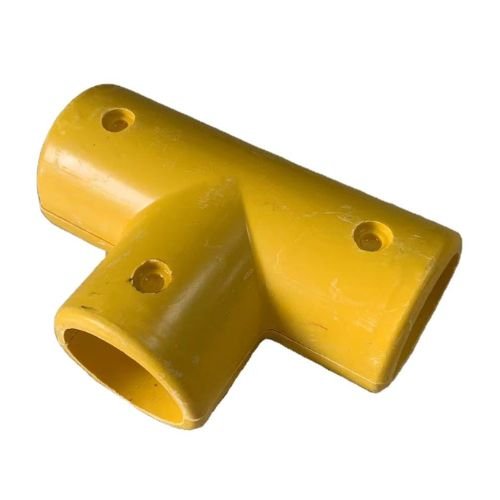
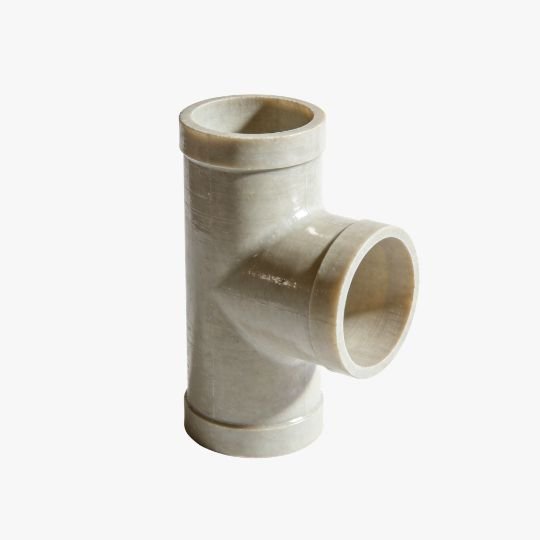
Equal Diameter FRP Tee allows for a more even distribution of flow and pressure.
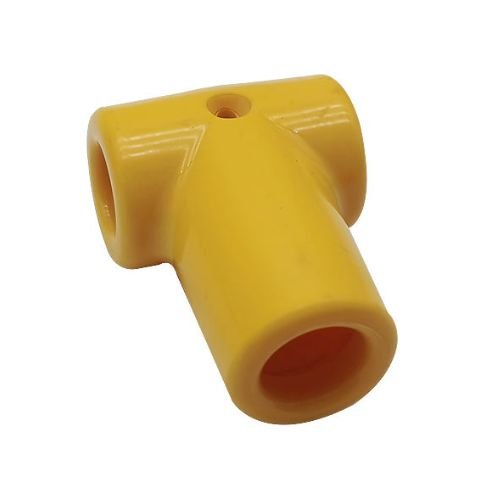
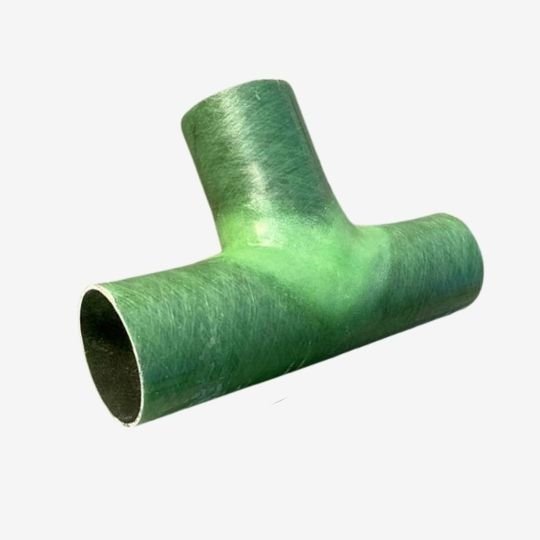
Reducing FRP Tee is suitable for scenarios where different flow rates need to be distributed, or for connecting pipes of different sizes.
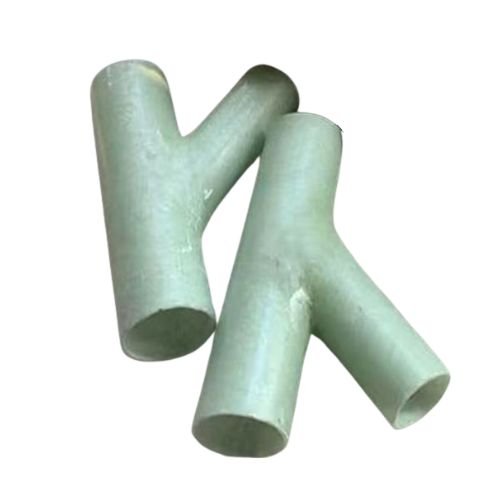
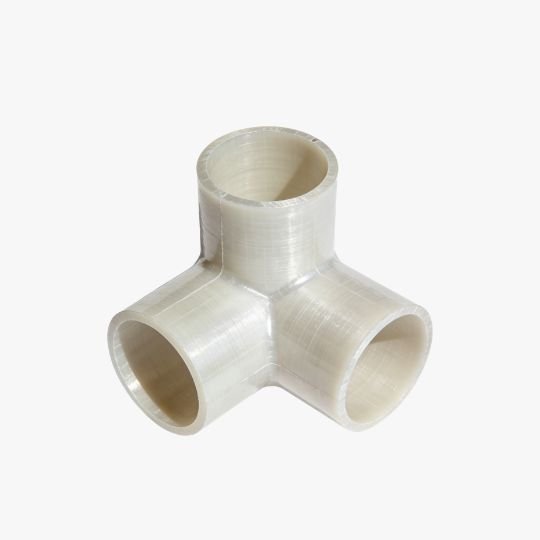
Miter cut FRP tees can be flexibly customized for different angles in the application site.

Our FRP tees are resistant to acids, alkalis, salts and a wide range of chemical media.

FRP is electrically insulating, which effectively avoids the risk of electrical leakage and enhances the safety of use.

FRP has a low thermal conductivity and is able to withstand high temperatures for a wider range of applications.

The smooth inner wall can significantly reduce the resistance encountered in the process of fluid transportation and improve the transportation efficiency.
Lightweight FRP Tees
The mass of FRP is only a quarter of that of steel, which makes FRP tees easy and fast to transport and install. It can significantly reduce the construction period and is easy to maintain. In addition, the FRP material itself is highly resilient and is not prone to breakage or damage during use. It is such a light but strong material.
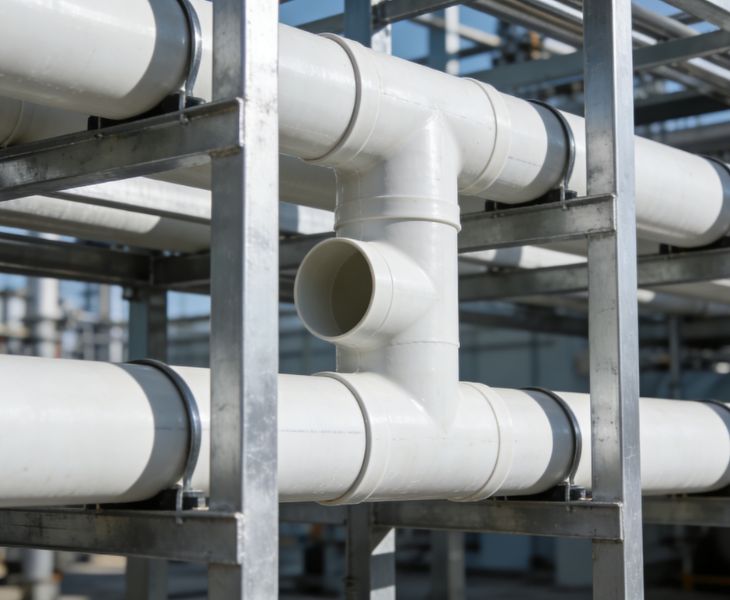
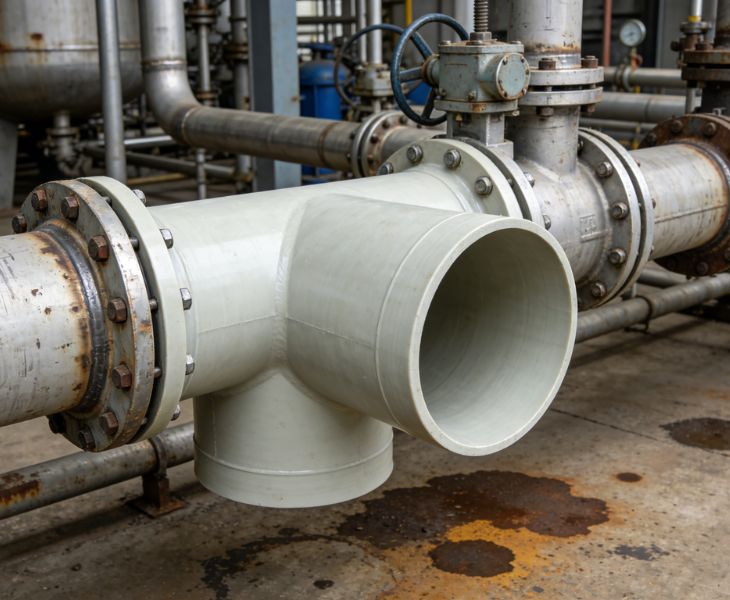
Ageing Resistance
FRP tees also have excellent ageing resistance. This means that they can have a long service life in UV, corrosive environments and require low maintenance. Compared to metal tees, it is more weather resistant and will not rust. The FRP tees we design are with a service life of up to 50 years.
Optional FRP Tee Raw Material Formulations
You can customize the raw materials used to make FRP tees according to your specific application and needs. The resin formulations we offer you include phenyl resins (o/phenylene/m-phenylene), vinyl resins, phenolic resins, and structural materials such as fiberglass yarns, fiber cloths, and knitted felts.
We can guarantee that each formulation passes the ASTM fire test. The flame spread coefficients for polyester, vinyl, and phenolic resin grids are less than 15, 10, and 5.
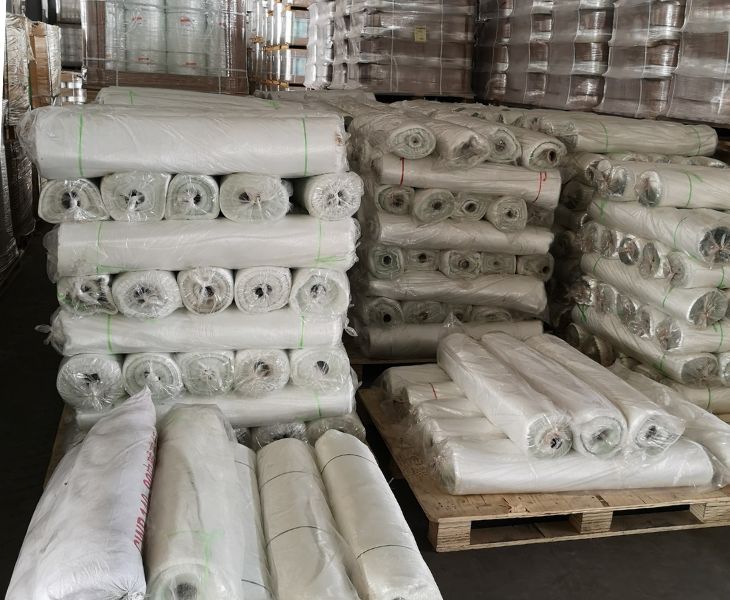

Within municipal water treatment systems, FRP tees can be used to connect water treatment piping while supporting the flow of water through them. It can withstand corrosive and contaminated liquids such as domestic wastewater well and support decades of use.

In the field of chemical processing, FRP tee can resist the corrosion of many chemical solvents such as acid and alkali, and at the same time, it can well withstand the high pressure environment to ensure the safety and reliability of the transportation process of hazardous chemicals.

FRP tee can be used for the transportation of crude oil and natural gas in the field of oil and gas, which needs to be closely connected with the pipeline to ensure the sealing of the transportation process and reduce the risk of crude oil leakage.

In electronics manufacturing, the FRP tee’s electrical insulation can ensure the safety of the transportation process, avoiding the risk of electric sparks or leakage of electricity.
Different media require different tee materials. If you need to change the media or transport other types of liquids, you will need to re-select or customize the FRP tee.
Although FRP is a strong material, you need to avoid contact with sharp or hard objects on a daily basis.
If your tee is to be used outdoors, it is a good idea to wax or polish it on a regular basis to maintain its durability.
Yes, FRP itself is a material with excellent corrosion resistance and can be used for a wide range of liquid media where strong corrosion exists, such as strong acids, strong bases, and seawater.
In fact, it needs to be judged according to different use environments. In more corrosive environments, FRP tees can replace steel tees for the transportation of corrosive media such as seawater. But in the presence of higher hydraulic pressure or temperature, stainless steel tees or carbon steel tees can not be replaced by FRP tees.
In general, our FRP tee fittings can withstand temperatures ranging from approximately -50°C to 180°C. Of course, this temperature tolerance varies depending on the resin or fiberglass formulation.
Generally speaking, our FRP can be designed for pressures up to 2.5 MPa, and the exact performance will also depend on a number of factors such as the composition content and thickness of its structural layer.
What Is an FRP Tee?
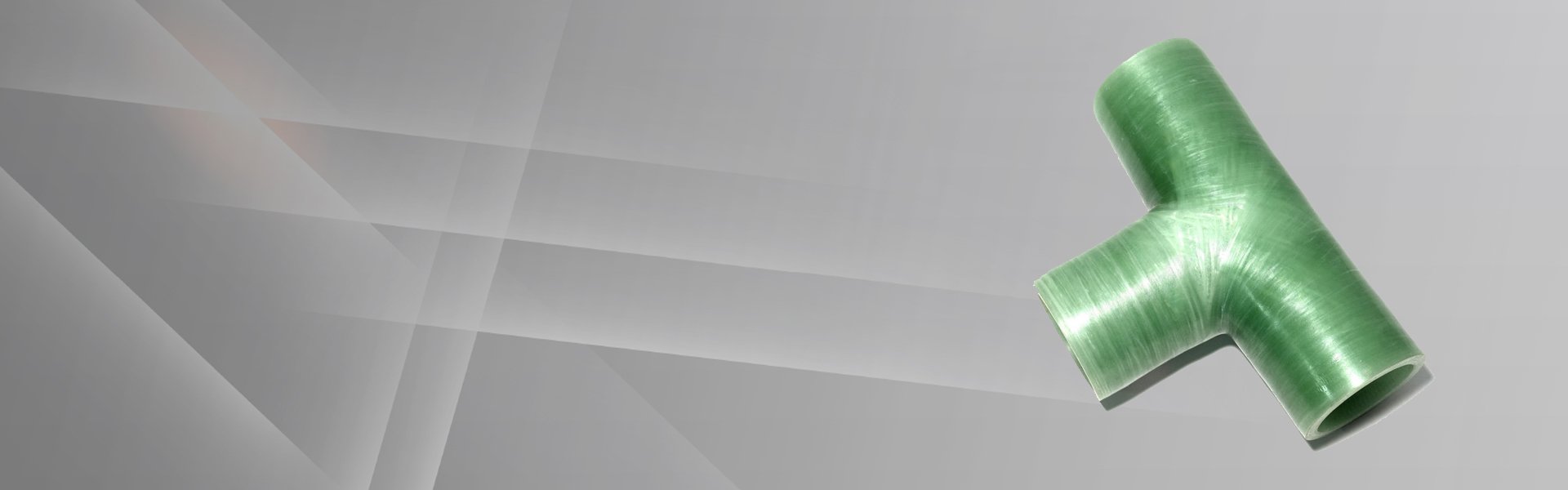
FRP tee is a pipe connector made of FRP, which is a composite material made of resin as the base material and glass fiber as the reinforcing material. FRP has the advantages of light weight and high toughness.
With its T-shaped appearance, the FRP tee can connect three pipes at the same time or be used to change the pipe flow direction, mix liquids, or divert flow, thus realizing a more flexible connection.
Common Process Of Making FRP Tee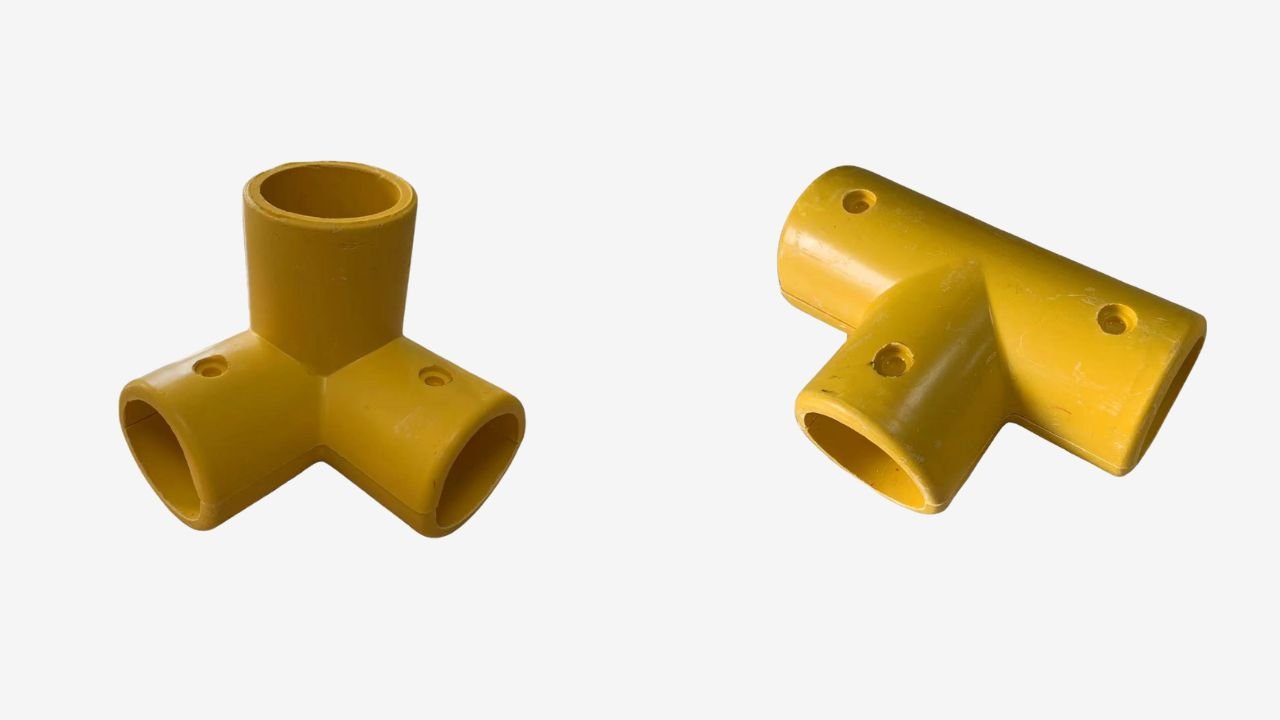
FRP tee is usually made by a one-piece winding molding process, we will first mix the resin (phenyl/phenolic/vinyl resin) and fiberglass material. And according to the design requirements, the mixed raw materials will be wound or laid flat on the mold for curing and molding. After a series of operations such as demolding, trimming, assembling, etc., the FRP tee you need is molded. Finally, we will carry out a series of strict quality tests from surface to performance before leaving the factory.
According to your different applications and requirements, we can adjust the formula and thickness of the lining layer, structural layer and other structures to achieve different physical and chemical properties, in order to realize the functional requirements of different uses.
Comparison of Common Materials of Tee: FRP vs Carbon Steel/Stainless Steel/Copper/PVC
| Features/Materials | FRP | Carbon Steel | Stainless Steel | Copper | PVC |
| Pressure Resistance | Medium-high | Can withstand high pressure | Can withstand medium-high pressure | Medium | Usually less than 1 MPa |
| Corrosion Resistance | Good corrosion resistance in seawater, acid and alkali environments | Lower, may need to be sprayed for corrosion protection | Better | Easily corroded by strong acids | Resistant to weak acids and bases and most chemicals |
| Heat Resistance | Maximum service temperature up to about 180 ℃ | Withstands high temperature steam | Higher | Can easily soften at high temperatures | Temperature tolerance is low, generally less than 60 ℃, easy to be affected by temperature softening deterioration |
| Thermal Conductivity | Lower | Higher | Higher | Higher | Lower |
| If Insulated | Yes | No | No | No | Yes |
| Weight | Lighter | Heavier | Lighter than the carbon steel | heavier | The lightest |
| Application | Chemical piping, seawater transportation, wastewater treatment | Oil and gas | Chemicals, food area | Plumbing for buildings | Building drainage |
What Are The Optional Resin Materials For FRP Pipes?
| Features\Types | o-Phenyl Resins | m-Phenyl Resins | Vinyl Resins | Phenolic Resins |
| Corrosion resistance | Better corrosion resistance to inorganic acids and salts. | Medium strength inorganic acids, weak bases, and salt environments | Suitable for acid, alkali, salt and other corrosive environment | Resistant to acids and many solvents |
| Operating temperature | -50℃-52℃ | -50℃-90℃ | -50℃-100℃ | Up to 180℃ |
Comparison Between Different Fittings For Piping: Tees Vs Flanges Vs Elbows
| Types/Features | Functions | Applications |
| Tees | Pipeline diversion and reversal | Chemical industry, seawater, sewage treatment pipelines |
| Flanges | Pipe connections | Interfaces for chemical equipment |
| Elbows | Changing the direction of fluid | Couplings for turning pipes |
How To Choose a High Quality FRP Tee For Your Pipeline?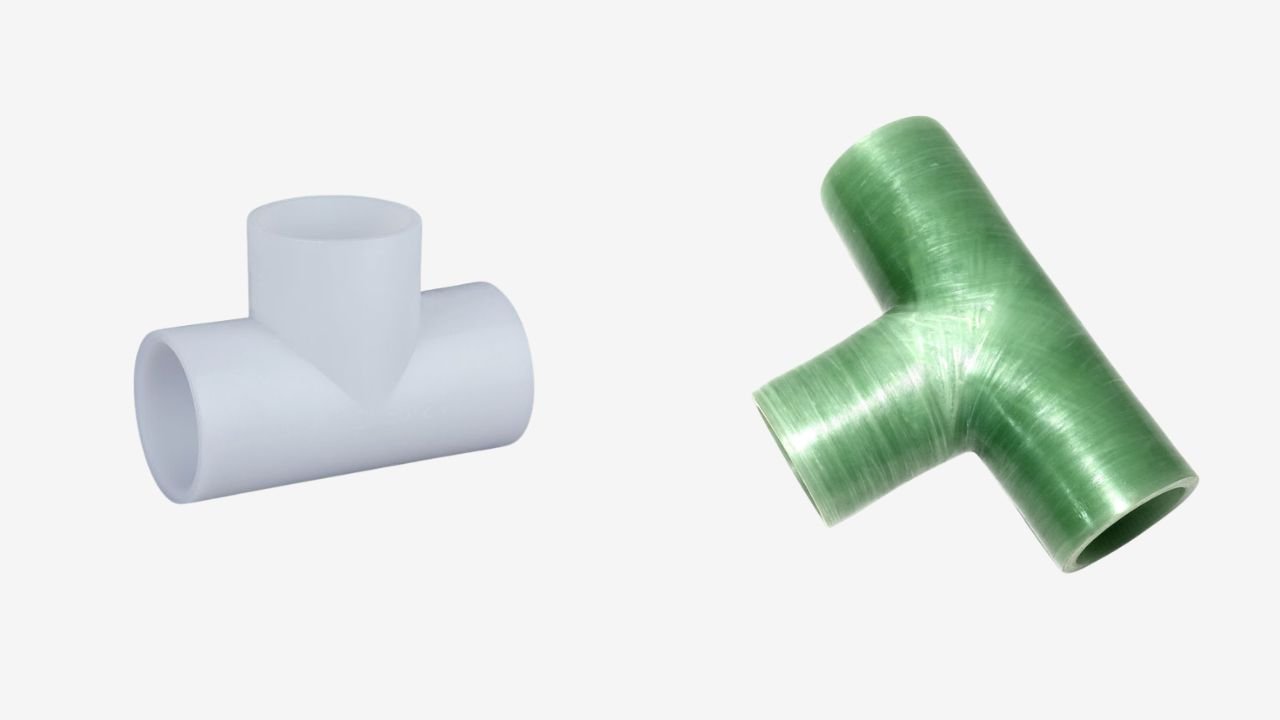
Determine The Caliber
The most important thing when choosing an FRP tee is to make sure that the size of the selected fitting can fit the size of your pipeline, to avoid the trouble of having to return it repeatedly because of the size discrepancy.
Make Sure The Appearance Is Flawless
You also need to make sure that the appearance of the FRP tee is intact, which is the key to ensure that its workmanship is meticulous. You can see if its surface is smooth and uniform in color. And use vernier calipers to check the thickness of the pipe wall to ensure that the thickness is consistent and uniform, and there will be no problem of insufficient wall thickness affecting the strength of subsequent use.
Determine The Connection Method
The connection methods of FRP tee usually include heat fusion butt joint and threaded connection. If the FRP tee you choose needs to be connected by heat fusion, then you need to use a special heat fusion tool to operate. In the case of threaded connections, you will need to verify the accuracy of the threads to ensure a tight connection.