
Why Choose Our Anti-Slip Grating?
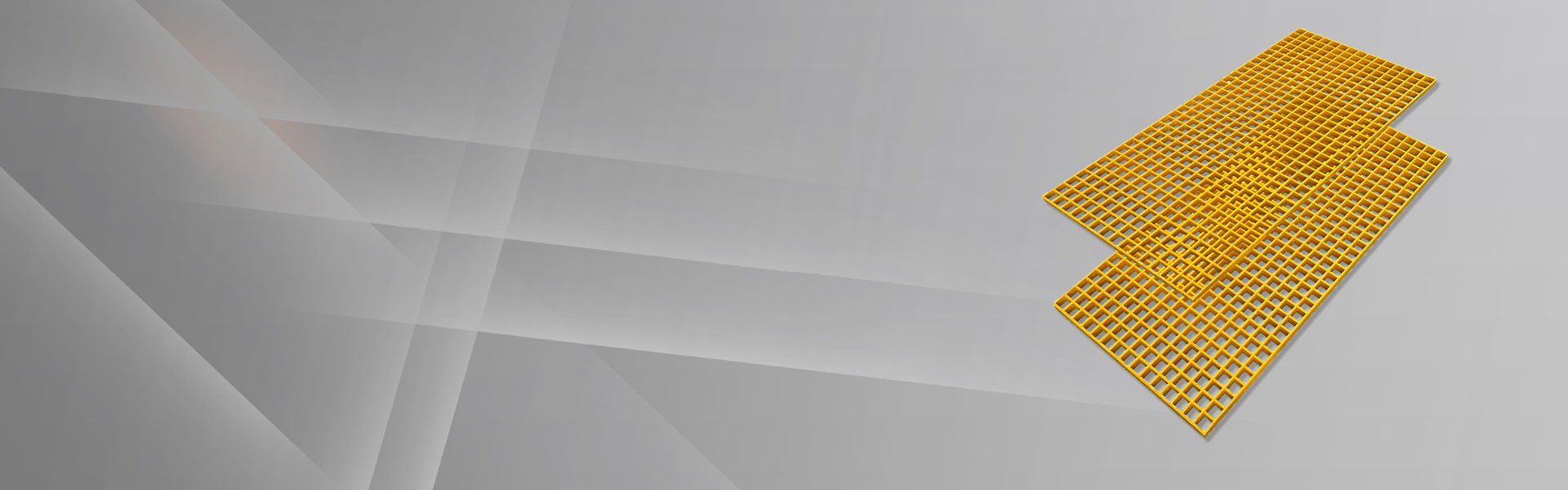
High-Performance Anti-Slip Gratings for Industrial Floors
- ISO-certified factory, with over 20 years of manufacturing experience in anti-slip fiberglass grating.
- From the procurement of resin raw materials to production and processing, the entire process is completed integrally.
- Provide load calculation and CAD drawing services to ensure the products precisely match your project requirements.
- Inspecting products through the static friction coefficient tester to provide written evidence for slip resistance.
Leading Anti-Slip Grating Manufacturer in China
We specialize in manufacturing high-performance anti-slip grating, which is produced by a one-piece mold forming technology. The anti-slip sand layer is wear-resistant and corrosion-resistant, requiring no maintenance.
Anti-slip grating is commonly used in harsh and humid environments such as the chemical industry, offshore platforms, sewage treatment, food processing, and the power industry. As a leading anti-slip grating factory in China, we offer full customization options, including size, color, pattern, grid density, load capacity, edge wrapping treatment, and special openings.
Classification of Anti-Slip Grating
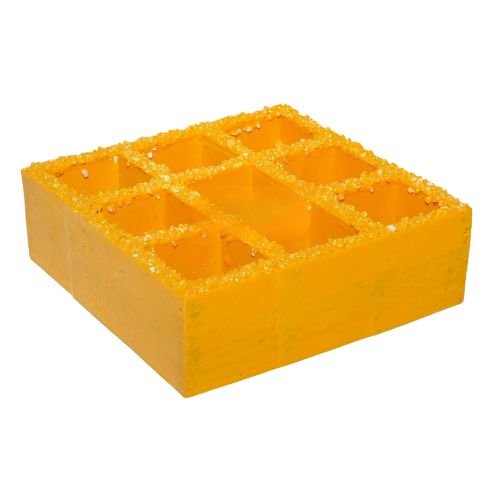
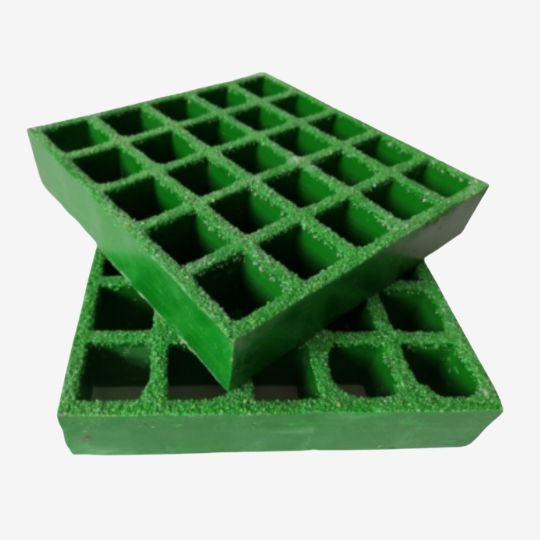
The molded anti-slip grating has a compact structure and strong load-bearing capacity, making it suitable for applications with high load-bearing requirements, such as platforms, staircases, and manhole covers.
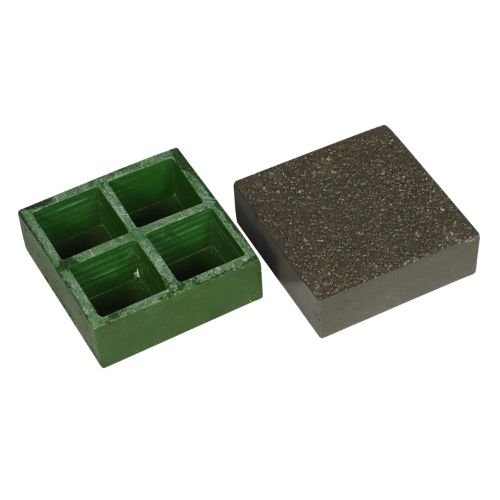
It is produced by the pultrusion process. It has a low cost and is suitable for long-distance laying, such as bridges, walkways, floors, etc.
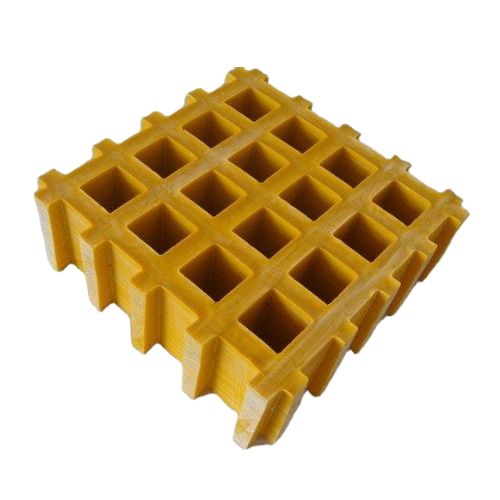
The smooth surface is anti-pollution and prevents liquid residence. It is suitable for the food processing industry with strict hygiene requirements.
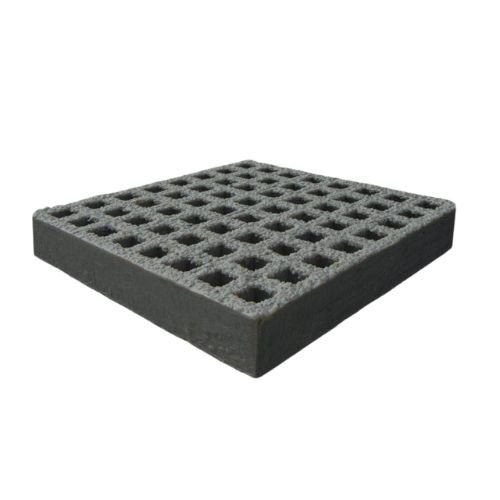
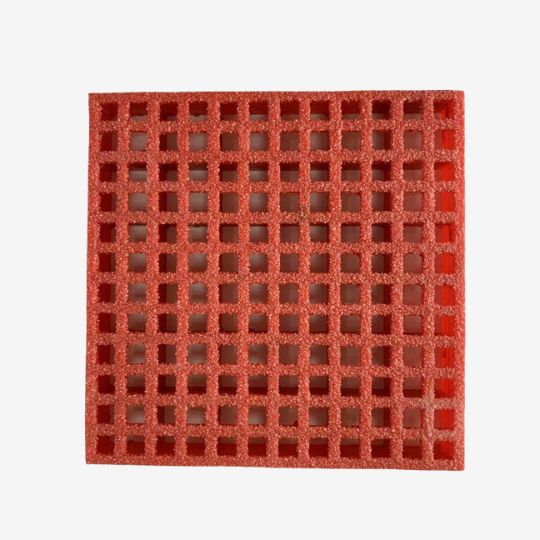
The quartz sand or silicon carbide particles on the surface make it anti-slip and highly wear-resistant. It is widely used in humid and oily environments, such as offshore platforms, food processing workshops, and chemical plants.
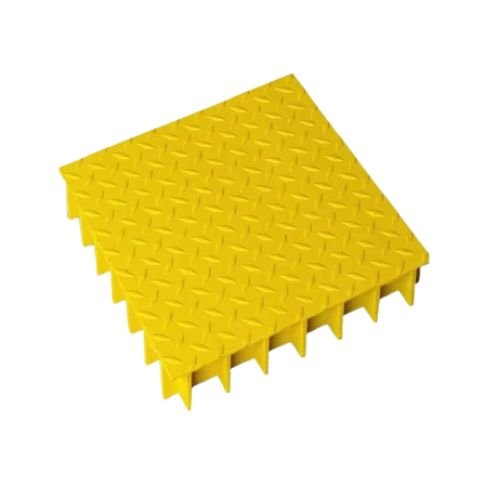
The surface is pressed with patterns, which combine both aesthetic appeal and anti-slip properties.
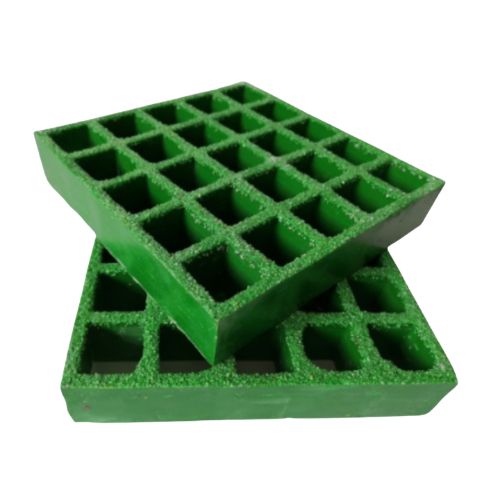
Its grid open structure allows for free air circulation and has excellent light transmission properties. It is suitable for applications requiring drainage and natural lighting, such as manhole covers, sewage treatment plants, basements, and parking lots.
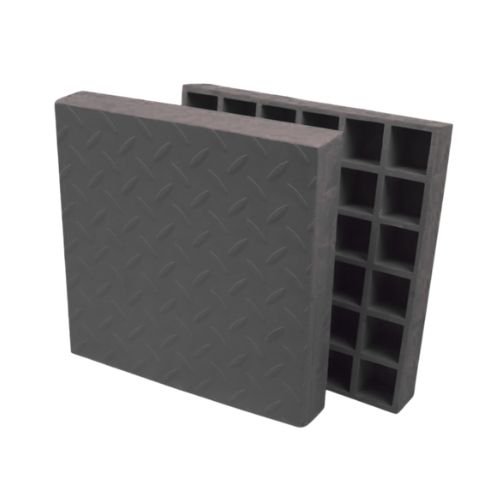
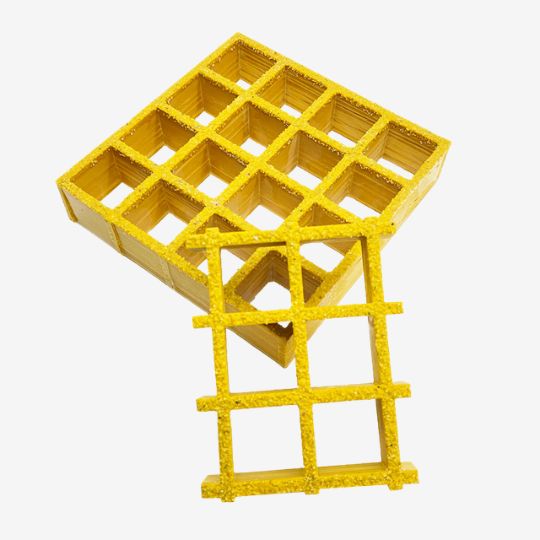
The grid bars are filled with resin or reinforcing materials and have a stronger load-bearing capacity than hollow grids. They are suitable for heavy-duty applications such as docks and heavy equipment platforms.
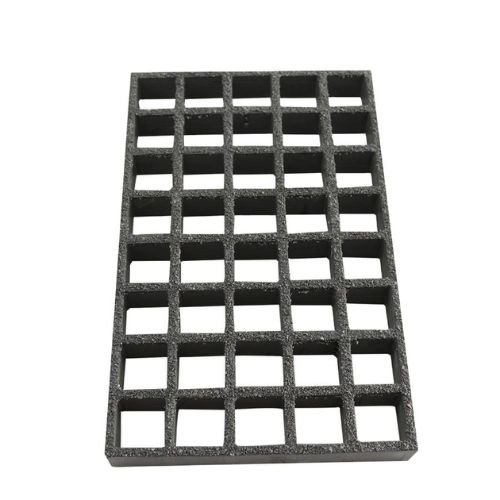
It has grooves on its surface, ensuring the soles of the feet and the tires achieve stable grip, adding the anti-slip property. They are suitable for ramps and heavy loads.
Features of Anti-Slip Grating

The wear-resistant sand surface and raised patterns give it excellent anti-slip properties.

The anti-slip gratings made of vinyl resin have excellent corrosion resistance and can withstand the erosion of acids, alkalis, salts, and various solvents.

The phenolic resin-made anti-slip grating can operate at temperatures over 180℃.

The strength of the anti-slip grating can rival carbon steel, but its weight is only one-quarter of it. This reduces installation and transportation costs and makes it easy to cut.

The resin raw material is an excellent electrical insulation material. It is not prone to deformation or cracking under long-term alternating loads.

The anti-slip grating has a long service life of over 20 years. Although the initial investment cost is high, its zero-maintenance requirement in the later stages results in a low total cost throughout the life cycle.
Permanent Anti-Slip Property
The anti-slip sand surface is integrally formed with the base material in the mold. Even if the surface layer is worn off, the internal sand layer still maintains the anti-slip function. The anti-slip performance of the grating does not diminish throughout its entire life cycle. It reduces the risk of workplace injuries and legal crises for your factory.
Zero Maintenance Cost
The anti-slip grating made of special resin materials can withstand the corrosion of strong acids, strong alkalis, seawater, and most organic solvents. After installation, the grating does not require any painting or anti-corrosion treatment, achieving zero maintenance operation, and enabling your maintenance team to focus on maintaining the production equipment.
Reduce the Project's Total Investment
The anti-slip grating has the same high strength as steel and a lighter weight. Its lightweight design reduces the requirements for supporting structures, which means less base load, lower transportation costs, and faster manual installation. This significantly saves the total project investment during installation.
Applications of Anti-Slip Grating

The sand-coated grating can damage the oil slick, resist seawater and chemical corrosion, and is also slip-resistant. It is often used in offshore oil platforms and operation platforms of chemical plants.

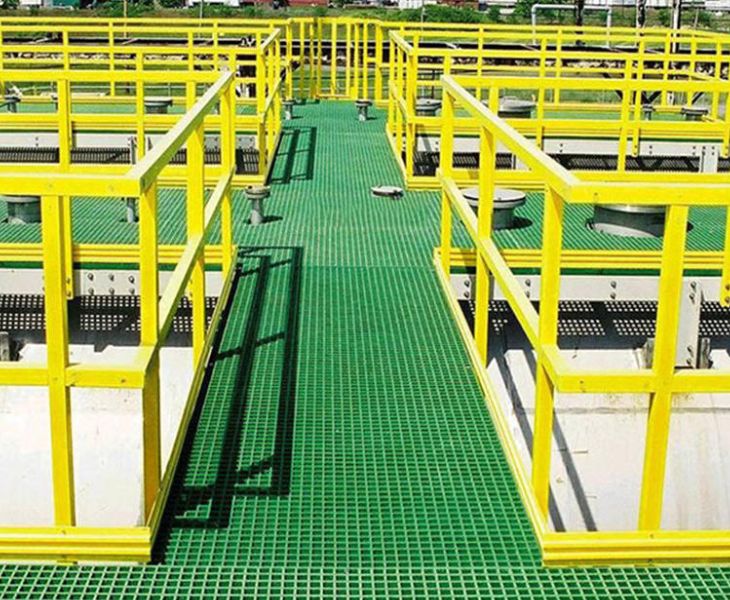
The anti-slip grating is resistant to acid and alkali corrosion and has a drainage grating design, which is widely used in operation platforms and walkways of power plants and sewage treatment plants.

The anti-slip grating has a smooth and dense surface, which is not easy to grow bacteria or accumulate dirt. It can meet the hygiene standards, and is often used in the floors and platforms of food processing workshops and fermentation tanks in breweries.

Its corrosion resistance property can withstand the erosion of chemicals during the pharmaceutical process. Its high anti-slip property ensures operators’ safety of. It is commonly used in the walkways and platforms of pharmaceutical factories.

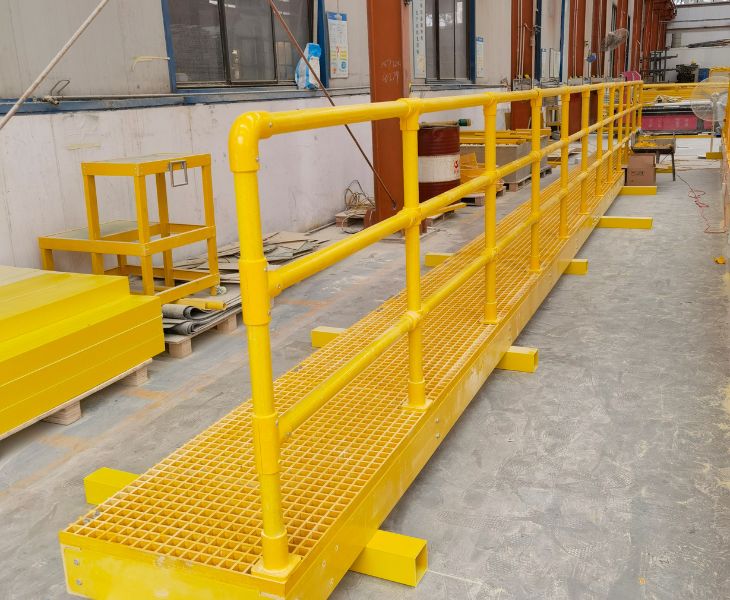
Its lightweight, high-strength, and special anti-slip surface treatment make it an ideal material for industrial factory walkways and floor coverings.

Anti-slip grating can be used as a manure-discharging floor in livestock farms or a drainage grille in car garages.
As a primary manufacturer, we use high-quality resins and non-alkali glass fibers to ensure the durability of the material, and the pultrusion or molding process to guarantee the structural integrity.
The load ratings of our anti-slip grating comply with the EU EN standards, including light, medium, heavy, and extra heavy. For each load rating, our anti-slip grating has detailed technical data sheets.
If you have specific requirements for the load capacity, we can customize the load level for you.
The fiberglass reinforced plastic can maintain stable physical properties within -40℃ to +80℃. For areas with intense ultraviolet radiation, we add ultraviolet absorbers to the resin, effectively preventing thermal expansion and contraction caused by ultraviolet rays, thereby avoiding cracks or deformation. This ensures the grid maintains stable color and a very low rate of strength attenuation during long-term use.
We collaborate with well-known resin and glass fiber suppliers to ensure that the raw materials are of high quality.
During manufacturing, the production line for the anti-slip grating has real-time monitoring, which can monitor parameters such as the extrusion temperature, speed, and fiber content of the products.
After the manufacturing, each batch of samples will be checked to test the key mechanical properties and dimensions.
The anti-slip property of the anti-slip grating stems from the sand surface or patterns, which are integrally formed in its mold and have a hard texture. The fiberglass has stable physical properties, enabling it to maintain wear resistance throughout its entire life cycle.
The anti-slip property of plastic grating stems from the post-processing surface techniques, such as embossing and sand coating. It has a certain initial anti-slip property but a poor long-term anti-slip property. As the anti-slip patterns on the surface wear off, the surface of the plastic grating gradually becomes smooth. Especially in areas with high foot traffic such as stair treads, the anti-slip property of the plastic grating declines more significantly.
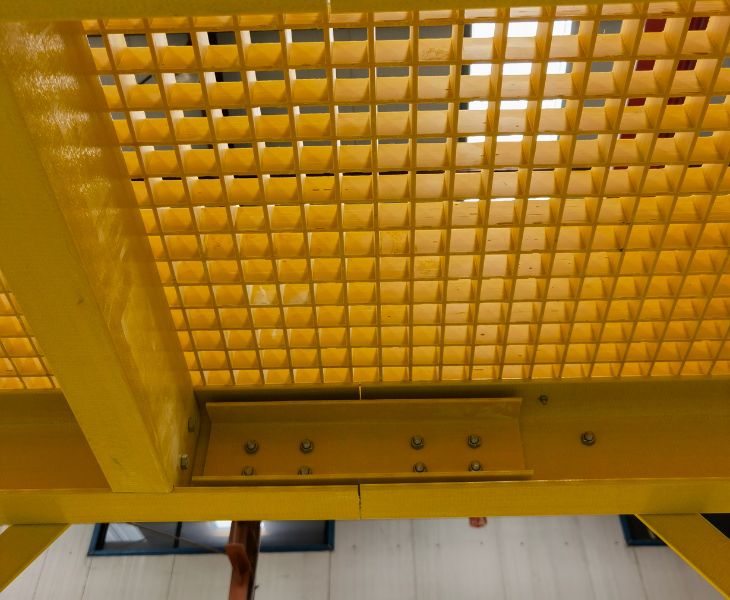
We offer FRP fixtures, support beams, special clasps, and anti-slip rubber pads that match the performance of the grating. Using compatible accessories from the same supplier ensures the best load distribution and saves you time in purchasing components. For large-scale projects, we can arrange on-site technical supervisors.
What Is An Anti-Slip Grating?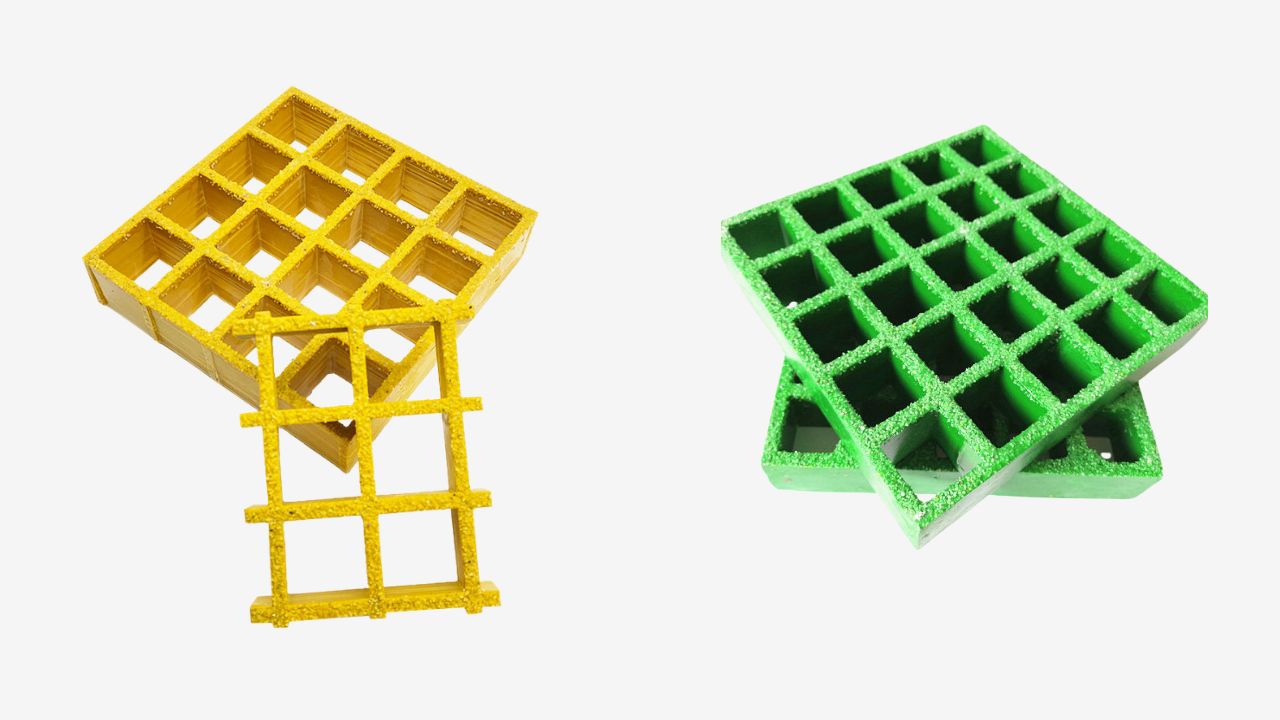
Anti-slip grating is a high-quality flooring material. Compared to conventional fiberglass grating, it has excellent anti-slip properties. It can withstand various corrosive environments and extreme temperatures because it is made of chemically inert resin.
It is commonly used for interlayers, platforms, walkways, or other areas that are damp or covered with oil stains. It achieves permanent anti-slip properties and avoids maintenance costs over several decades of use.
The Advantages of Anti-Slip Grating Compared to Other Floor Gratings
Sand Surface Treatment
The anti-slip performance of the grating is achieved through the in-mold integrated molding process. Before the resin is fully cured, it will be embedded with high-hardness quartz sand. These quartz sands form countless protrusions on the surface, increasing the surface roughness and enhancing the friction between the grating and the soles of feet or tires when contacting.
This surface sandblasting treatment process has the greatest applicability and can adapt to most industrial environments.
Pattern Treatment
Furthermore, the patterns on the surface also increase the friction of the grating. Common surface patterns include rhombus, stripes, and dots. These patterns enhance the aesthetic of the grating, and their raised edges can effectively prevent the lateral sliding of the soles or tires, providing directional grip.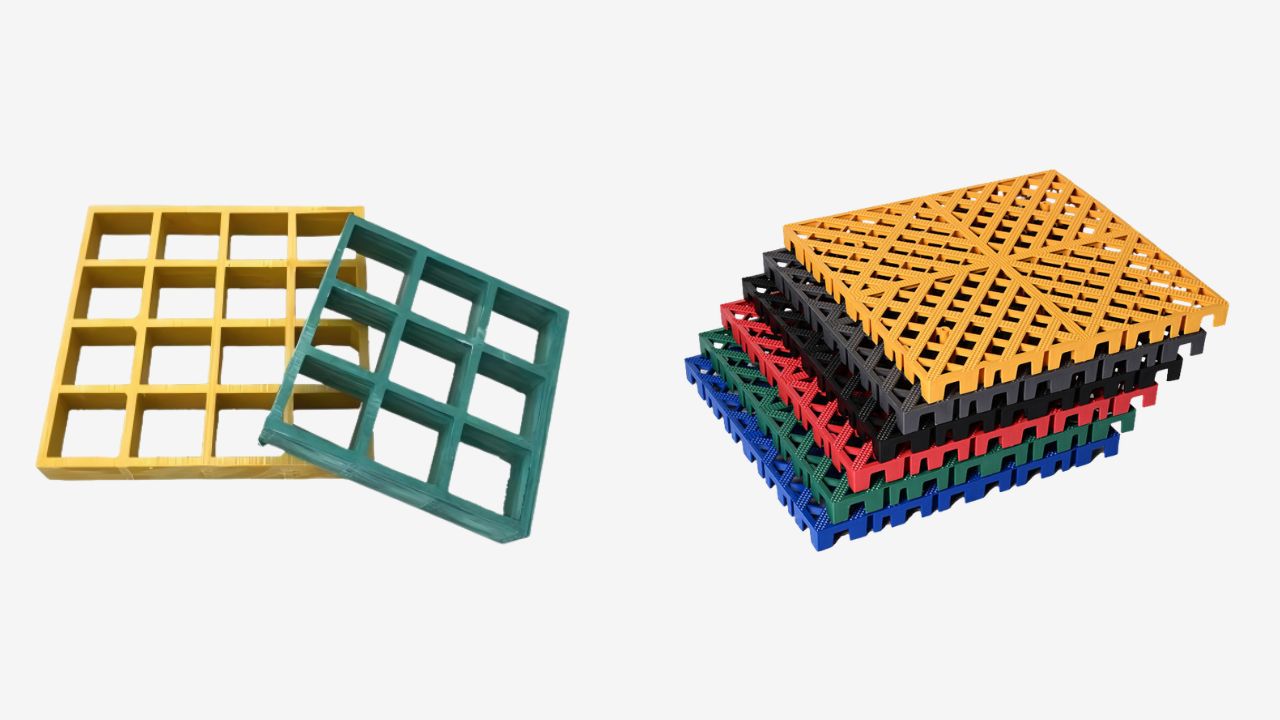
Edge Effect
For slopes or heavy-load scenarios, the edges of the grating or the raised parts of the patterns and grooves will form physical barriers, converting the sliding tendency of the sole into vertical pressure, thereby increasing the grip and achieving anti-slip. The edge effect is commonly used in slopes and heavy-load scenarios.
Drainage Design
The perforated structure of the anti-slip grating drains off oil and sewage, preventing the formation of continuous water films. This fundamentally solves the slipping problem when walking.
The grooves formed by the mold serve as drainage channels for the grating, allowing liquid to drain from both sides and preventing the water film formation.
The drainage design is commonly used in places requiring high drainage efficiency, such as car wash areas, slopes, and platforms.
Adhesive Coating Treatment
Covering the exterior of the grating with an elastic material, such as PVC or polyurethane, can enhance elasticity and grip. These elastic materials have a certain shock absorption function. Therefore, the anti-slip grating processed by this coating treatment has a high walking comfort level and is suitable for pedestrian bridges, ship cabins, where comfort is a requirement.
Anti-Slip Clip
The anti-slip clips are made of PVC and are easy to install. They can be used to reinforce the grating, improve the walking smoothness, and prevent tripping. Just press the vertical part gently with your hand to insert the clamp, and it cannot be removed after insertion.
Antiseptic Property
The fiberglass reinforced plastic grating has inherent corrosion resistance. The insulating and chemically inert properties of the material can solve the problems of rusting and corrosion of the galvanized grid fundamentally. The fiberglass grating performs well in humid and highly corrosive environments such as chemical industries, marine environments, and wastewater treatment facilities.
When exposed to a wide pH range (3-11) and specific chemical media, its corrosion rate of < 0.1 mm/year ensures a long-lasting anti-corrosion performance for several decades, which is better than most metal materials. Therefore, it does not require painting and has extremely low maintenance costs during service life.
Light Self-Weight
Its weight is only one-quarter of the galvanized grid and two-thirds of the aluminum material. Therefore, it can carry a larger area of anti-slip gratings in a single lift, significantly reducing logistics costs.
The light weight makes it easier and safer to install manually, without using heavy lifting equipment. The installation speed is 50% faster than that of metal gratings, significantly reducing labor and equipment costs.
The light weight significantly reduces the load on the supporting structure, so it can be directly applied to light steel structures, saving construction materials costs.
Surface Structure
The rigid support and micro-elastic structure of the anti-slip grating enable it to slightly deflect under load, increasing the adhesion of the soles of the feet and avoiding the problem of slippery surfaces that cause slipping with metal grating.
FRP composite materials do not corrode or flake off. This avoids the problem of uneven surfaces caused by the metal material rusting over long-term use, avoiding the risk of tripping.
The surfaces of concrete and tile gratings are porous and easy to grow moss and algae. In contrast, the anti-slip gratings have a compact and tight structure, which prevents the growth of smooth mold, mildew, and algae. When cleaning, they only need a simple rinse, reducing long-term maintenance costs.
Customized Solutions for Anti-Slip Gratings in Different Industries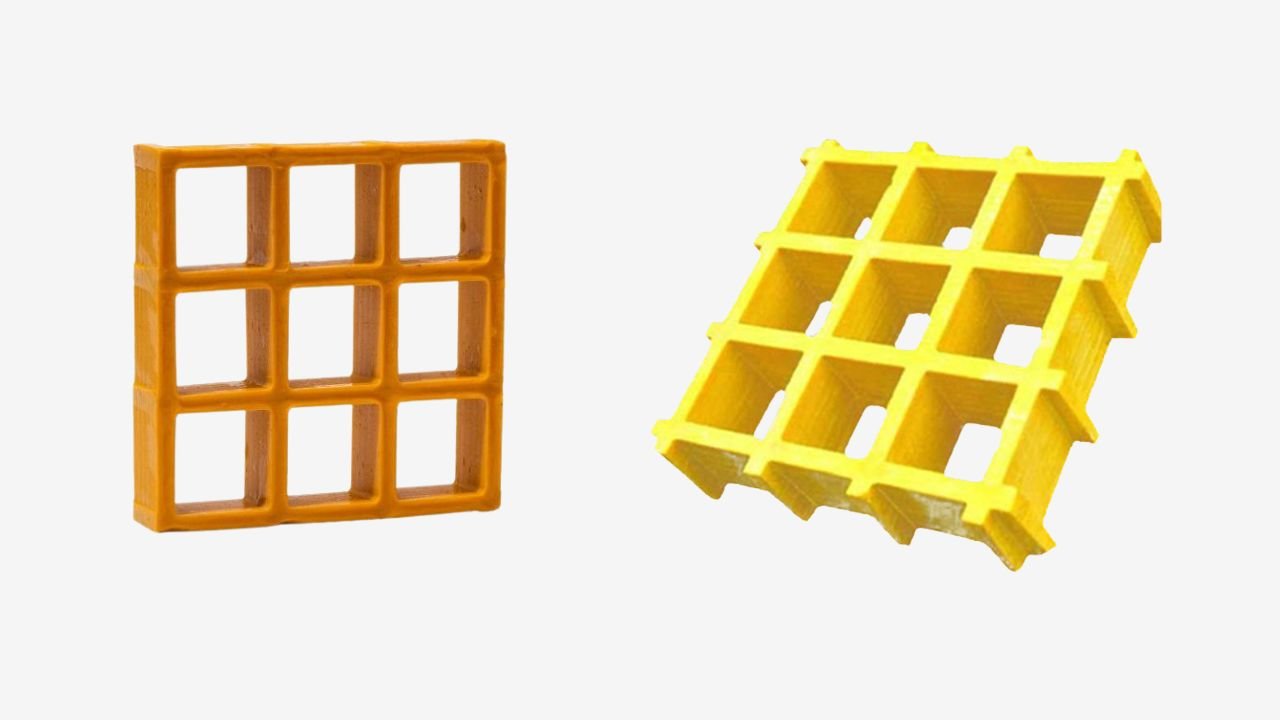
Our anti-slip grating is manufactured in an ISO 9001-certified factory, with performance meeting the key international safety and performance standards. Below is our customized solution for anti-slip grating based on different industry characteristics.
The Petrochemical Industry
In the production platforms and corridor staircases of the petrochemical industry, there is often oil residue. We recommend sand-textured anti-slip grating. The raised points formed by quartz sand can break the oil film, preventing the sole of the shoe from floating completely on the oil film and maintaining the basic friction performance.
Offshore Platform
The high salinity and high humidity environment of the ocean is prone to electrochemical corrosion. The resin raw material of fiberglass reinforced plastic is an inert material and does not react with the chloride ions in seawater. Therefore, it can resist seawater corrosion.
Intense ultraviolet radiation at sea causes the resin matrix aging and the molecular chain breaking, thereby reducing the structural strength and toughness of the grating. The anti-slip grating we apply in the marine environment is added with an overall formed anti-ultraviolet coating to prevent surface degradation and fading.
Food Processing Industry
The residual substances, such as syrup and oil, during the food processing process have high viscosity and are very prone to adhering to the floor. Moreover, they have rich nutrients for the growth of mold and yeast. If not cleaned in time, bacteria will rapidly multiply and contaminate the production environment.
We develop a high-density anti-slip grating with a dense and free-pore surface, effectively preventing the infiltration of syrup and oil. By constantly polishing the surface to expose the quartz sand inside, the friction coefficient of the contact surface increases. Compared to other surface treatment processes, the polished surface is less prone to accumulating dirt, avoiding the deterioration of slip resistance caused by dirt coverage.
The grating is highly durable and can withstand the flushing of high-pressure water guns.
Sewage Treatment Plant
Air pollution and ground oil stains in sewage treatment plants are the application challenges for anti-slip grating. The air contains a large amount of highly corrosive gases such as sulfides and ammonia, which can easily damage the grating surface. Our anti-slip grating can resist acid and alkali corrosion.
Its environment is damp and rich in nutrients, making it highlyeasy to grow algae. The polysaccharide substances secreted by algae are very slippery, increasing the slipping risk. We apply anti-algae agents to the grating surface to prevent algae growth.