
Why Choose Our FRP Pultruded Profile
Pultruded FRP Profiles for Corrosive & Load-Bearing Applications
- We offer a variety of customized pultruded profiles and surface treatment processes.
- Our own factory is equipped with advanced production facilities, enabling us to respond to your demands more efficiently.
- All finished products will be inspected by our internal quality control team before shipment.
- Completely produced internally, we can offer stable quality at more competitive prices.
- Standard rods, pipes, and panels are all in stock, enabling quick delivery.
Your Reliable FRP Pultruded Profile Supplier in China
We are a professional manufacturer of FRP pultruded profiles, offering a variety of standard and customized shapes for use in structures, electrical applications, and corrosive circumstances. We employ a strict extrusion process, which gives the profiles high strength, corrosion resistance, electrical insulation, and dimensional stability, and presents them in a lightweight form. With internal production, strict quality control, and export experience, we provide your projects with lightweight, high-strength, and low-maintenance pultruded profiles.
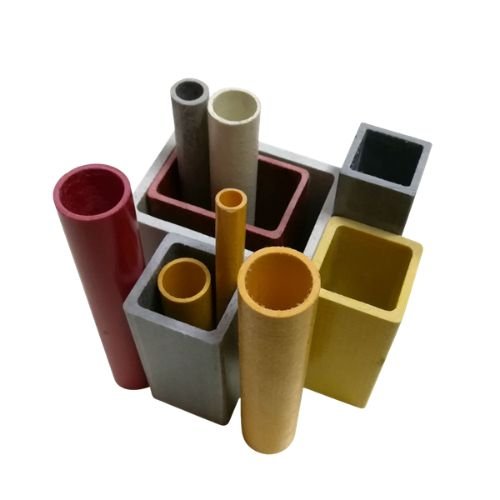
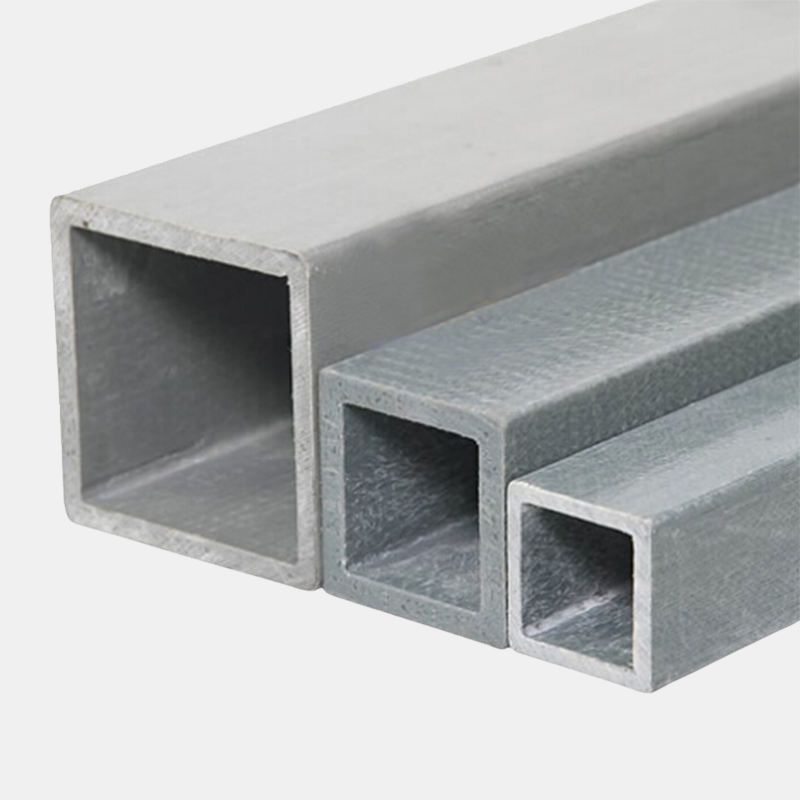
FRP pipes are widely used in handrail systems, cable protection, cross-support, and lightweight structures. The closed structure provides good torsional resistance and also has electrical insulation properties, so it is always applied in power and industrial facilities.
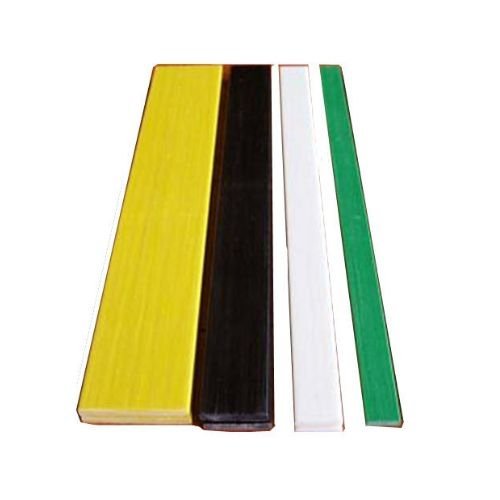
Solid bars and flat bars are used for pins, support rods, reinforcement components, and insulation parts. This type of material has high pultrusion accuracy, stable dimensions, and excellent tensile strength, and the profiles need to keep high rigidity.
This product category covers bridge decks, span structures, and other high-load applications, as well as radar domes, fan blades, and other lightweight scenarios. Through different wall thicknesses and fiber ratios, a balance is achieved between load-bearing capacity and weight.
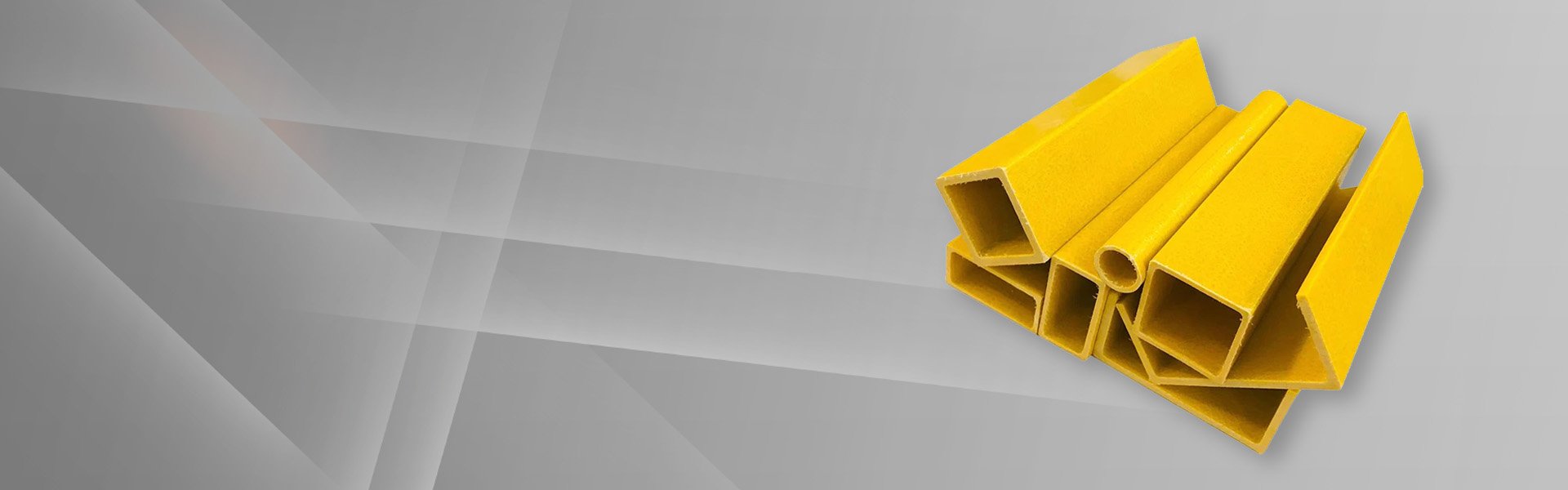
FRP custom profiles and pultruded profiles are customized according to specific working conditions and design parameters. They have complex cross-sections and effectively reduce the number of later assembly steps, and can be designed as a single component.
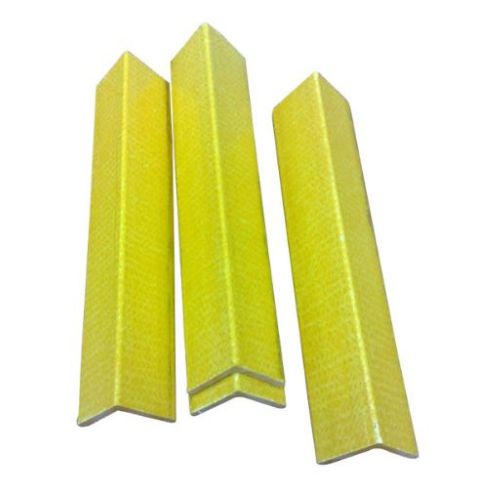
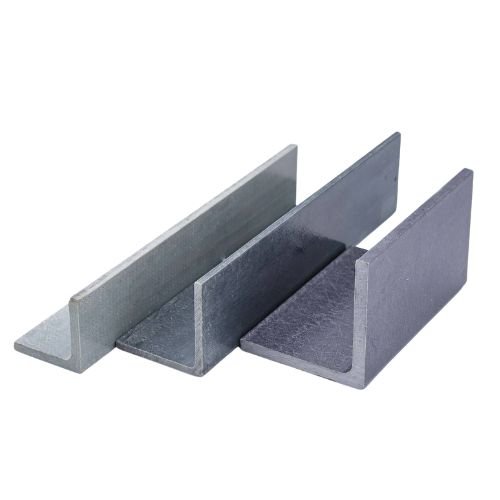
FRP angle steel and channel steel are mainly used for structural support, frame connection, and stair systems. Their cross-section is stable, and the bearing performance is reliable. They can be used in humid or corrosive environments and are generally used for connection and reinforcement purposes.
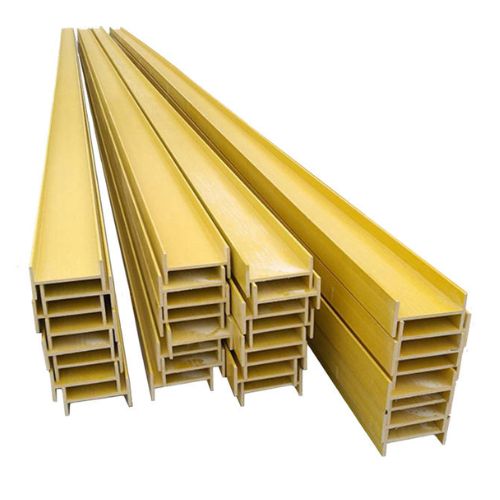
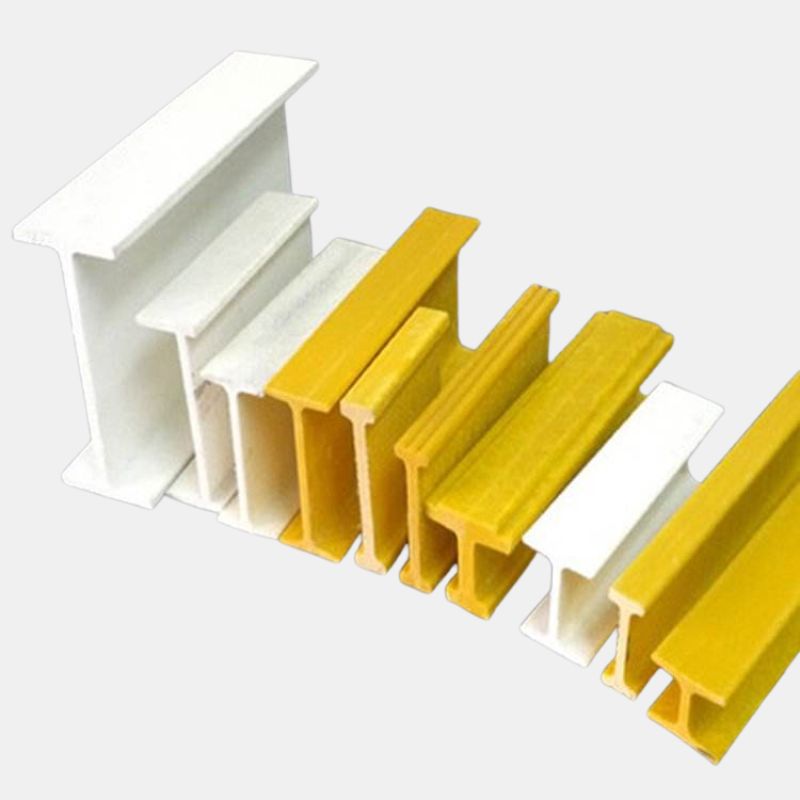
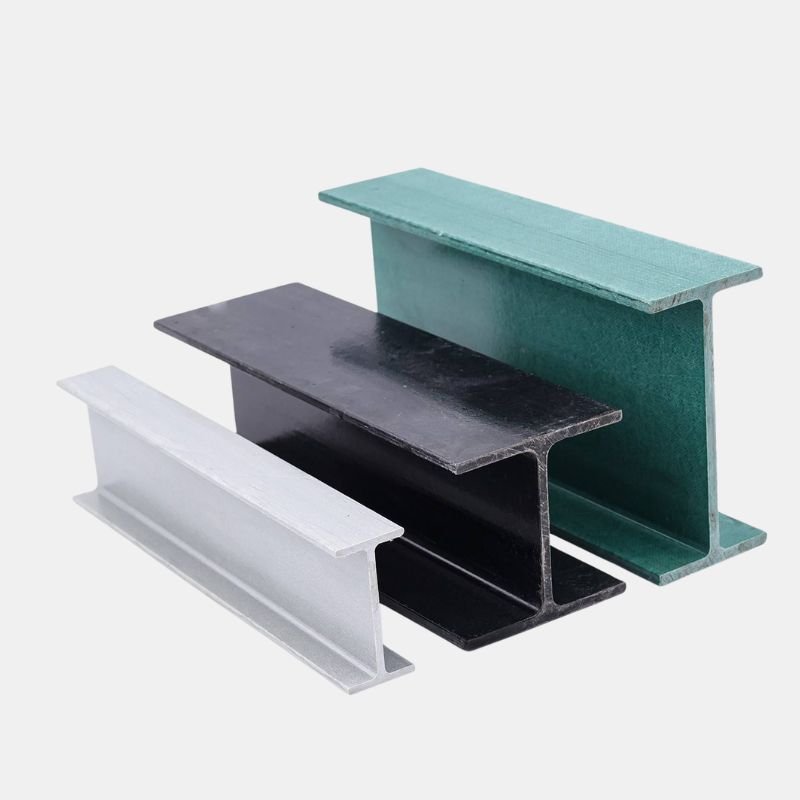
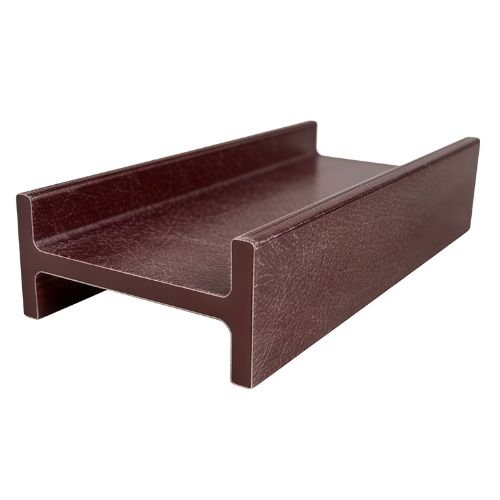
The shape is similar to traditional steel beams, but they are lighter in weight and have stronger corrosion resistance. They are used for platforms, walkways, and load-bearing frame structures. They can keep a stable bearing capacity in high-humidity and highly chemically corrosive environments.
Features of FRP Pultruded Profile

Our FRP profiles are lightweight, with a weight only one-sixth that of steel, yet their tensile, bending, and compressive strengths can rival those of high-grade steel.

The relative density of FRP is only 1/4 to 1/5 of carbon steel, making it easier to transport and install.

FRP profiles can resist water, air, acids, alkalis, salts, and various chemicals, and are suitable for all aspects of chemical corrosion protection.

FRP profiles are non-conductive and are an insulating material. They maintain good dielectric properties even in high-frequency environments.

FRP is completely non-magnetic and will not interfere with MRI equipment, precision instruments, or other magnetic-sensitive equipment.

FRP has a low thermal conductivity, with a value of 1.25 to 1.67 kJ/(m·h·K) at room temperature. It can protect structures from high temperatures or high-speed airflow erosion.

The pultrusion molding process allows you to flexibly customize various structural products, meeting different strength, heat resistance, or electrical performance requirements.

FRP profiles are resistant to ultraviolet rays and environmental corrosion, and maintenance only requires a small amount of paint or sandblasting coating.
Flexible Customization, Complex Cross-sections
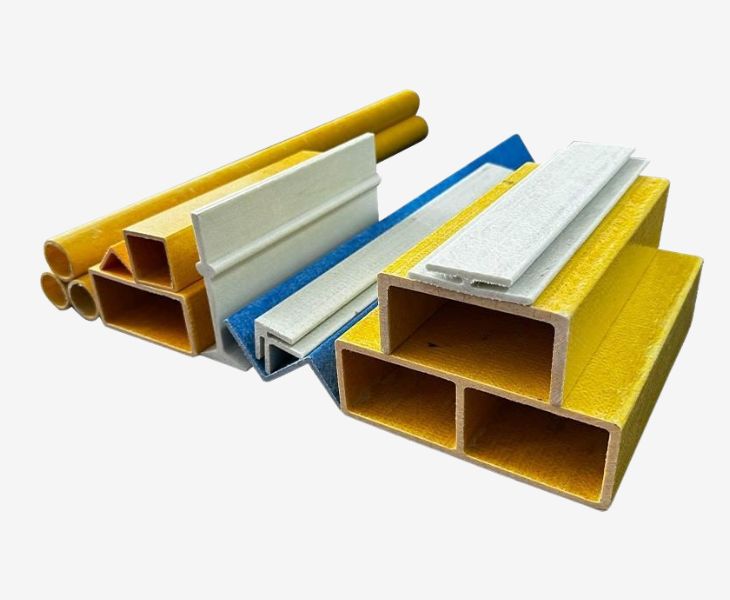
Through the pultrusion molding process, we can produce different cross-sections and sizes, including angle steel, channel steel, I-beam, square tube, and round tube. Different combinations of fibers and resins can accomplish high strength, corrosion resistance, heat insulation, or electrical insulation properties, and can meet the individual structural requirements of diverse industrial or construction projects.
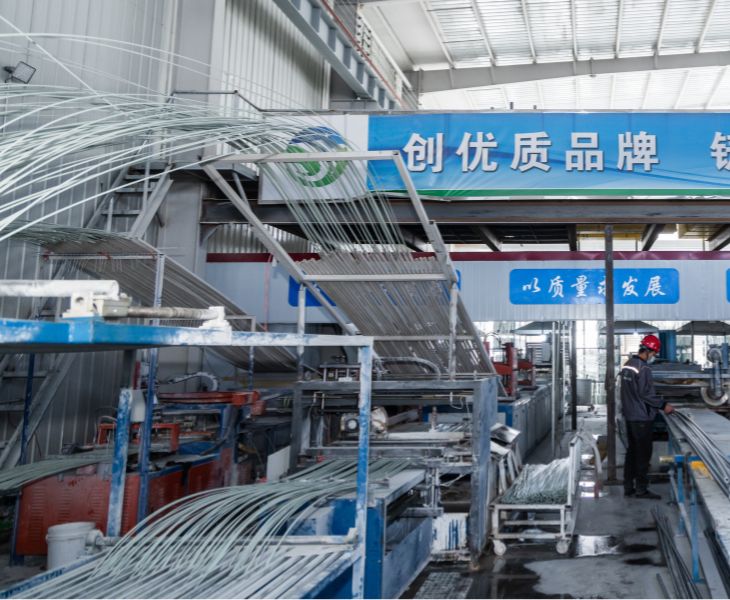
Precision Manufacturing, International Standards Guaranteed
Our profiles are manufactured using high-precision equipment and undergo comprehensive testing by a system. They comply with international standards like ASTM, ISO, EN, and BS. You can rest assured to use them, as each product is guaranteed to have a complete structure, stable performance, and precise dimensions.
Factory Direct Supply, Quick Delivery
Through factory production and standardized pultrusion lines, we offer a stable and credible supply. We arrange production on the basis of the project schedule, greatly decreasing delays. We are involved in the project throughout, from profile design to spare parts support, guaranteeing rapid delivery and continuous application guidance.

Application of FRP Pultruded Profile

In chemical or petrochemical factories, the chemical corrosion resistance of FRP profiles plays a crucial role, being used for platform supports, walkways, handrails, ladders, and tank supports. It can keep long-term safety in highly corrosive circumstances or in the event of leakage accidents.

FRP profiles are well-suited for walkways, clarifier structures, grates, ladders, and handrail systems. They can resist the erosion of chlorides, water, and different treatment chemicals, guaranteeing the safety of the product structure.

FRP profiles’ non-conductive and non-magnetic characteristics are used for high-voltage equipment supports, cable trays, instrument supports, and safety guardrails. This guarantees the safe operation of equipment and avoids electrical short circuits or magnetic interference.

FRP profiles are well-suited for structural components, fan plates, and louvers of cooling towers. Their white industrial profiles can withstand water, treatment chemicals, and high-humidity circumstances.

In railway and public vehicles, FRP profiles can be used for vehicle body structures, platform cantilevers, signal equipment enclosures, and track accessories. The high strength, light weight, non-conductivity, and corrosion resistance characteristics allow you to accomplish better performance about safety, durability, and long-term use.

FRP profiles are applied to doors and windows, building structures, enclosure components, interior decoration, flat plates, corrugated tiles, and complete bathrooms. They possess excellent corrosion resistance, extremely light weight, and good plasticity, which makes the construction projects more flexible.

FRP profiles can be used for car exteriors, doors, instrument panels, floors, bumpers, etc., as well as train window frames, roof ventilators, water storage tanks, etc. This enables you to accomplish safer, lighter, and more durable solutions in vehicle manufacturing.

In municipal engineering, FRP profiles are well-suited for rainwater pipes, water supply pipes, cable protection pipes, sewage pipes, as well as traffic signs, isolation pillars, and highway guardrails. By relying on its corrosion resistance, light weight, and low maintenance characteristics, it guarantees long-term reliable operation.
Continuous fibers are pulled through a resin bath and then enter a heated mold, where they cure and form profiles with a constant cross-section. This process enables the fibers to be oriented in a specific direction, and the ultimate products will have high strength, dimensional stability, and consistent mechanical properties.
FRP pultruded profiles offer a high strength-to-weight ratio, excellent corrosion resistance, and a longer service life. Compared to steel, they do not rust, and compared to aluminum, they have better resistance to chemical media.
Yes. FRP pultruded profiles are added with UV-resistant materials and surface mat layers, allowing them to be exposed to sunlight and harsh weather conditions for a long time. They still keep stability of structural performance and appearance.
Yes. FRP pultruded profiles can be customized in terms of cross-sectional shape, size, fiber structure, and resin system. Common cross-sections include angle steel, channel steel, I-beam, square tube, and round tube, and complex custom cross-sections can also be developed.
Yes. FRP pultruded profiles are non-conductive and non-magnetic in themselves, so it is well-suited for high-voltage equipment, substations, cable supports, and the peripheral structures of precision electronic devices. They can prevent electric shock and electromagnetic interference and improve the safety of system operation.
What are FRP Pultruded Profiles?
FRP pultruded profiles are a type of composite material structural profile. They are produced continuously through the extrusion molding process. First, continuous glass fibers or other reinforcing fibers are fully impregnated with resin, then pulled into a heated mold for curing and forming, ultimately resulting in profiles with a constant cross-section and continuous length. This process mainly relies on “pulling” to stabilize the fibers and resin, rather than relying on pressure as in extrusion.
FRP pultruded profiles are composed of reinforcing fibers and a resin matrix. The fibers provide the main structural strength, while the resin is responsible for bonding, molding, and environmental resistance. Common fibers include glass, carbon, and aramid fibers, and the resin system can be selected from polyester, vinyl ester, epoxy, or polyurethane to meet different corrosion resistance, strength, or insulation requirements.
Because the fibers are continuously arranged along the length direction of the profile, FRP pultruded profiles have a high strength-to-weight ratio and excellent dimensional stability. Their cross-sections are uniform, and the performance is consistent, so it is always applied for beams, supports, handrails, walkways, and structural frames. Compared to conventional metal materials, it is less prone to corrosion, non-conductive, non-magnetic, and has lower maintenance requirements.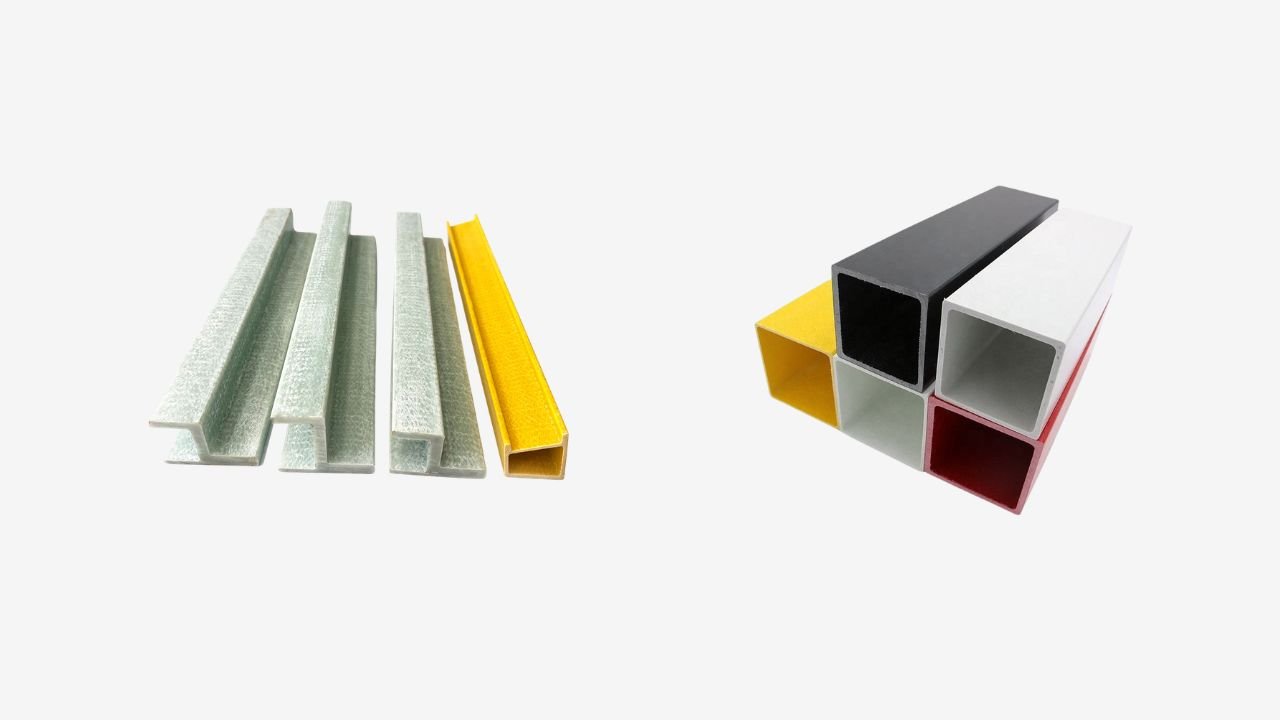
Properties of FRP Pultruded Profiles
| Property | Typical value |
| Materials | Using glass fiber reinforced polymer (FRP), the resin system can be selected from isophthalic acid, vinyl ester, epoxy, or phenolic resin. |
| Strengthening structure | The E-glass fiber is the main component, including coarse yarn, short-cut felts, surface felts, and other directional combinations. |
| Mechanical properties | The tensile strength is >200 MPa, and the bending strength is >250 MPa. |
| High-intensity weight ratio | The density is approximately 1.7–2.0 g/cm³, which is only about 1/4 of that of steel. |
| Electrical performance | Non-conductive and non-magnetic, with a dielectric strength of >30 kV/mm. |
| Thermal performance | Working temperature range is -50°C to +150°C, with a low thermal expansion coefficient. |
| Flame-retardant property | Self-extinguishing, low flame spread, meeting ASTM E-84 Class 1 or higher standards. |
| UV resistance performance | High, Integrated UV inhibitors. |
| Water absorption rate | Extremely low, usually <0.5%. |
| Shape | Angles, channels, I-beams, square tubes, round tubes, bars, flat steel, and custom profiles. |