

Why Choose Our FRP Step Ladder
- The FRP step ladder adopts a high-strength glass fiber reinforced structure, ensuring the load-bearing capacity while significantly reducing the overall weight.
- In chemical plants, sewage treatment plants or coastal environments, its service life is usually significantly better than that of aluminum or steel ladders.
- FRP step ladder production system has obtained ISO9001, ISO45001 and ISO14001 management system certifications.
- We support 7×24-hour rapid response service to provide you with communication during inquiries, technical confirmation or after-sales communication in time.
Reliable Industrial FRP Step Ladder Solutions
Apart from the FRP step ladder, we also provide reliable long-term cooperation capabilities. From project selection advice to batch delivery support, you can obtain more stable supply guarantees and more competitive factory direct supply prices. If you have specific specifications or project requirements, please feel free to communicate with us. We will provide you with targeted solutions and price support.
Types of FRP Step Ladder
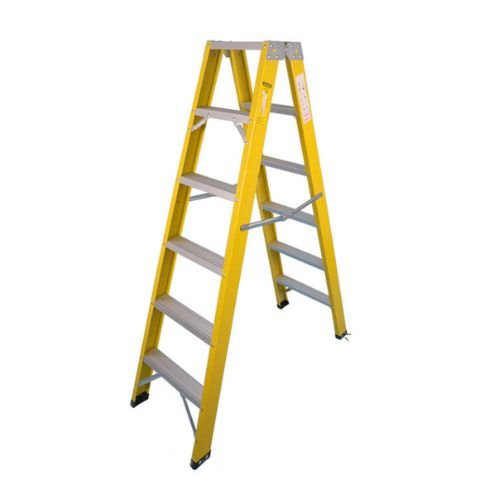
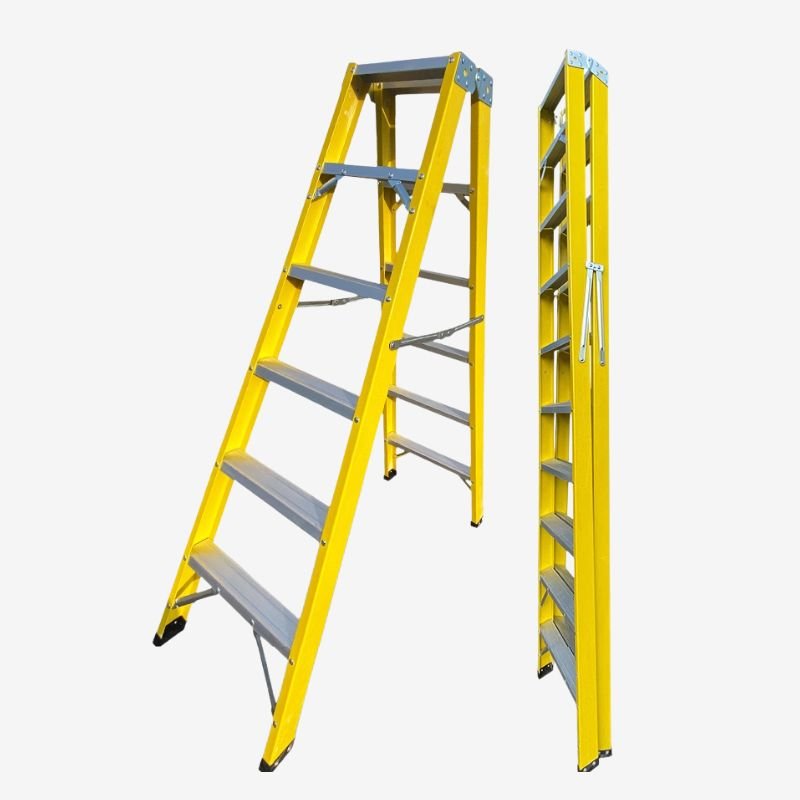
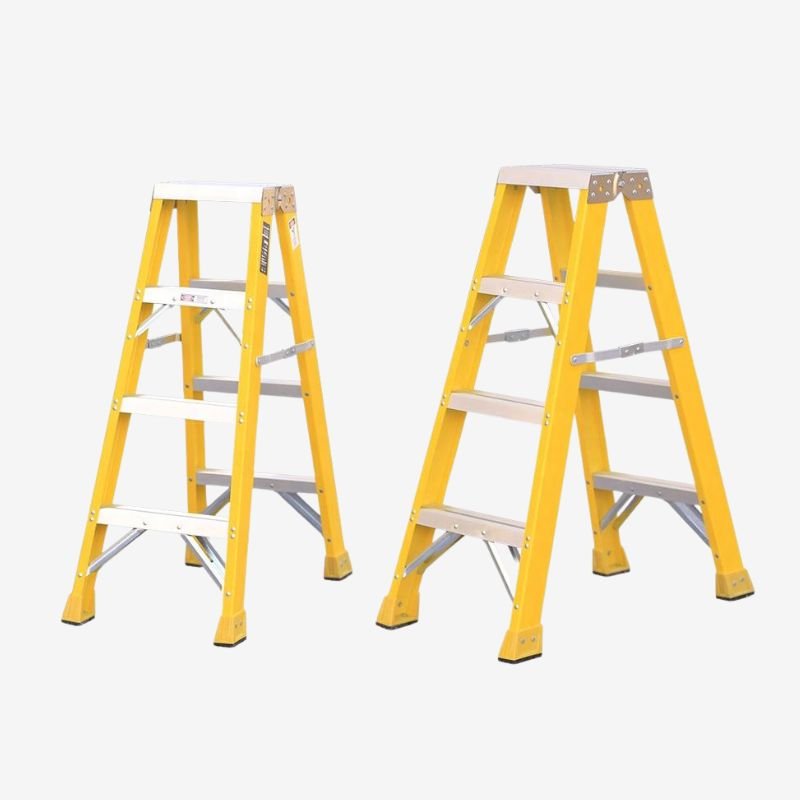
Is an independent industrial step ladder with an “A” shape in its appearance. Due to its sturdy and durable construction and safe insulation properties, it is widely used in scenarios such as power maintenance, equipment maintenance, and instrument installation.
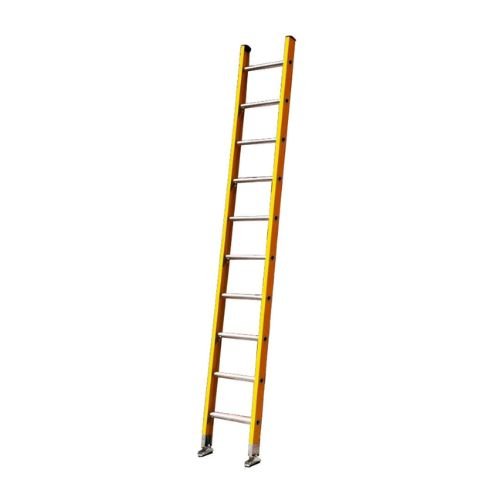
Adopt an asymmetrical design and require support against a wall, equipment, or cabinet during use. Its lightweight construction, compact storage footprint, and ease of frequent relocation make it an ideal choice for maintenance teams seeking efficient mobility and flexible storage solutions.
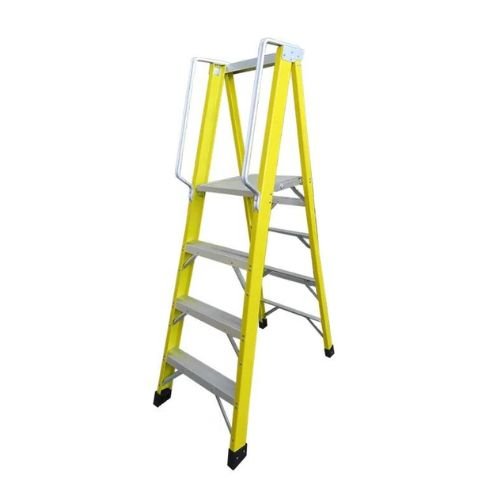
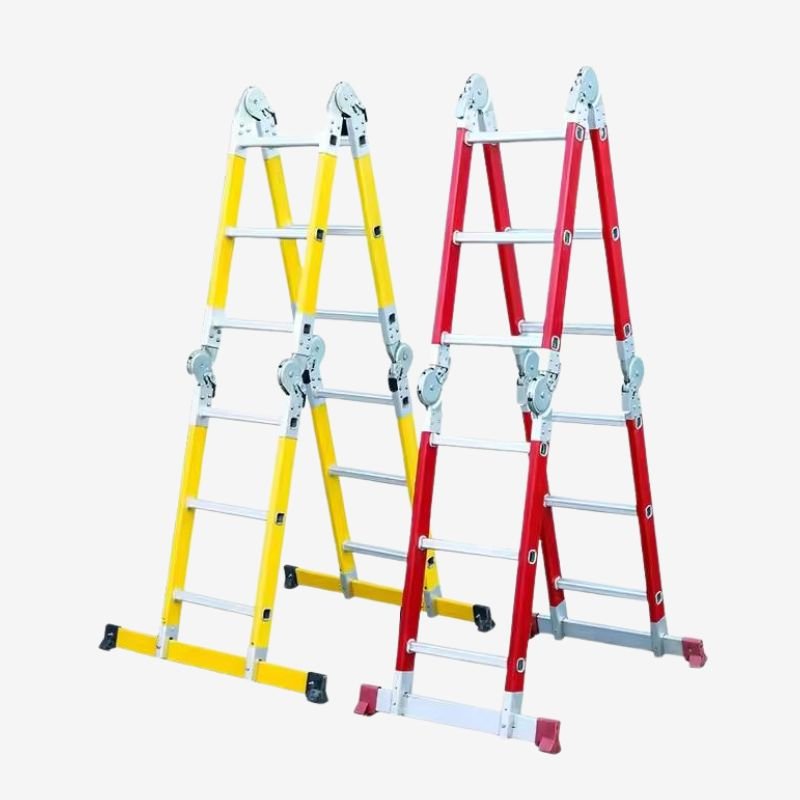
For ultra-long climbing operations, you install the safety guardrails to ensure even load distribution and high load-bearing across the entire structure. Modular construction allows for segmented manufacturing and on-site assembly, facilitating transportation and installation.
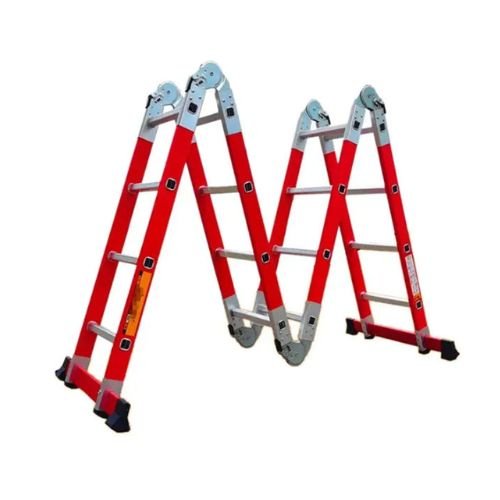
Lightweight, portable, and easy to store, this ladder folds down to a slim profile that fits effortlessly into tool cabinets, work vehicles, or equipment rooms. Its portability and safety features enhance your on-site work efficiency while minimizing usage risks.
Features of FRP Step Ladder

The FRP step ladder adopts a foldable design that allows your quick storage when not in use, occupying minimal space for centralized storage or vehicle transport.

The FRP ensures strength and significantly reduces the weight as well, weighing only about ⅓ of a steel ladder at the same specifications. One person can easily move, load and transport.

Standard FRP step ladder bears a load from 300 to 375 pounds (approximately 136–170 kg), and can be customized to higher load-bearing levels according to your project requirements.

The FRP is completely non-conductive, does not cause static electricity accumulation, and the FRP step ladder does not have electric shock or sparks risk like metal ladders.

It requires no painting maintenance, no additional anti-corrosion treatment, and is not easy to structural rust or loosening problems, which significantly reduce maintenance costs in a long run.

The FRP step ladder has a wide applicable temperature range from -40℃ to +120℃ and excellent UV resistance.

It is resistant to acids, alkalis, salt, sewage and various chemical gas erosion with no rust or corrode. The FRP step ladder’s service life is usually 5 to 10 times that of steel ladders.

It automatically locks in the extended position to prevent accidental collapse. The FRP step ladder enhances your operations’ safety through optimized stability and anti-slip performance.
Customization Capacity
We can provide standard heights of 5 feet, 6 feet, 8 feet, 10 feet, 12 feet with custom production options for different applications. You can select load-bearing capacity as 150kg, 200kg, and industrial-grade reinforced structures. The ladder frame can offer different cross-sectional forms such as rectangular tubes, I-beams, or elliptical shapes to meet different strength and stability requirements. At the same time, it supports upgrades of anti-slip rubber foot pads, insulation levels optimization, color customization, and OEM branding customization.
Production Capacity
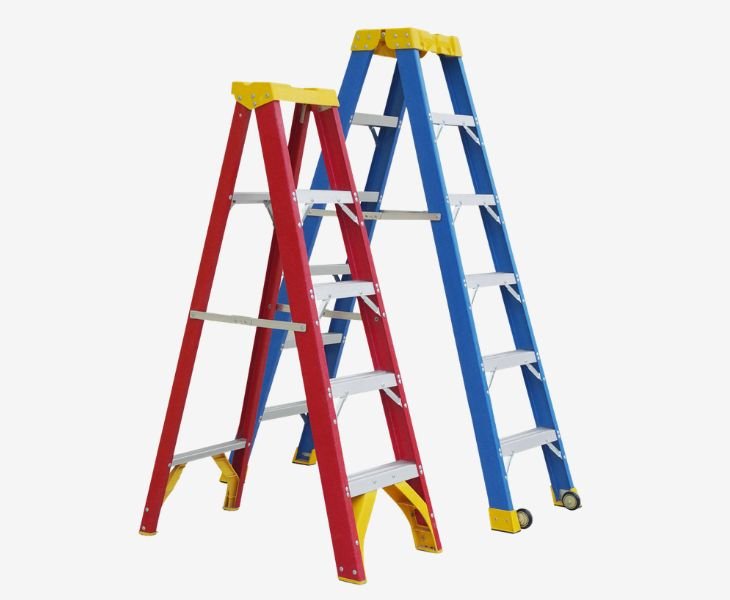
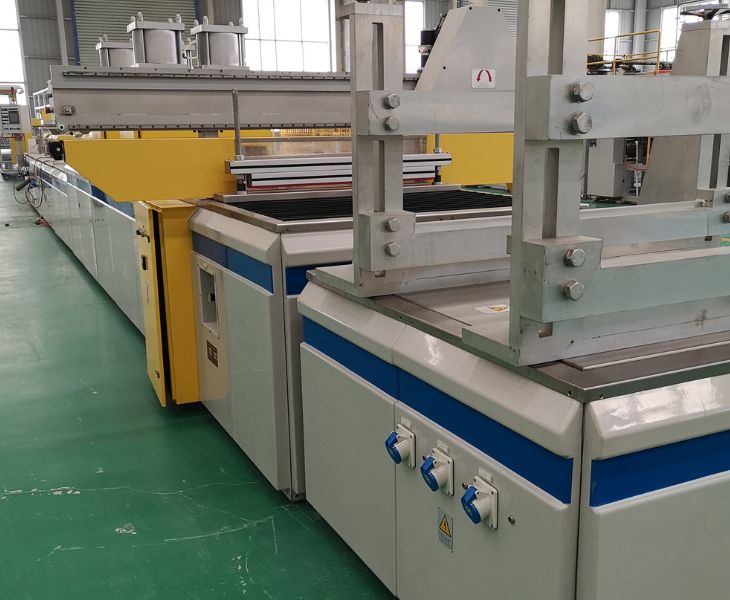
Our FRP folding ladders are manufactured in strict compliance with multiple testing standards, ensuring high consistency and reliability in your products throughout mass production. All products undergo rigorous load tests, insulation tests, sliding resistance tests, and raw material inspections. We control tight tolerances of ±1mm for height, ±0.5mm for wall thickness, and a total length deflection of less than 2mm/m, with stringent control over flatness. The strict precision control can provide you with better structural stability and product consistency.
Anti-slip Design
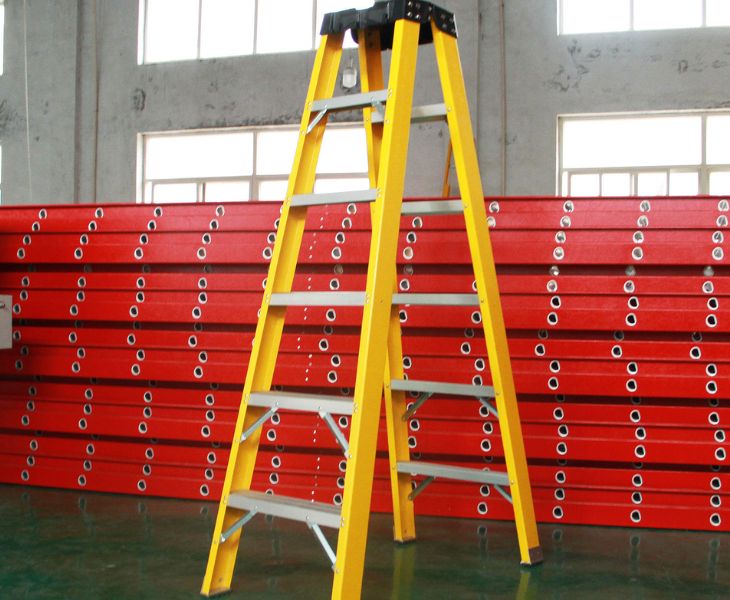
The FRP step ladder adopts an integrated quartz sand anti-slip layer for steps, with a friction coefficient over 0.6. Even in humid, rainy, or low-temperature environments, it still maintains excellent traction for you. The step structure prevents water accumulation, ice buildup, and mud adhesion, ensuring high safety for wastewater treatment plants, chemical facilities, or outdoor environments. For personnel who need to frequently move up and down, our anti-slip design can effectively reduce slip hazards.
Applications of FRP Step Ladder

With its insulating and non-conductive properties, the FRP step ladder can effectively reduce the electric shock risk and is a commonly used climbing tool for power companies and electrical contractors.

The equipment in the chemical and petrochemical industries is exposed to corrosive media and gases for a long time. The FRP step ladder has excellent corrosion resistance to acids, alkalis, and various solvents, it could provide you the structural stability and long service life in harsh environments and save the cost by frequent replacements.

Whether it is the building facades construction, the storage shelves maintenance, or the equipment debugging, the FRP step ladder can offer a stable and safe climbing passage for you. It has strong weather resistance and is not affected by rain, snow, or humid weather, suitable for use in multiple indoor and outdoor scenarios.

The food processing and pharmaceutical environments require extremely high hygiene standards. While the FRP step ladders do not easily rust and do not react with most substances with easy-to-clean surfaces. These help you to mitigate contamination risks and satisfy the requirements for a high cleanliness production environment.
Compared to aluminum ladders or steel ladders, FRP step ladders are more suitable for industrial environments. Its non-conductive property can reduce electrical operations risk for you. Its corrosion resistance avoids rusting problems. And the overall weight is lighter, making it easier to transport and move with no need for frequent anti-corrosion maintenance.
Overall, in corrosive or electrical environments, the FRP step ladder runs longer and lower the long-term cost.
The production cycle for the regular model is usually 2 to 4 weeks. We will schedule and confirm based on the production plan and quantity, and provide you with a clear delivery time before confirming the order. Our stable production capacity helps you better arrange the project schedule.
The minimum order quantity are different depending on the model and customization requirements. Standard models support small and medium batch trials, convenient for you to conduct market tests or project validations. For long-term cooperation or bulk purchase orders, we can offer more competitive pricing solutions. The specific quantity and conditions can be confirmed through communication based on your project requirements.
What are FRP Step Ladders?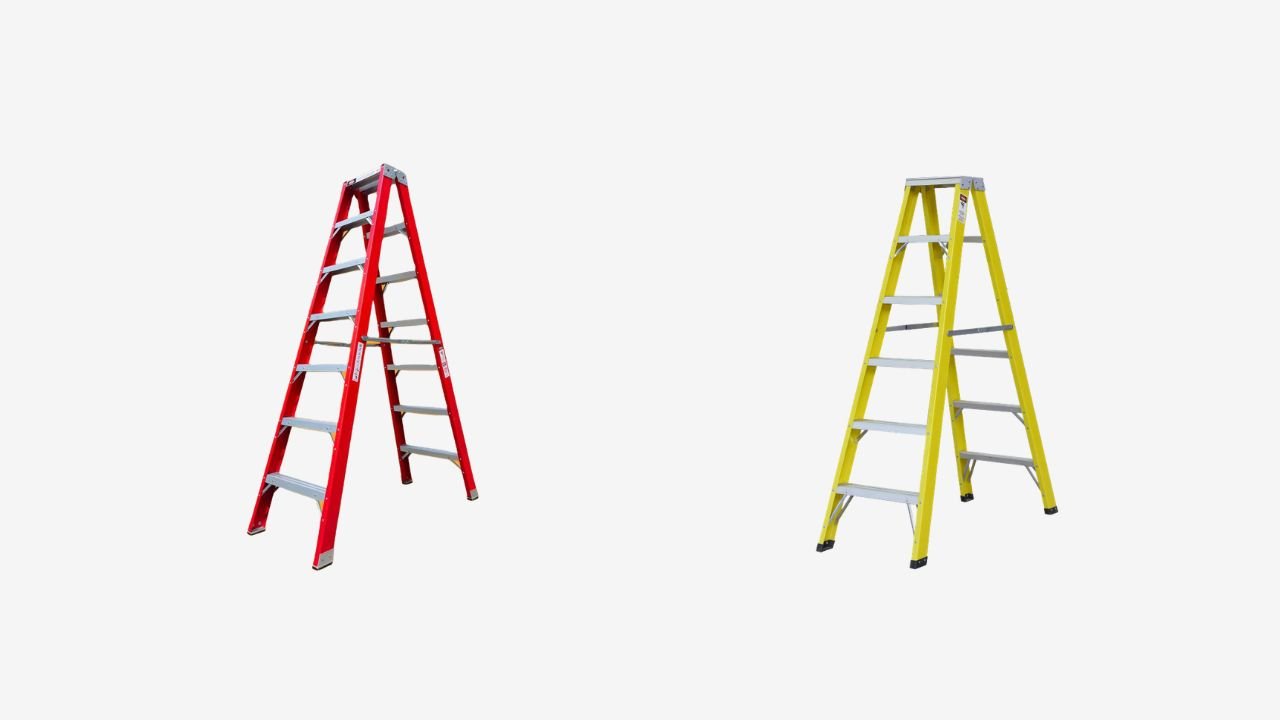
Fiberglass ladders are non-metallic corrosion-resistant safety ladders manufactured using glass fiber as the reinforcing material and thermosetting resin as the matrix through the pultrusion process. They are mainly used for personnel access in industrial equipment, storage tanks, water tanks, factories, sewage treatment, chemical areas, and so on.
This product can replace traditional steel ladders and aluminum alloy ladders because it addresses issues such as corrosion, electrical conductivity, rusting, and frequent maintenance.
Composition of FRP Step Ladders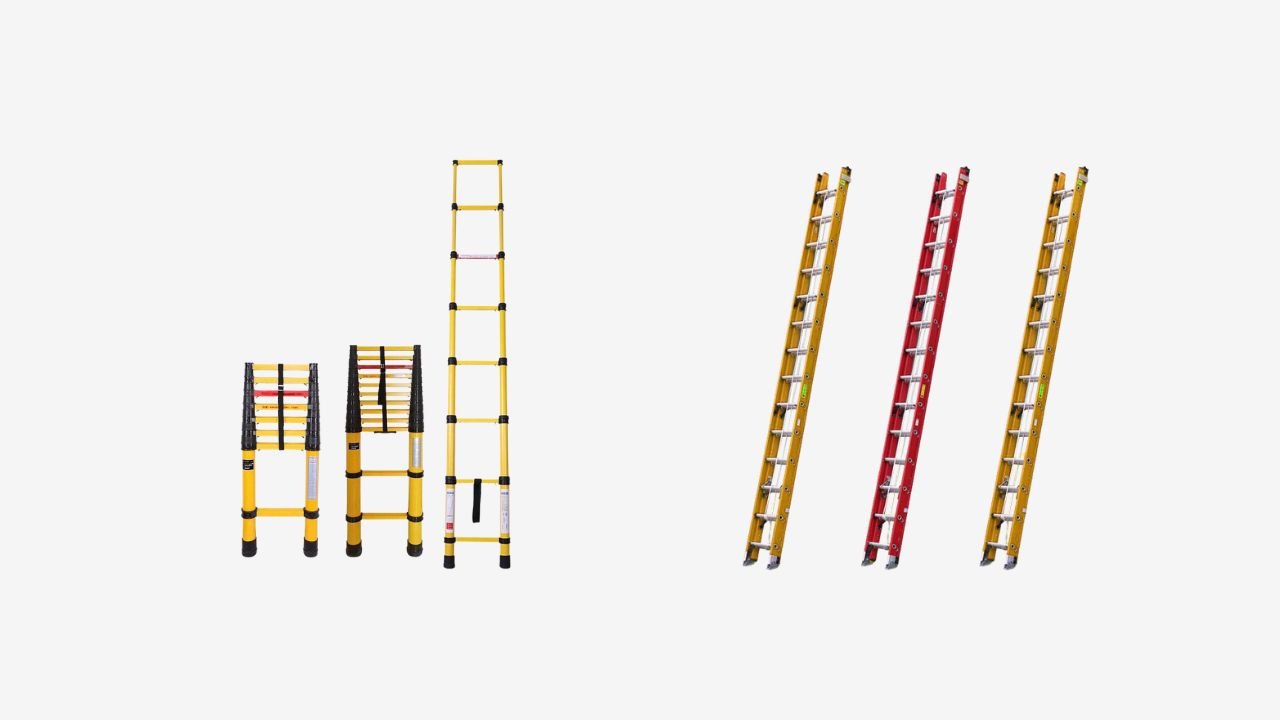
Main Beam
The main beam is the main load-bearing structure of the FRP ladder, which is usually made of pultruded fiberglass rectangular tubes or I-beams. The cross-section is standardized according to your ladders’ height and load-bearing requirements. Its surface is treated with anti-ultraviolet and corrosion resistance and it is widely used outdoors and in corrosive environments for a long time without deformation, cracking, or rusting.
Treads
The tread plate is the direct force-bearing component for personnel to step on. It is formed by integrally molding the pultruded fiberglass anti-slip tread profiles. The surface has quartz sand anti-slip layer or toothed anti-slip structure to ensure stable anti-slip performance in dry, damp, rainy, and snowy environments. The tread plate’s width, thickness, and load-bearing capacity are designed strictly in accordance with industrial safety standards, showing high bending strength, impact resistance, aging resistance, no water accumulation, and no ice formation.
Guardrail
The safety guardrail is a necessary safety protection component for ladders over 3 meters in height. It is composed of FRP circular pipe columns and a ring-shaped guardrail frame. This structure is cylindrical or square enclosure, effectively preventing workers from leaning backward, falling sideways, or falling from heights during climbing.
Connection Piece
The step connection pieces are used to firmly fix the step plates on the two side main beams. They usually adopt a combination structure of FRP special connection pieces or stainless steel fasteners.
Supporting Frame
The installation support fixes the ladder to the wall, tank wall, concrete or equipment surface. It is usually made of FRP brackets or FRP wrapped around hot-dip galvanized steel, and shows strong ability in corrosion prevention, load-bearing and deformation resistance.
Handrail
The handrail is used at the entrance, platform or turning position of the ladder. It is made of FRP circular pipes and provides hand support and lateral protection, enhancing your ladders’ stability and security during climbing up and down.
Fastening System
The fastening components include bolts, nuts, flat washers and spring washers. They are made of 304/316 stainless steel or hot-dip galvanized anti-corrosion accessories, which have strong corrosion resistance, no rusting, stable tightening force and long-term non-loosening. All fastening components are locked according to the mechanical design torque to ensure reliable connections between the main beam, steps, guard cage and support, which can stably operate for long-term use in industrial applications.
How to Choose FRP Step Ladders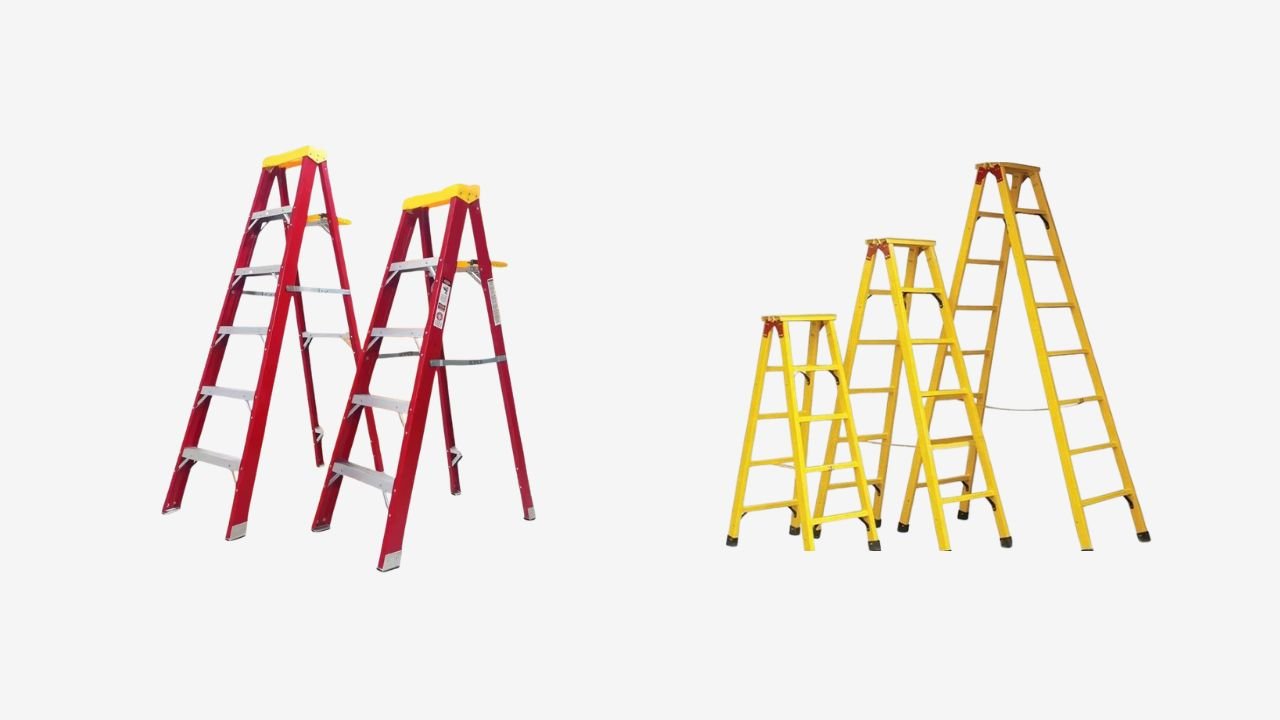
Working Environment
The usage environment directly affects your choice for raw materials. If the initial selection does not match the working conditions, the cost for later replacement or maintenance is often much higher than the initial price difference.
For example, if your project is located in a strong corrosive environment such as a chemical plant, electroplating workshop, printing and dyeing factory, or wastewater treatment plant, ordinary resin grades are not suitable.You must elect FRP step ladder with isoprene type or vinyl ester resin. These resin systems have stronger resistance to acids and alkalis, salt fog, and chemical corrosion.
Load Capacity
Apart from the personnel weight, you should also consider the weight of tools, equipment or materials stacked when determining the load capacity. For maintenance or installation operation scenarios, it is recommended to reserve sufficient safety margins. Common load levels are 150kg, 200kg or industrial reinforced structures.
If it is a high-frequency use or multi-person alternating operation environment, please choose reinforced structures to avoid strength attenuation caused by long-term fatigue.
Installation Height
Installation height determines your structural configuration. For example, fixed FRP step ladders exceeding 3 meters typically require a safety cage structure to prevent fall hazards. When heights surpass 6 meters, it is recommended for you to select a segmented cage ladder with an intermediate platform. This platform serves as a rest and safety buffer zone, complying with industrial safety standards while facilitating project acceptance.
Additional Functions
In some specific scenarios, additional configurations can significantly improve your efficiency and safety. Common configurations include integrated tool trays for convenient maintenance operations, reinforced anti-slip footplate structures, high-strength support and connection systems. These can make your use more stable and convenient, and reduce fatigue risks.
Certification
If the project aims at the international market, you also need to pay attention to whether the products comply with relevant safety standards such as GB4053.1, EN 131, OSHA 1910.