

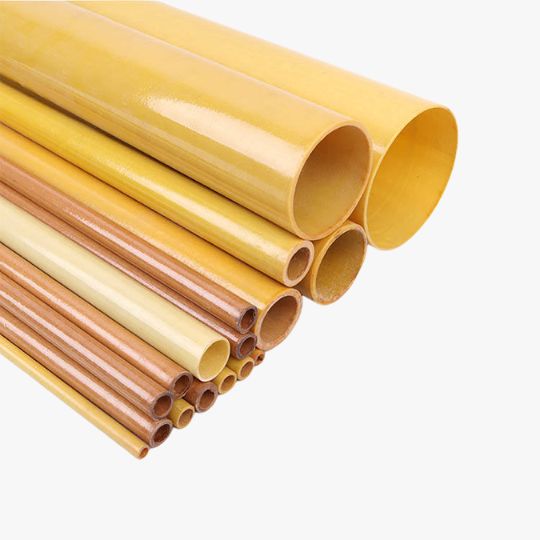
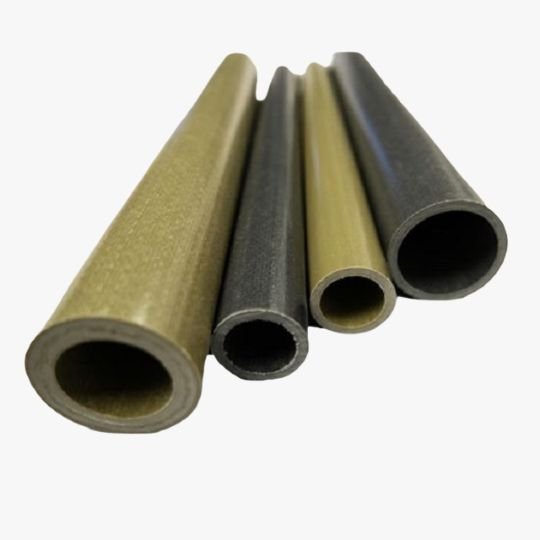
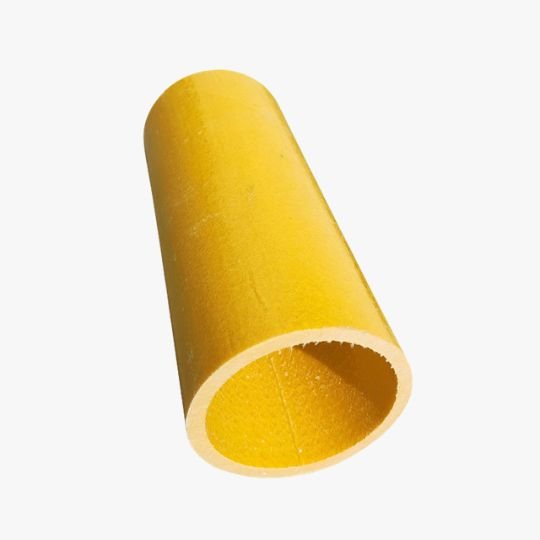
Why Choose Our FRP Epoxy Pipes?
- Strict ISO certification process, ensuring products meet international quality standards.
- Each batch of pipes undergoes strength and sealing tests to ensure the safety of your industrial project.
- A technical guidance team with over 10 years of experience, providing personalized plans based on your product and environment.
- Establish a materials research and development center, actively explore optimization solutions for resin materials.
Reliable FRP Epoxy Pipe Manufacturer in China
As an experienced FRP epoxy pipe manufacturer in China, we specialize in providing high-strength and corrosion-resistant FRP epoxy pipes. Our Chinese factory covers over 30,000 square meters and integrates design, production, and installation. We offer flexible customization for your special needs and provide rapid technical support during the construction of your project.
Classification of FRP Epoxy Pipes
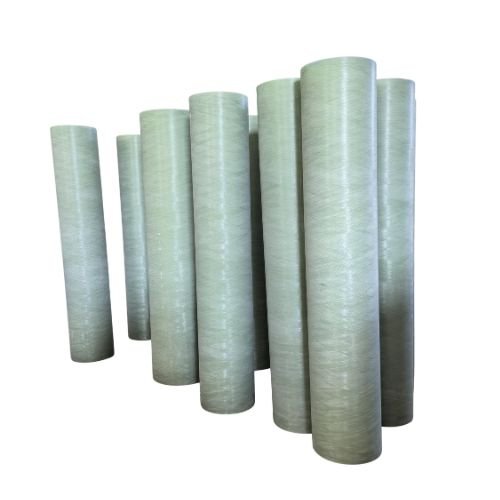
It uses a fixed-length mold to make standard-length FRP epoxy pipes. The FRP epoxy pipes manufactured by the fixed-length winding process have standardized lengths and are commonly used in customized designs and pipes with specific specifications.
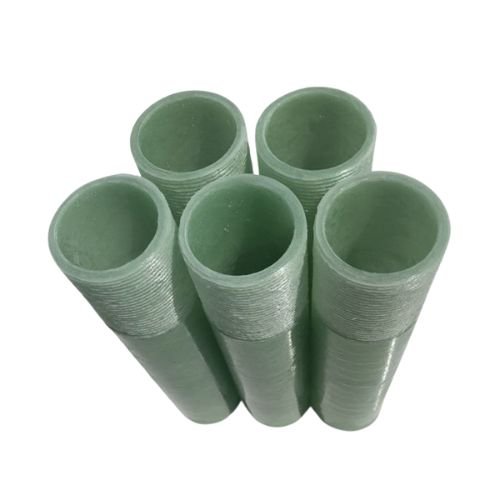
It uses continuously rotating core molds to produce FRP epoxy pipes, which achieve larger diameters and longer lengths, and are often used in large-scale industrial projects and long-distance transmission.
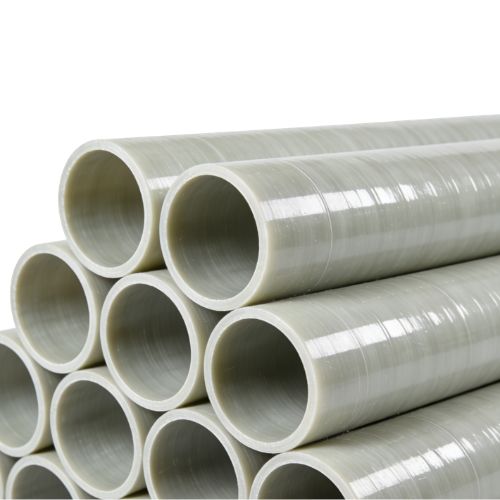
Using centrifugal force to firmly press the resin material and glass fibers against the inner wall, forming a dense pipe wall. It creates FRP epoxy pipes with no excess air or moisture inside. They are used for the transportation of high-end chemical materials.
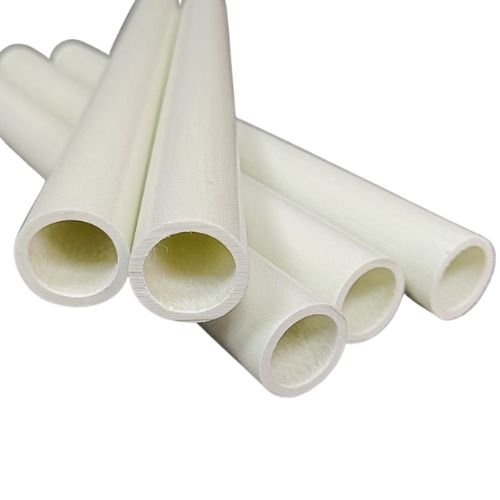
The glass fibers of FRP epoxy pipes are pulled out and arranged along the axial direction of the pipe, so they can withstand high-intensity axial tensile forces. Since it has a fixed-size cross-section, it is mainly used for manufacturing pipes with a fixed cross-section.
Features of FRP Epoxy Pipes

The epoxy resin matrix of FRP epoxy pipes effectively resists acids, alkalis, salts, and organic solvents. Its smooth inner wall prevents the formation of dirt clumps that cause corrosion and leakage, and ensures your product’s safety while avoiding downtime failures.

The FRP epoxy pipes with UV protection formula can resist outdoor sunlight for a long time, prevent resin decomposition, and keep a smooth appearance. This saves your cost of frequent maintenance.

The resin matrix and glass fibers can withstand temperatures above 120℃, and can maintain mechanical strength even during construction and operation in high-temperature environments. This avoids the paralysis risk caused by traditional pipes softening and deforming under high temperatures.

Its specific strength is four times that of conventional metal pipes, and its tensile strength is 30%-50% higher than that of polyester fiberglass. This means that FRP epoxy pipes achieve higher strength with a lighter weight. It significantly reduces the requirements for your building support system, saving your structural costs.

The inner epoxy resin material has a high molecular chain structure and can effectively resist scratches and wear. After the Taber abrasion test, the degree of wear on the inner wall of the epoxy glass fiber pipe was much less than that of other material pipes. The maintenance costs and material losses caused by leakage are much lower than those of carbon steel pipes.

The volume resistivity of FRP epoxy pipes is ≥ 10¹⁴ Ω·cm. They can be installed without the need for cathodic protection and insulated joints and are ideal for use in areas with high current density, such as substations and rail transit systems.
Outstanding Corrosion Resistance, Fundamentally Avoiding Leakage
Leakage caused by pipe corrosion easily causes material loss and safety accidents. Our FRP epoxy pipes have stable chemical properties. The winding process optimizes the inner physical structure to prevent the penetration of external liquids and cracking caused by stress, maintaining the corrosion resistance.
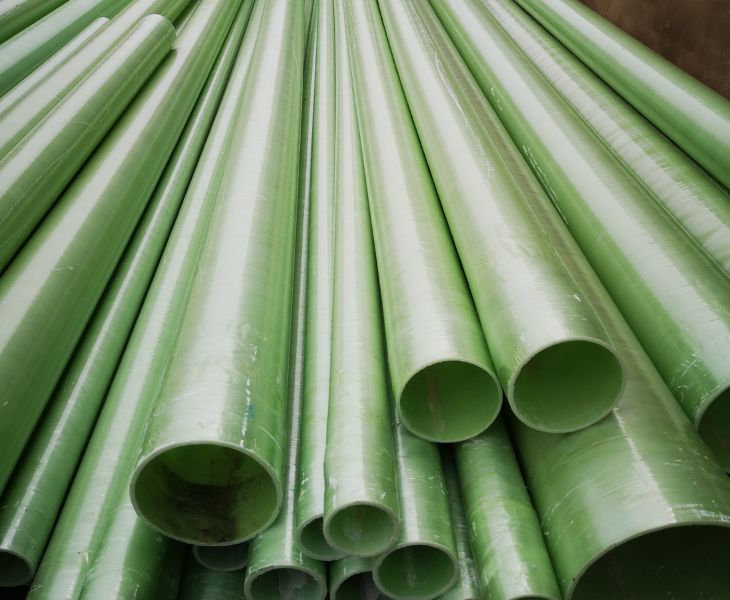
Lightweight and High-Strength, Significantly Reducing Costs
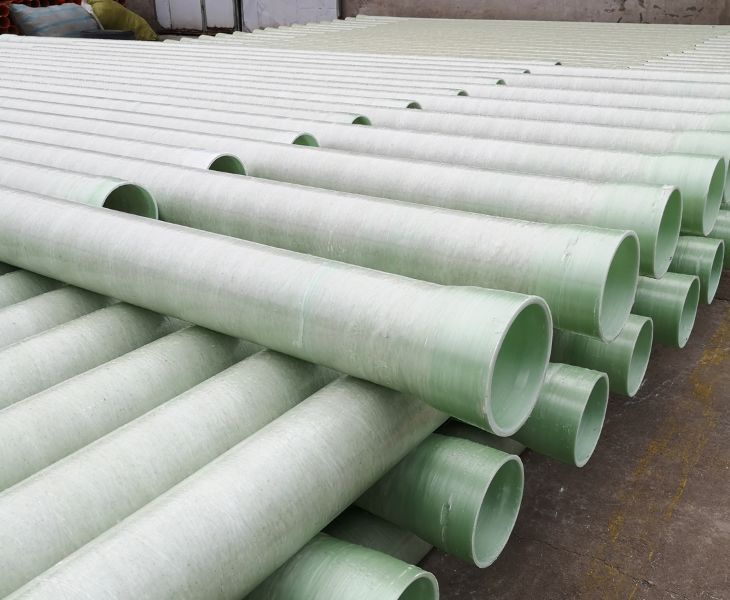
The transportation and installation of heavy pipes often require heavy equipment, which easily leads to budget overrun and project delay. Our epoxy fiberglass pipes combine light self-weight and high strength, providing you with cost optimization throughout the entire project, including cost and time reduction in transportation and installation.
Applications of FRP Epoxy Pipes

Its excellent corrosion resistance and sealing performance can withstand high concentrations of chemical media. Therefore, it is often used for transporting industrial wastewater and process materials, ensuring the long-term stable operation of the pipeline.

Its excellent insulation properties prevent interference between cables, and it is often used in high-voltage cable protection conduits. Its high mechanical strength and wear resistance prevent the wear of the pipe wall by materials, and also used in ash and slag transportation pipelines and scrubber system slurry pipelines.

The chemical properties of FRP epoxy pipes are stable and can resist the invasion of seawater and sea fog. Therefore, they are often used in seawater desalination plant pipelines, ship pipelines, and water supply pipelines for offshore platforms.

The inner wall of FRP epoxy pipes is smooth and not prone to grow bacteria and algae. Its high mechanical strength and corrosion resistance can also withstand frequent cleaning and disinfection to meet food hygiene standards. It is commonly used in the process pipelines of food and beer.
FRP epoxy pipes have higher strength, heat resistance and corrosion resistance. Plastic materials such as PVC and PP have lower mechanical strength and are easy to creep under large loads. Metal pipes have weaker corrosion resistance than FRP epoxy pipes in specific chemical environments, and are easy to pitting and cracking. FRP epoxy pipes offer mechanical strength close to metal pipes and excellent performance.
We conduct full-scale monitoring from the warehousing of raw materials to the automated production to facilitate reverse traceability.
Before each batch of products leaves the factory, we conduct quality inspections, including pressure tests, sealing tests, and hardness tests.
Winding molding and centrifugal casting are both manufacturing processes for FRP epoxy pipes, but the finished pipes have different properties.
In the winding molding process, the glass fibers are evenly wound at different angles in the circumferential and axial directions on the core mold, so it is very suitable for pressure-bearing pipeline systems.
In the centrifugal casting process, the fiber orientation is mainly in the circumferential direction, so it is more suitable for large-diameter drainage pipes.
The support spacing for pipes varies depending on different specifications, usually in 3-6m. During installation, flexible pipe clamps need to be used to accommodate the expansion and contraction of the pipes. Moreover, sharp objects should be avoided to prevent scratching the outer surface during installation.
Our FRP epoxy pipes have strong anti-corrosion properties themselves. The FRP epoxy pipes buried underground need to deal with the corrosion from soil and groundwater. Therefore, we will add a waterproof coating on the surface.
What Is An FRP Epoxy Pipe?
FRP epoxy pipe is a composite material made of epoxy resin and glass fibers. It has excellent properties and is widely used in various industrial fields. This article will introduce the core performance of FRP epoxy pipes and help you make a rational purchasing decision.
Initial Procurement Cost
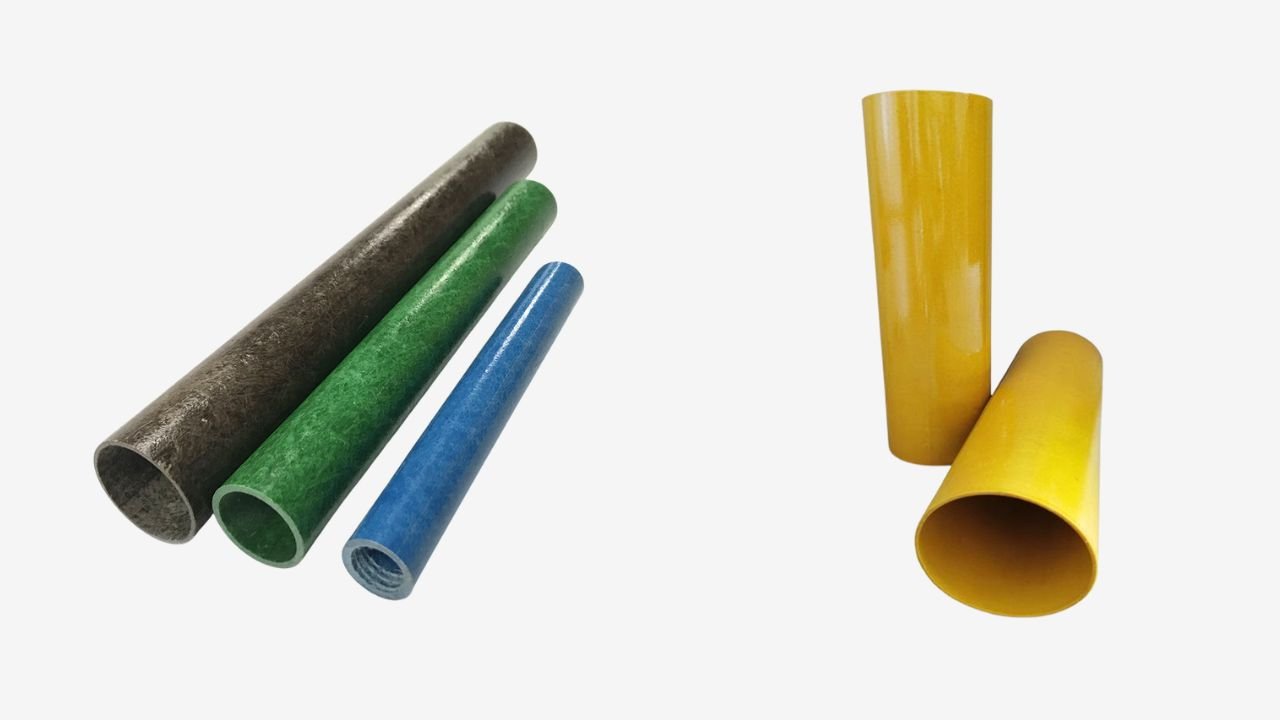
The material cost of FRP epoxy pipes is high compared to other pipes. The manufacturing processes such as winding and curing are complex, requiring more advanced equipment and skilled technicians. As a result, their initial purchase cost is significantly higher than other types of glass fiber pipes.
Installation Cost
However, during installation, the light self-weight of FRP epoxy pipes makes the installation more convenient. It only requires small machinery or manual labor to transport and install. This results in a high installation efficiency for FRP epoxy pipes and reduces the total installation cost of the project. This advantage is particularly obvious in large-scale construction environments.
Operation and Maintenance Costs
FRP epoxy pipes have outstanding comprehensive properties, such as anti-corrosion performance, wear resistance, and high-temperature resistance. The operating and maintenance costs during long-term use are very low and can be almost ignored.
Although it has a high initial purchase cost, its installation cost and long-term operation cost are significantly lower compared to other materials. If your project has high requirements for pipeline performance and is ready for long-term use, FRP epoxy pipes are a more cost-effective choice.