
Why Choose Our FRP Reducer
- We precisely control the external diameter and outer surface to guarantee the ease of connection and installation, compliant with AISI standards.
- We feature project-level supply capability that can be delivered in batches in conjunction with large pipeline systems.
- We support customization on the basis of your drawings, pressure level, and medium environment.
- Each FRP reducer will undergo wall thickness testing and size re-inspection, guaranteeing stable loading capacity.
- We are familiar with overseas project standards and export procedures, and we adopt professional reinforced packaging.
Your Reliable FRP Reducer Supplier in China
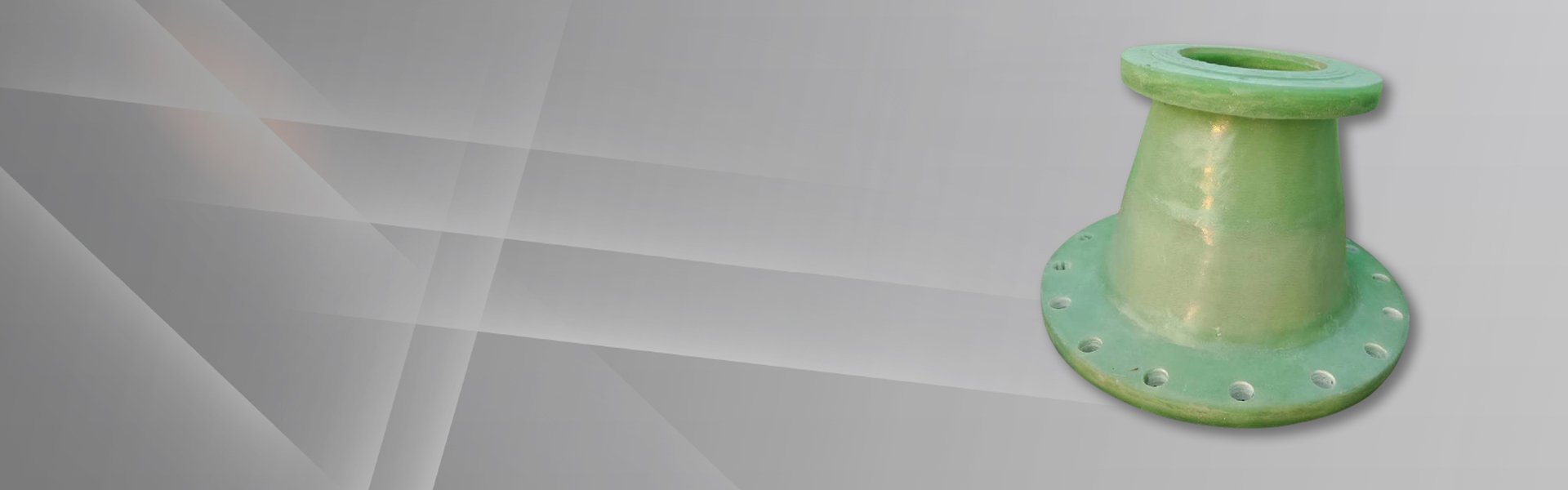
Our FRP Reducer is designed for connecting pipes of different diameters in industrial pipeline systems. It features a smooth transition structure, which can effectively reduce fluid impact and pressure loss. Through a multi-layer reinforcement structure and strict wall thickness control, it guarantees stable pressure-bearing performance and long-term reliability of use.
As a professional supplier of FRP reducers, we can customize the diameter, pressure rating, resin type, and connection method on the basis of your drawings or project parameters. We support engineering-level bulk supply and can quickly provide clear technical confirmation and quotation plans.
Our Product
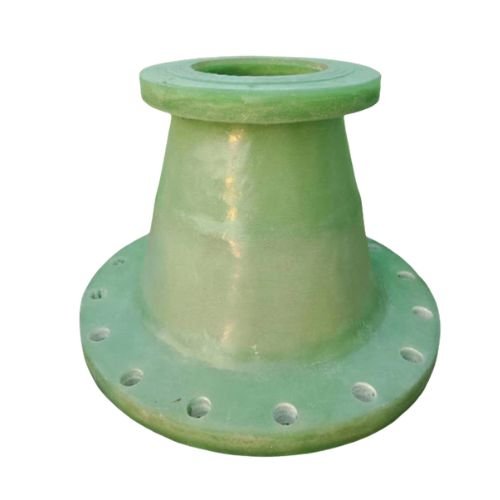
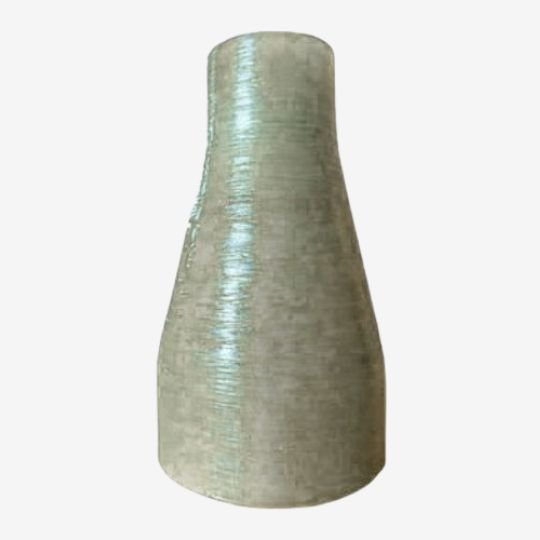
The center line keeps consistent, and its fluid flows very smoothly, which reduces pressure loss. It is suitable for riser pipes and conventional pipeline systems.
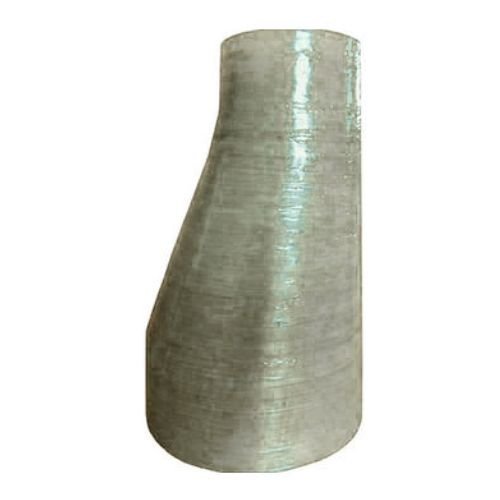
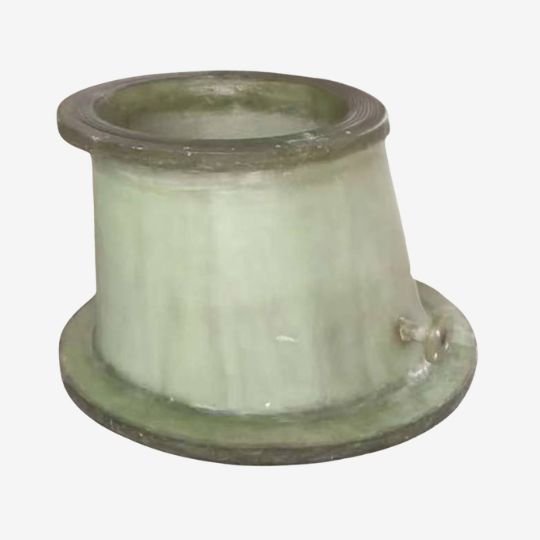
One side is kept horizontal to prevent the accumulation of gas or sediment, and it is suitable for horizontal pipelines and pump inlet systems.
Features of FRP Reducer

Using high-strength glass fiber and a multi-layered laminated structure, it can strengthen the pressure-bearing capacity and rigidity.

Equipped with a 150-level flat flange interface, it is easy to install and has a tight connection. It can match different industrial pipeline systems.

The surface is coated with a high-end protective layer, forming a smooth barrier. It lowers the influence of cavitation and improves corrosion resistance and service life.

Compact structure design is well-suited for installation environments with limited space, and it also facilitates construction in places with many pipes.

The structural design is conducive to lowering vibration and improving the fluid transition effect. It is suitable for pump inlets and pressure pipeline systems.

The flanges and connection parts have undergone galvanization treatment, which can resist oxidation and corrosion.
Optimize Fluid Transition and Protect the Pump System
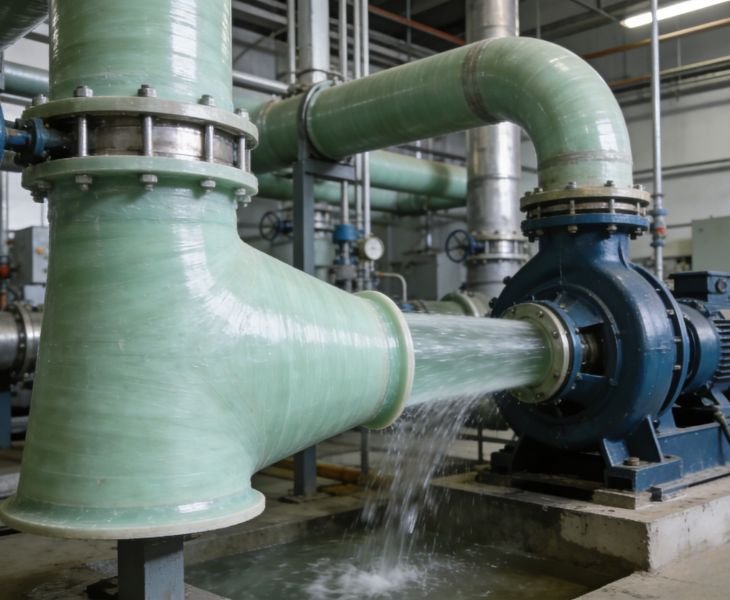
The reducer section is designed with a reasonable structure to accomplish a smooth connection between different pipe diameters. When fluid passes through, it can reduce turbulence, vibration, and pressure fluctuations. When used at the pump inlet or pressure pipeline, it can avoid cavitation formation and improve the hydraulic efficiency of the system. The stable flow state is conducive to extending the service life of the pump and its supporting equipment.
Compact Design and Professional Connection Method
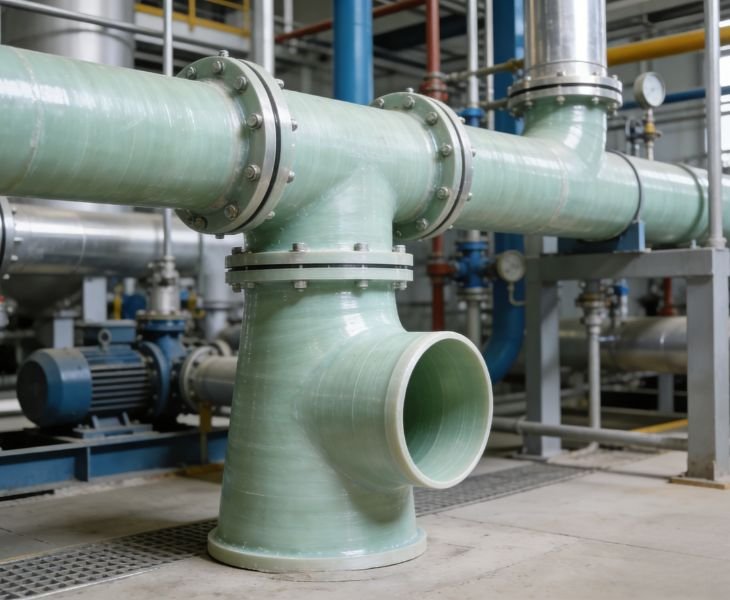
Our FRP reducer adopts a compact structure design, which is perfect for installation in places with many pipes. It can be equipped with 150-level flat flange connections and is compatible with PVC, carbon steel, and stainless steel pipeline systems. Our manufacturing process strictly controls the dimensional accuracy, which guarantees smooth on-site installation.
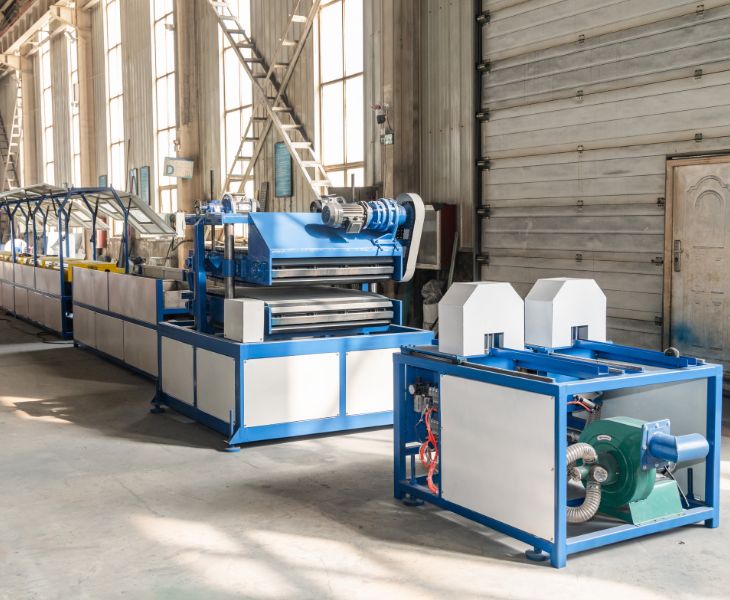
With Molds and A Stable Production System
We have independent mold development capabilities and a mature FRP production line, so we
can complete the mold-making and mass production of concentric or eccentric non-circular pipes. During the production process, we strictly control the order of glass fiber placement and resin ratio, which can guarantee uniform wall thickness and stable strength of each FRP reducer. Our own factory system lowers outsourcing risks, so the delivery time and quality will be more controllable.
Application of FRP Reducer

In pipelines of acids, bases, salts, and other corrosive media, FRP reducer can replace carbon steel or lined pipe fittings. Its multi-layered laminated structure features good corrosion resistance, and the surface protective layer can reduce chemical erosion and cavitation damage. So it is well-suited for connecting pipelines of reaction vessels, inlets and outlets of storage tanks, and process transportation systems.

At the inlet of the sewage lift pump, the aeration system, and the main pipeline line, the FRP reducer is used to accomplish a smooth transition between different diameters. Its eccentric structure can avoid gas accumulation or sediment deposition, so it can guarantee smooth system flow.

At the suction inlet of the pump or the pressure pipeline location, selecting a concentric or eccentric structure reasonably can reduce turbulence and pressure fluctuations. It also has a smooth inner wall and an optimized transition design, which are conducive to avoiding cavitation risks and improving the pump’s operating efficiency.

FRP materials have good resistance to salt fog and electrochemical corrosion. FRP reducer can keep structural stability in high-salt environments and reduce replacements. So it is always used in seawater transportation pipelines and cooling water systems.

In the circulating water system, desulfurization and denitrification pipelines, and cooling systems, the FRP reducer offers reliable pressure-bearing connections. The stable wall thickness control and flange connection method can guarantee safe operation for a long time.
Concentric FRP reducers have the same center lines at both ends, and they are perfect for vertical pipes or pipeline systems with no special requirements for fluid distribution. Eccentric FRP reducers keep horizontal on one side, which can prevent gas or sediment from accumulating, so they are always used at pump inlets or horizontal pipes, optimizing fluid transition.
FRP Reducer is usually designed to withstand pressures ranging from 0.6 to 2.5 MPa, and it can also be customized according to your needs. The wall thickness is uniform and undergoes strict process control to guarantee stable pressure-bearing performance during a long period of operation.
In terms of corrosion resistance, FRP reducer outperforms carbon steel and some stainless steel pipe fittings, which are well-suited for environments with seawater or high humidity. But compared to steel pipes, it does not need extra anti-corrosion coatings and has lower maintenance costs.
The FRP Reducer is equipped with standard flanges or welding interfaces, and is compatible with PVC, carbon steel, and stainless steel pipeline systems. It is easy to install and guarantees sealing performance and stable pipes.
The FRP Reducer is manufactured using hand lay-up or winding processes. The glass fiber layers and resin are layered in the prescribed ratio, and after curing and surface treatment, it forms a high-strength, corrosion-resistant pipe fitting. During the manufacturing process, the wall thickness and dimensions are strictly controlled, which can guarantee that the pressure-bearing and fluid performance meet the standards.
How to Choose the Right FRP Reducer?
When choosing the right FRP reducer, you should consider the material, fluid, pressure, installation environment, and project requirements.
Resin Selection and Pipeline Environment
Select the proper resin based on the type of medium being transported by the pipeline and the working environment.
- Meta-phenyl type resin suits general acid and alkali environments
- Vinyl ester resin is suitable for highly corrosive media
- Epoxy resin is suitable for high-strength or high-temperature scenarios.
Correct resin can guarantee that the FRP reducer pipe can resist corrosion for a long time in chemical, water treatment, seawater, or sewage systems.
Pressure-Bearing Capacity and Wall Thickness Control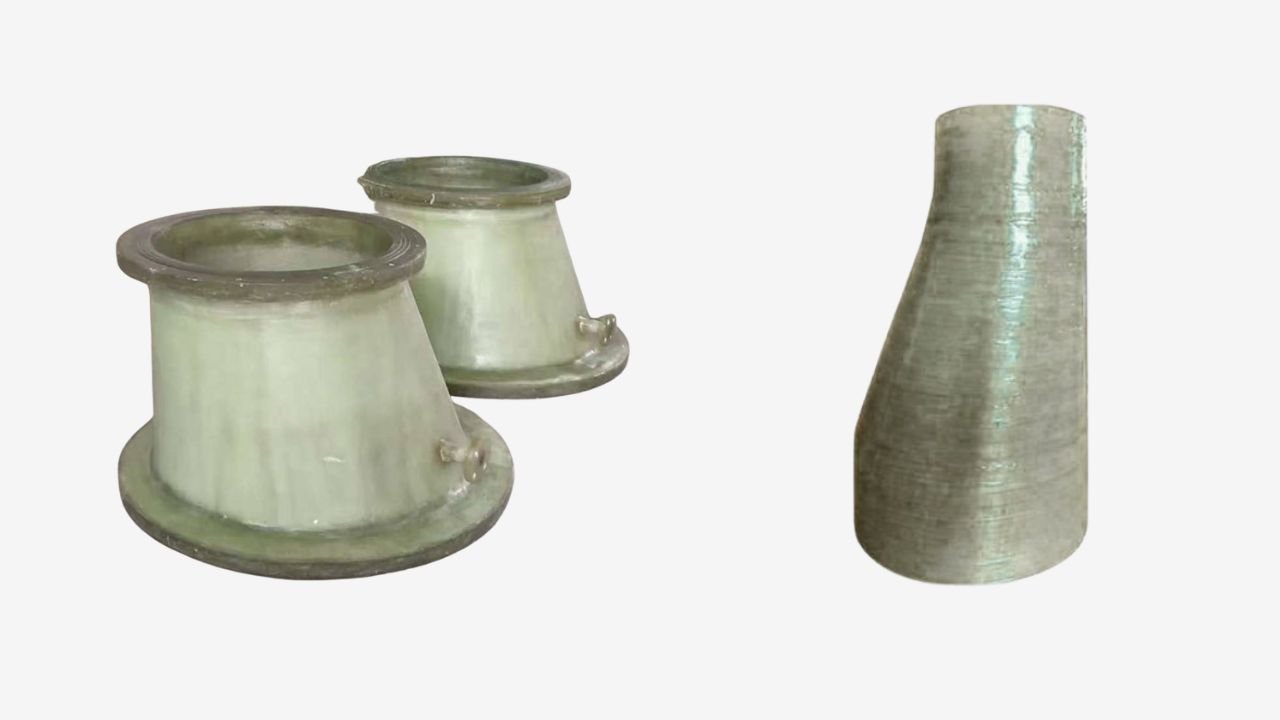
The pressure-bearing capacity of the FRP reducer should match the pressure of the pipeline system. High-quality products use multi-layer glass fiber layup and strict wall thickness control, which can guarantee no deformation or cracking under long-term operation and periodic pressure fluctuations. For pump systems or high-pressure pipelines, the design of high-quality wall thickness can lower the occurrence rate of accidents.
Size Specifications and Interface Compatibility
You need to verify that the diameter, length, flange grade, and welding interface of the reducer match the piping system. FRP Reducer is usually compatible with PVC, carbon steel, or stainless steel pipes and fittings, ensuring convenient on-site installation, reliable sealing, and reducing construction adjustments and leaks.
Fluid Dynamics and Cavitation Prevention Design
You should choose FRP Reducers with smooth inner walls and smooth transitions, which can reduce pressure fluctuations, avoiding cavitation at the pump suction end, and extend the service life of pumps and pipeline equipment.
Project Supply and After-Sales Assurance
Selecting suppliers with stable production capacity and experience in bulk supply will guarantee a stable delivery schedule. Quality manufacturers usually offer warranties and technical support.