
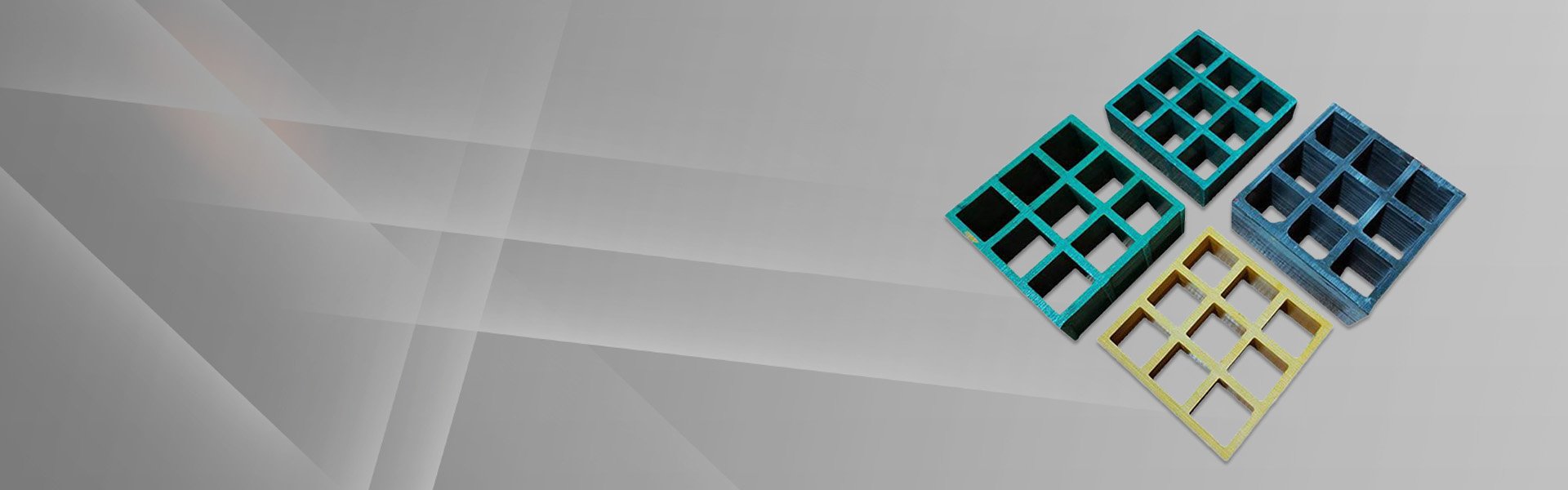
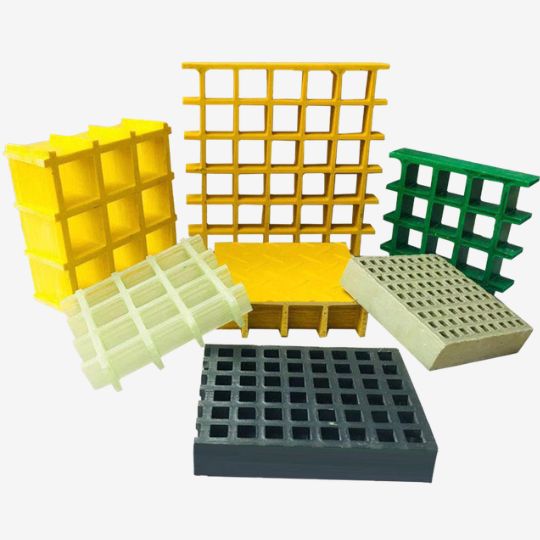
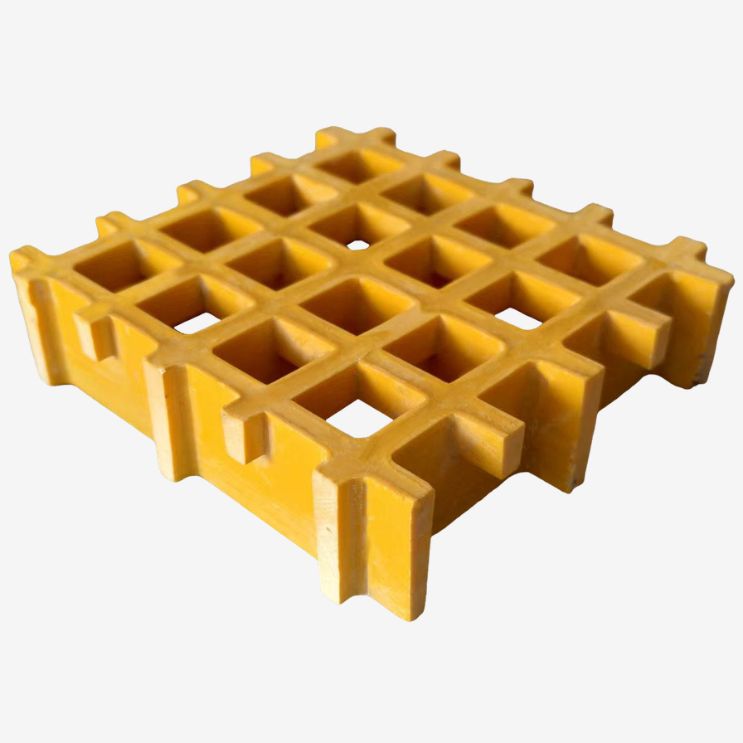
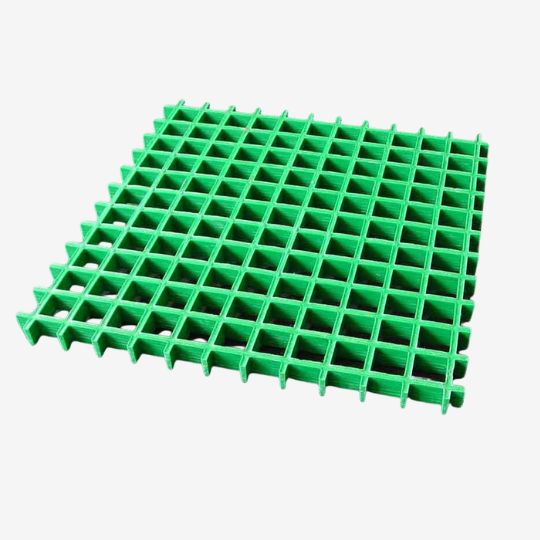
Why Our Heavy Duty FRP Grating?
Heavy Duty FRP Grating – Industrial Heavy Duty Platforms and High Load Access Solutions
- With 130 employees and long-term cooperation with more than ten research institutes and colleges and universities, it ensures the ability of product development and customization.
- All heavy duty FRP grating is made of high quality glass fiber and high quality resin composite, the glass fiber content is more than 30%, to ensure light weight and high strength.
- Widely used in chemical plants, wastewater treatment, ports and industrial platforms, we have accumulated years of experience in heavy duty scenario solutions.
- Provide size, thickness, surface anti-slip type and resin selection customized according to your needs to meet special load or environmental requirements.
- Provide on-site installation guidance and technical support, easy maintenance, service life of more than 20 years, low long-term operation and maintenance costs.
Your Heavy Duty FRP Grating Solution for High-Load Industrial Platforms
Heavy Duty FRP Grating is mainly used in industrial environments that need to withstand high loads for a long time and have corrosion, humidity or safety requirements. With over 30,000 square meters of production space and proven molding processes, we control the resin formulation, fiberglass content, and grating structure so that Heavy Duty FRP Grating maintains stable load carrying and deformation resistance even under high load conditions.
Our Heavy Duty FRP Grating is widely used in the chemical industry, municipal wastewater treatment and various industrial platforms, which have strict requirements for corrosion resistance, flame retardancy and structural reliability. With a rational choice of m-phenyl, vinyl or phenolic resins, we can provide the most suitable solution for different media and temperature conditions.
During the installation phase, we help you reduce the risk of rework and maintenance by giving laying and fixing recommendations based on the support span, installation method and frequency of use. This means a more controlled project cycle, lower overall costs and a product that is stable for more than 20 years.
Our Heavy Duty FRP Grating Types
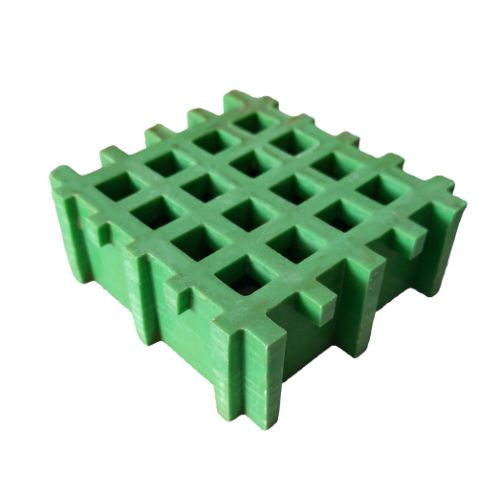
Integral molding, suitable for high load bearing industrial platforms, corrosion resistance and uniform and stable load bearing.
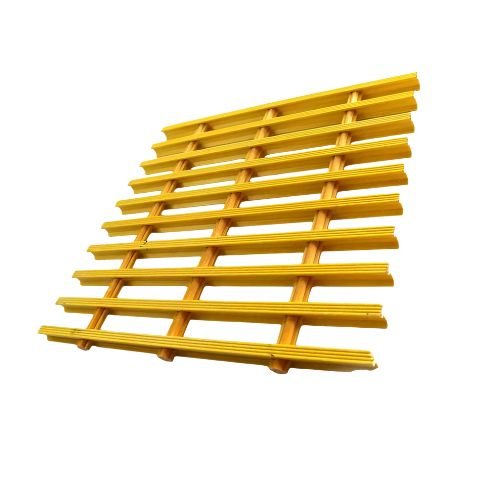
Continuous arrangement of fibers, high strength, suitable for large spans and continuous load applications.
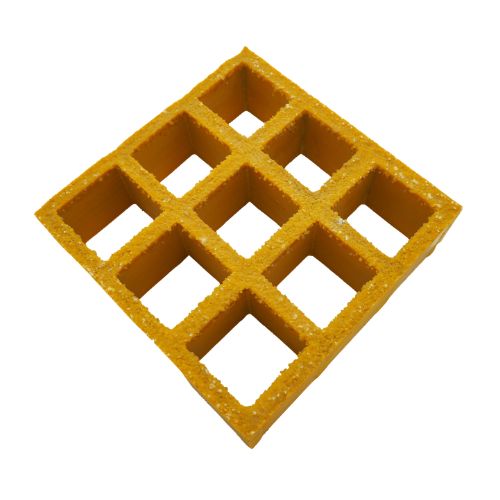
Sanded or textured design ensures safety for operators and vehicles.
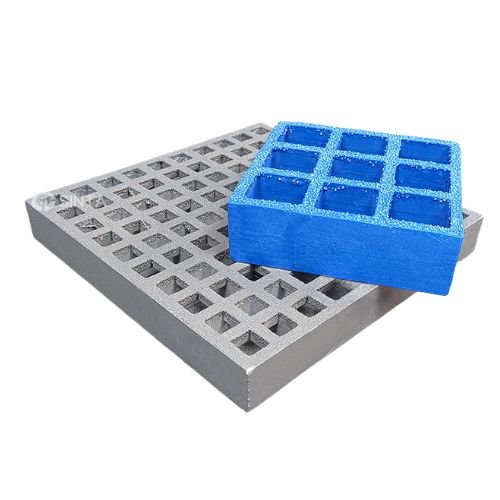
Well-drained and breathable, suitable for chemical, wastewater treatment and outdoor platforms.
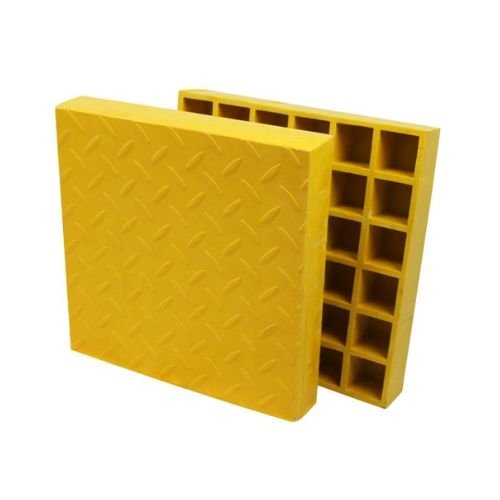
Drip-proof and gas-proof, suitable for special chemical or laboratory environments.
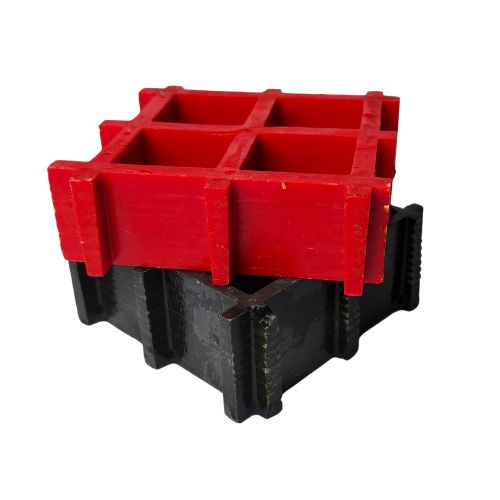
Can be used in 100~180℃ high temperature environments for a long time, suitable for industrial furnace areas or steam environments.
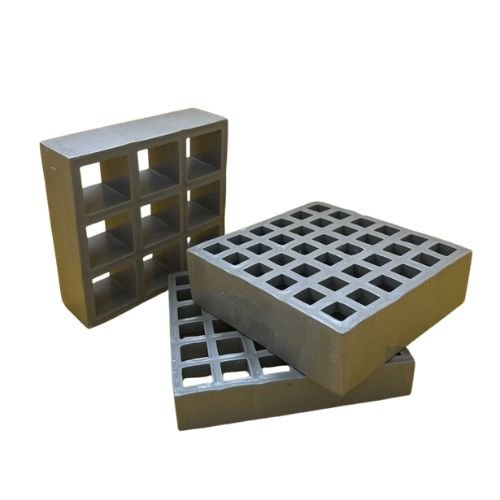
Can be customized according to the support span, load demand and site conditions.
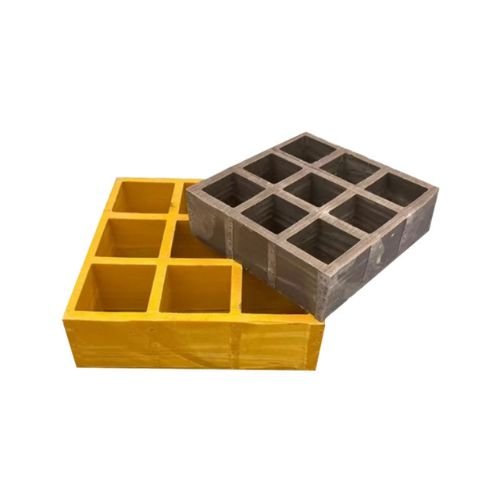
Meets ASTM standards for fire retardancy and is suitable for high fire risk industrial platforms.
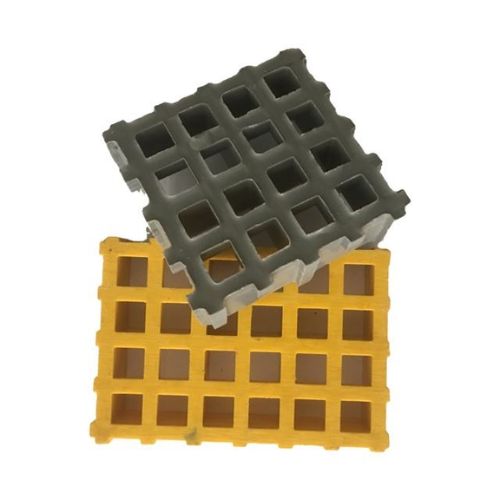
Non-conductive design for electrical, substation and high voltage work platforms.
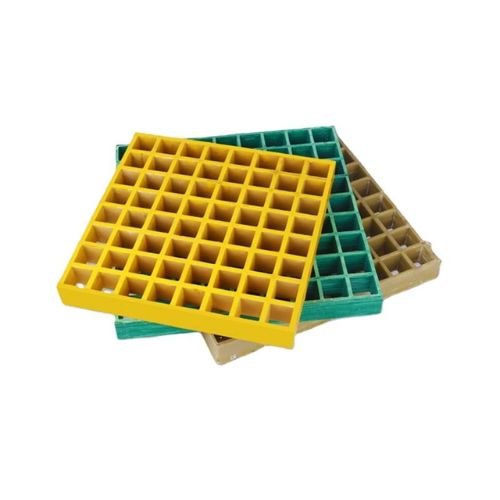
Optimal resin and fiber combinations can be selected based on corrosive media and environmental conditions for increased durability.
Features of Heavy Duty FRP Grating
Our Heavy Duty FRP Grating provides a long term high load solution for complex environments such as chemical, wastewater treatment, ports and industrial platforms, which reduces installation and maintenance costs, while ensuring safe and reliable use.

Can withstand the continuous passage of heavy machinery and vehicles, structurally stable, suitable for high-density load platforms.

Resistant to acids, alkalis, salt water and chemical solvents, suitable for corrosive industrial environments, with a service life of up to 20 years.

A variety of anti-slip surfaces are available to ensure operator and vehicle safety.

Approximately 1/4 lighter than steel for faster installation and construction, reducing labor and equipment costs.

High-quality resin and fiberglass combine to resist aging and UV rays to maintain performance and appearance over time.

Utilizes a flame retardant resin system that meets ASTM standards to retard combustion under high temperature ignition sources, enhancing safety.

Can be customized in size, thickness and resin type to meet project-specific requirements based on span, load and environmental conditions.

is easy to clean and does not require complicated daily maintenance, ensuring continuous safe use.
High Load Carrying Capacity
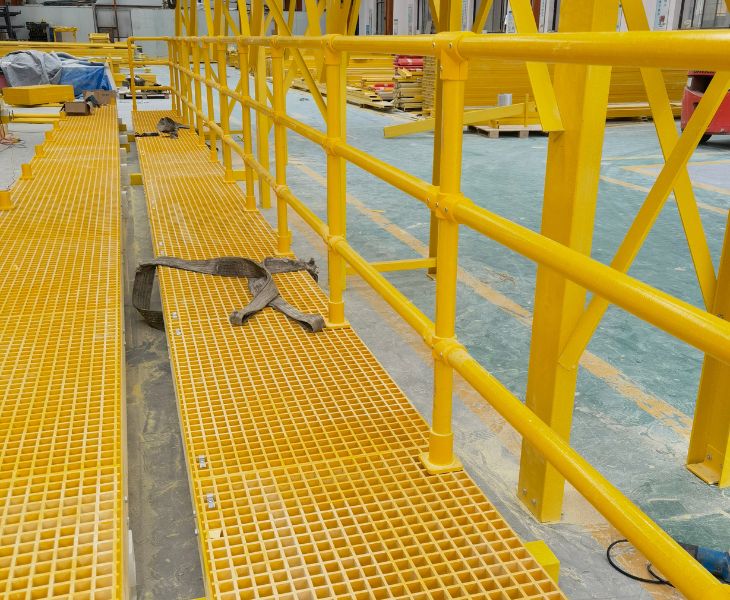
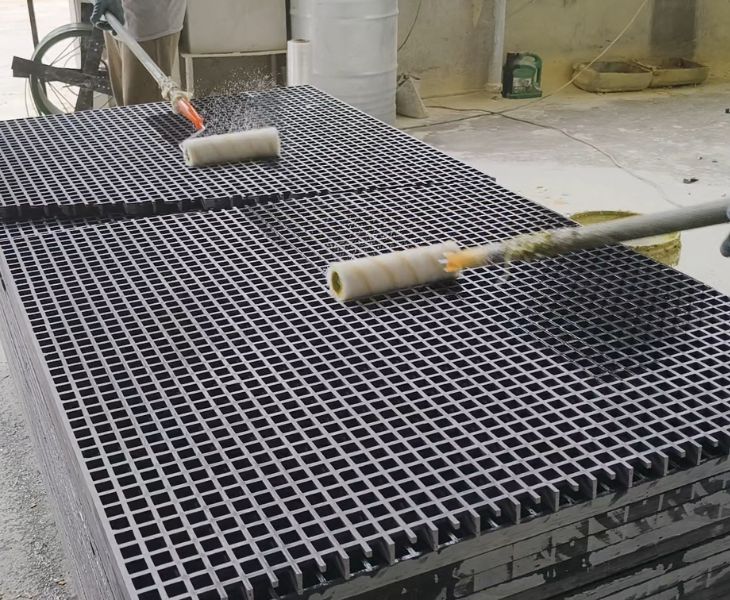
Our Heavy Duty FRP grating uses high-density alkali-free glass fibers and premium resins that are precisely controlled by a molding process that precisely controls fiber alignment and resin curing. This ensures that the grating remains structurally stable when subjected to heavy loads over long periods of time. Field tests have shown that a standard 38 mm thick Heavy Duty Grating can withstand a uniform load of 5 kN/m² and deflect within safety standards, even when carrying vehicles and equipment continuously on industrial platforms.
Long-Term Cost-Effectiveness
Our Heavy Duty FRP grating is made from m-phenyl, vinyl or phenolic resins with continuously drawn glass fibers, making the product corrosion-, age- and UV-resistant. Based on experience in chemical and wastewater treatment plants over the past 10 years, the average service life of this grating is over 20 years, whereas conventional steel grating typically needs to be rust-proofed or replaced every 3-5 years in similar environments.
Customizable To Meet Project Needs
Every industrial project has different support spans, load types and chemical environments. We can customize the size, thickness, resin type and surface form of the grating to meet your needs. Combined with on-site structural and load calculations, we provide you with recommendations for installation clearances, fixing fixtures and spans. We have supplied bespoke heavy duty platform gratings to a number of port terminals, sewage treatment plants and chemical plants, designed and installed to site conditions. This means that construction risks can be reduced and your project can go live without a hitch.
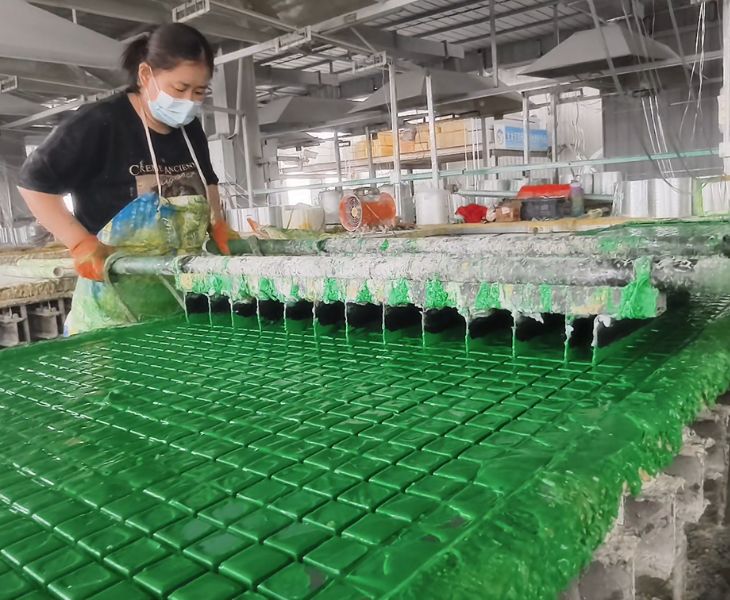
Heavy Duty FRP Grating for Safe, High-Load Industrial Access
Heavy Duty FRP grating is primarily used for industrial platforms and walkways in environments that require high load-bearing capacity, corrosion resistance and operational safety. It provides reliable long-term support for a wide range of industries, keeping equipment functioning properly while ensuring safe passage for personnel.

Platforms and walkways in chemical and petrochemical plants are often exposed to acids, alkalis, and a variety of organic solvents. Heavy Duty FRP grating is available in a choice of phenolic, polyester, or vinyl ester resins depending on the specific environment, and can therefore be used for long periods of time in common acid and alkali solutions (pH 2-12) and organic solvents. organic solvents. It maintains corrosion resistance for 10-20 years, while retaining sufficient load-bearing capacity to eliminate the need for frequent replacement or additional corrosion protection.

Gutter covers and operating platforms at wastewater treatment plants are often in contact with sewage or chemical cleaners. Heavy Duty FRP grating is constructed with moisture-resistant resins and continuous fiberglass reinforcement, and loses less than 5 percent of its strength even after prolonged submersion in water or humid environments.

Ports, docks and marine facilities need to carry lifting equipment, forklifts and containers that are exposed to salt water for long periods of time. Heavy Duty FRP Grating is constructed with salt spray-resistant resins and fiberglass reinforcement for 15 to 20 years of continuous use in marine environments without corrosion. Heavy-duty FRP grating is made of salt spray resistant resin and fiberglass reinforced structure, which can be used continuously in the marine environment for 15-20 years without corrosion. It has a stable load-bearing capacity that ensures safe operation even under heavy loads and improves the efficiency of port operations.

Factory floor and production line platforms are required to carry heavy machinery and frequent passage of personnel. Heavy Duty FRP Grating can be customized in thickness and size according to the weight and span of the equipment, with a bending strength of up to 60-120 MPa and a stable load-bearing capacity, ensuring operational safety while reducing production downtime.

Substations and industrial power platforms need to carry cables, equipment, and operators while requiring safe insulation. Heavy Duty FRP Grating uses non-conductive resins with a dielectric strength of ≥20 kV/cm, which allows it to carry high loads on equipment and operators while ensuring electrical safety, reducing the risk of accidents, and ensuring the long-term stability of the facility.
Heavy Duty FRP grating can be used in high-temperature industrial environments, but only within the material’s allowable temperature range. Typical industrial grade Heavy Duty FRP grating will not exceed 80°C for long term use and can withstand short periods of time approaching 100°C. FRP is not suitable for placement directly adjacent to sources of sustained intense heat such as boiler exteriors, above exposed high temperature steam piping, or heat treating furnace outlets, where temperatures may exceed the resin’s tolerance limits. For temperature controlled, wet or corrosive areas such as boiler room access roads or equipment peripheral operating platforms, Heavy Duty FRP grating requires no corrosion protection coating, is low maintenance and is suitable for long term use.
Heavy Duty FRP grating supports on-site cutting and secondary processing without the need for specialized heavy equipment. Hand-held chainsaws, circular saws or angle grinders with carbide or diamond blades do the job.
FRP contains no metal, no sparks, and no heat distortion, making it suitable for plant environments with explosion-proof or flammable requirements. Simple sealing after cutting is all that is required to meet structural and operational safety requirements.
Heavy Duty FRP grating is designed for long-term outdoor use. By adding UV stabilizers to the resin and using a resin-rich layer or UV-resistant surface treatment, UV aging is effectively retarded.
In normal outdoor environments, the mechanical properties do not deteriorate significantly in a short period of time. In practical applications, it is more common to see slight changes in surface color, but without affecting the load-bearing capacity and structural safety. Compared to steel grating, which requires repeated descaling and recoating, FRP requires less frequent outdoor maintenance and is more suitable for long-term use.
Pultruded grating is more suitable if the main requirements of the project are high loads, vehicle traffic or frequent equipment movement. Its continuous distribution of glass fibers in the direction of the load is better suited for long spans and well-defined load directions.
Molded heavy-duty grating is suitable for strong corrosive environments or multi-directional stress scenarios, such as chemical platforms or complex loading areas. It has a stable overall structure, uniform corrosion resistance and is more suitable for multi-directional loads.
When should I choose Heavy Duty FRP grating over regular FRP grating?
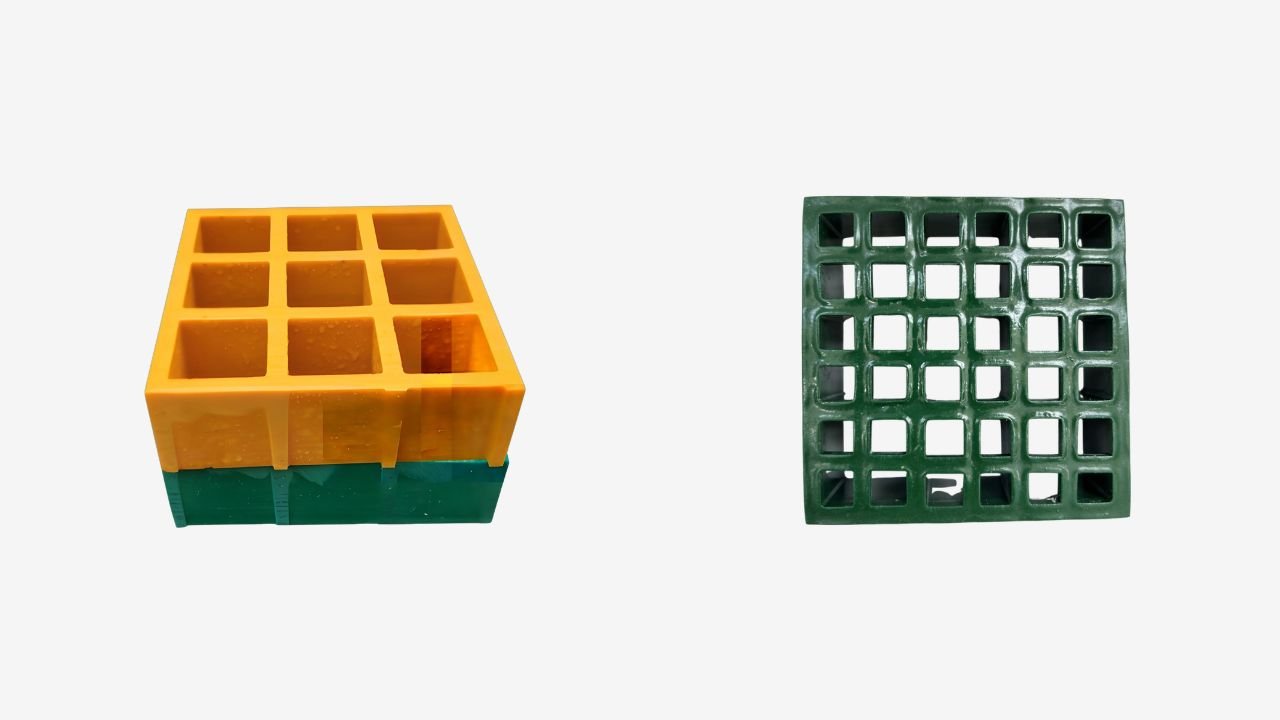
The choice of Heavy Duty rating for a FRP grating project depends primarily on whether the actual load requirements exceed the long-term safety capacity of a typical FRP grating.
If the grating is only used for personnel access or light equipment maintenance, the support span is less than 1.5 meters and the mean distribution load does not exceed 2 kN/m², ordinary FRP grating is usually sufficient. Under these conditions, the grating is subjected to uniform static loads and the structural stresses are relatively stable, so there is no need for additional costs.
Heavy Duty FRP grating is suitable for the following more demanding scenarios:
- Areas with high safety requirements such as aerial platforms, critical equipment access routes or continuous production systems; Areas with concentrated or moving loads, e.g. forklift trucks, maintenance vehicles, movable equipment or heavy pumping units, with single point loads up to 1-5 kN;
- Higher bending stresses on the grating itself, due to larger support spans (1.5-3 m) and inconveniently supported by additional steel beams;
- Long-term, highly loaded operation, with high demands on fatigue and structural Long-term high load operation with high demands on fatigue performance and structural stability, with a design service life of more than 20 years;
- Areas with high safety requirements, such as aerial platforms, critical equipment pathways or continuous production systems.
In these cases, even if ordinary FRP grating can carry the load at the initial stage, it may have problems such as increased deflection (more than 1/200 of the span), local fatigue or insufficient safety margins in long-term use, etc. Heavy Duty FRP grating ensures stable load carrying under long-term operation by increasing fiber content, optimizing structural design and strictly controlling the span.
Steel grating vs Heavy Duty FRP grating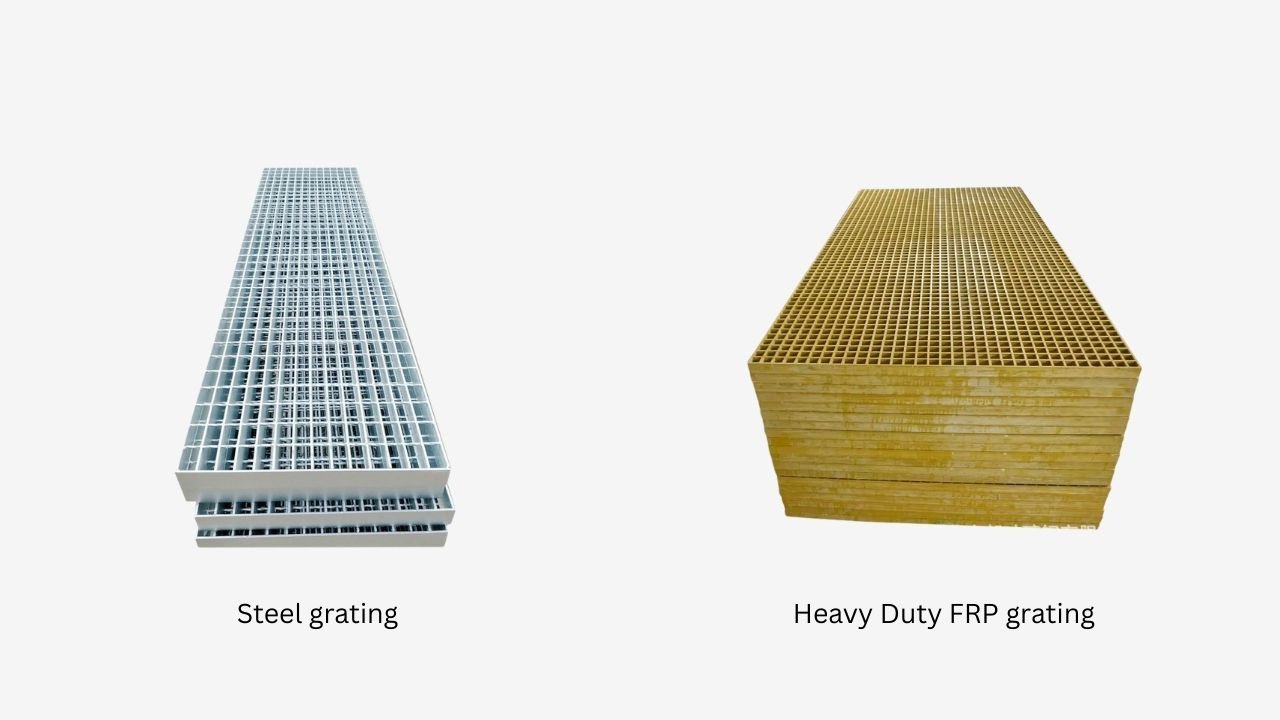
If you only focus on the purchase unit price, Heavy Duty FRP grating is usually more expensive than ordinary steel grating, which is the reason why many purchasing hesitation at the beginning. In practice, however, grating is a long-term structural component, and cost evaluation should be based on the entire life cycle.
In corrosive, wet or salt spray environments, the main cost of steel grating is often not in the material, but in the anti-corrosion coating, regular maintenance, rust removal, rework and replacement. These hidden costs are likely to exceed the initial purchase price as the service life increases, and are particularly evident in chemical, wastewater, offshore or coastal projects.
In contrast, the performance of Heavy Duty FRP grating is not dependent on coatings. It will not rust or flake and does not require periodic recoating within the temperature and load ranges allowed by the design. Routine maintenance is primarily structural inspections, not corrosion treatments, which significantly reduces long-term maintenance costs and downtime.
On a full life-cycle basis, in projects that are more corrosive, require long periods of continuous operation, or are more sensitive to maintenance costs, Heavy Duty FRP grating typically offsets its higher initial price compared to steel grating in 5 to 8 years through reduced maintenance and replacement costs.