
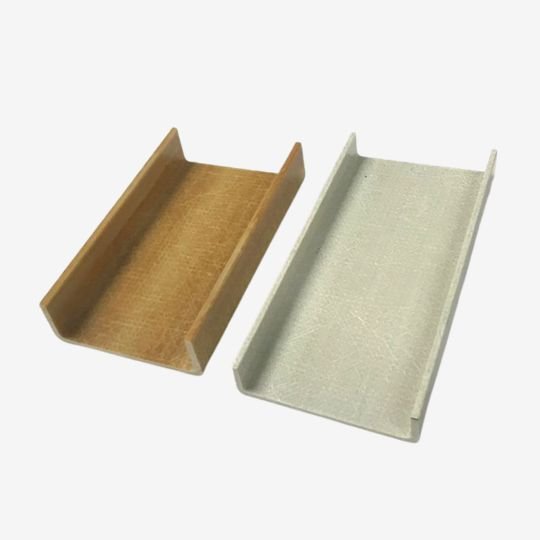
Why Choose Our FRP Profile
- Strict control of raw materials guarantees high stability of fiber content and predictable mechanical properties.
- Experienced engineers are responsible for customized configuration design, drawing review, and feasibility analysis.
- In addition to standard profiles, we also customize production of special profiles for specific projects.
- All our FRP profiles comply with the ISO EN 13706 standard.
- Our FRP profiles can be used for a long time in areas such as cooling towers, docks, and platforms.
- Direct factory supply offers highly competitive prices for large-scale orders and long-term projects.
Your Reliable FRP Profile Supplier in China
Our company is a modern enterprise that integrates the design, production, and sales of FRP profiles. All FRP profiles are manufactured using the continuous pultrusion process. The products possess excellent corrosion resistance, dimensional stability, and reliable mechanical strength. In highly corrosive environments, their non-conductive and low-maintenance characteristics effectively replace steel, aluminum, and wood. Moreover, we can customize FRP profiles according to different requirements.
Our Product
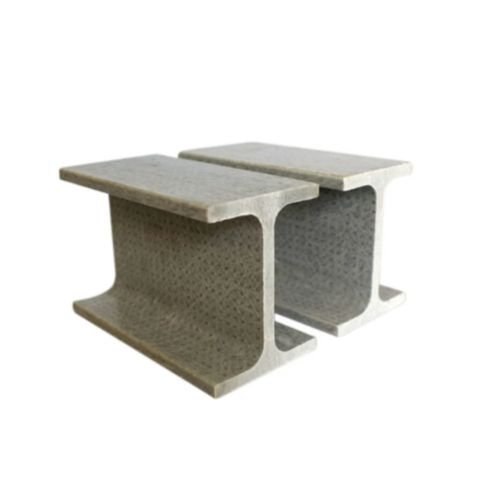
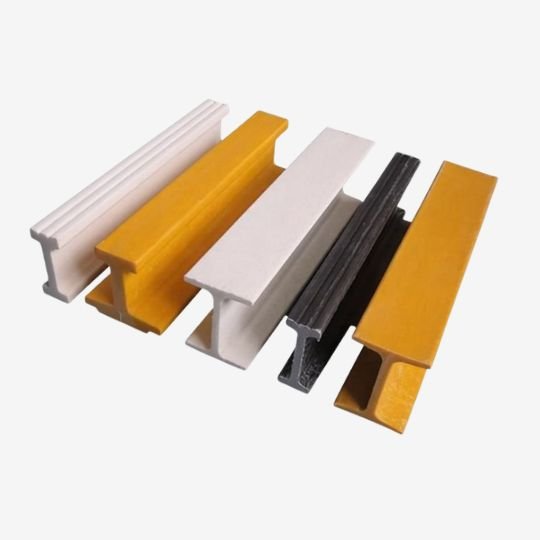
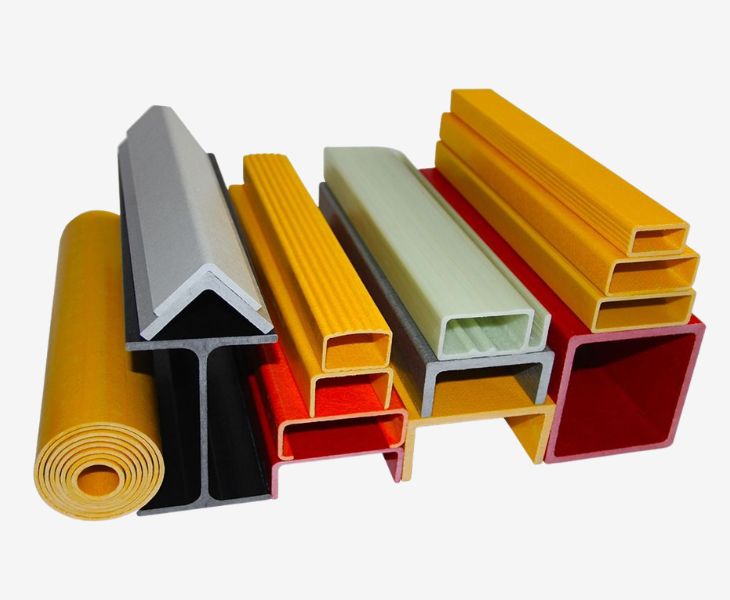
FRP I beams and H beams are manufactured through continuous pultrusion technology. They can be used as long-term alternatives to steel structures, so they will reduce the anti-corrosion maintenance, and are well-suited for platforms, walkways, and industrial support structures.
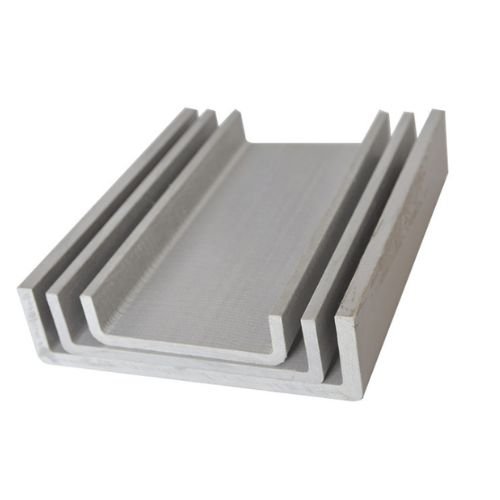
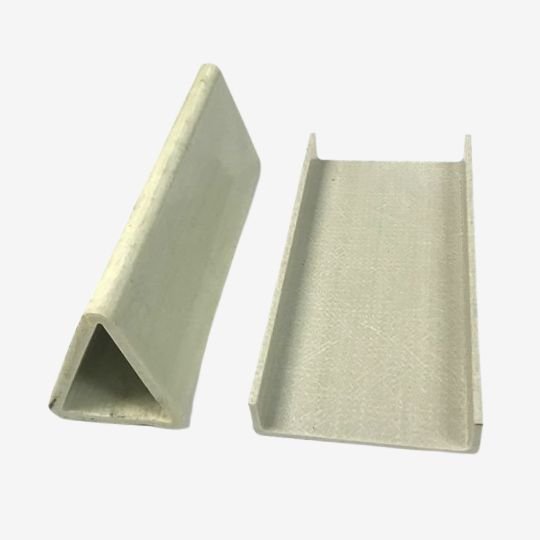
FRP channels are stable and have uniform sections, suitable for equipment supports, cable trays, and secondary load-bearing structures. Because they can be safely used in densely electric areas or corrosive environments.
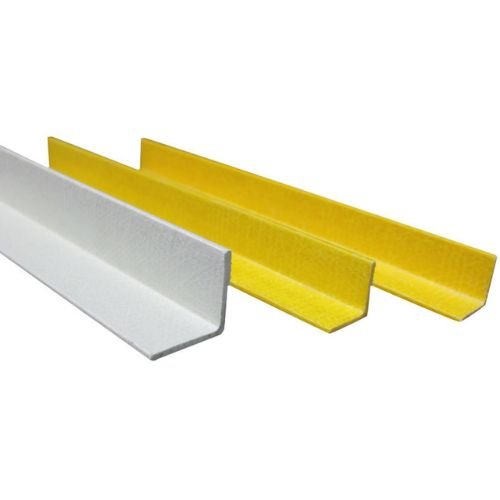
FRP angle steel is used for reinforcing frames, connecting structures, and auxiliary support systems. The product is lightweight, easy to install, highly corrosion-resistant, and has a very stable size, often being used in outdoor environments.
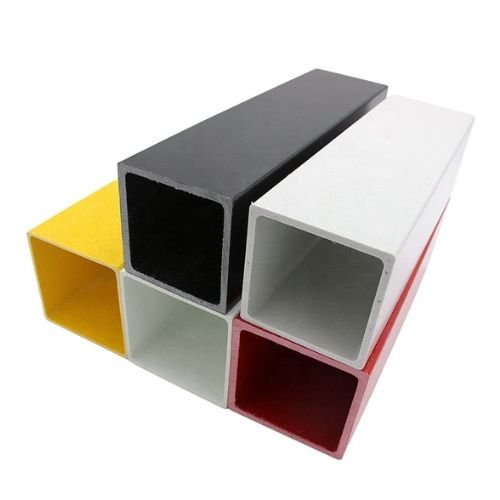
The FRP channel sections possess uniform structural strength, so they are well-suited for guardrails, fences, and equipment support systems, etc. Its lightweight design helps to cut transportation and installation expenses.
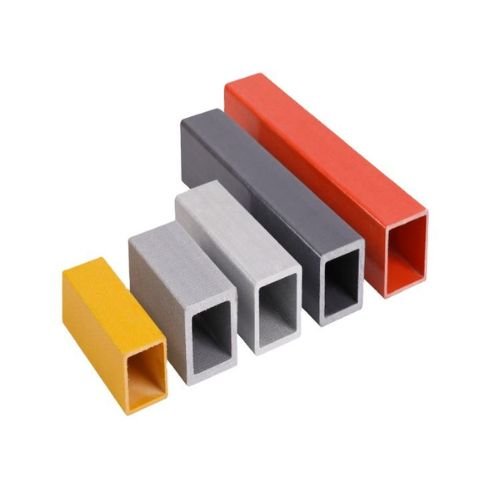
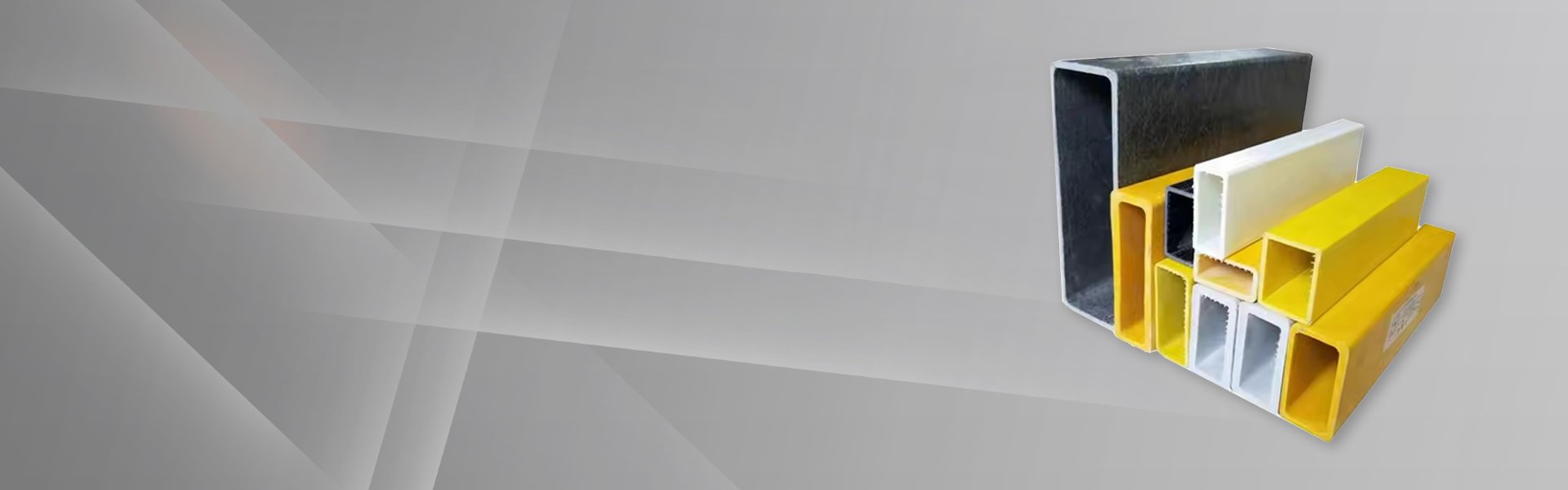
FRP rectangular tubes offer greater structural flexibility. This product has outstanding corrosion resistance and anti-aging properties, and is well-suited for engineering with special requirements for load-bearing direction and utility rate of space.
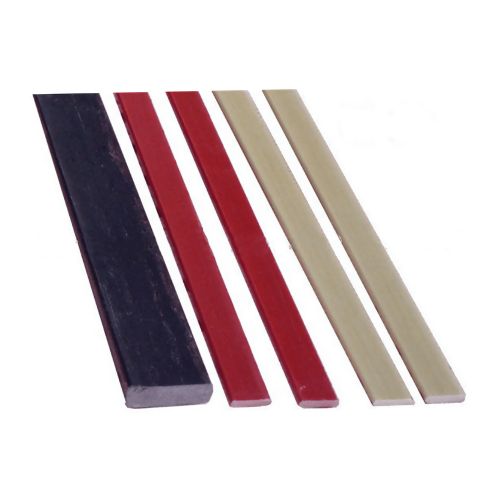
FRP strips and plates are used for connection, reinforcement, and covering of structures. It can be cut and processed on the basis of project needs and is well-suited for chemical platforms, walkways, and wastewater treatment facilities.
Features of FRP Profile

FRP profiles have excellent tensile and flexural strength and are extremely lightweight, enabling the construction of sturdy structures.

FRP profiles are manufactured from glass fiber reinforced polymers. Compared with conventional metal structures, they are more resistant to various adverse circumstances.

The continuous pultrusion process guarantees the consistency and precise dimensions of the cross-sectional shape. It can accomplish assembly and matching in large-scale structural projects.

FRP profiles have non-conductive and non-magnetic properties, so they are well-suited for substations, communication towers, and other circumstances sensitive to electrical interference.

FRP profiles do not rust, rot, or require painting. Therefore, the maintenance frequency is extremely low. They can keep the structural and appearance integrity of the profiles for several years.

FRP profiles can resist diverse chemical substances and ultraviolet radiation. They do not degrade or fade in outdoor, marine, and industrial environments.

FRP profiles can be extruded into diverse cross-sectional shapes, including I-beams, channel steel, pipes, rods, and special shapes designed on the basis of project requirements.

The thermal conductivity of FRP profiles is low, providing good insulation. They can be safely used in high-temperature or temperature-sensitive applications.
Outstanding corrosion resistance and long lifespan
FRP profiles are made from glass fiber reinforced resin as the raw material, which can defend against corrosive media like strong acids, strong alkalis, salt fog, and seawater. Therefore, in harsh environments such as chemical factories, cooling towers, docks, and offshore facilities, it can operate stably for many years. Compared with steel or aluminum, FRP profiles not only extend the service life but also greatly reduce long-term operating costs, providing reliable and durable structural support for engineering projects.
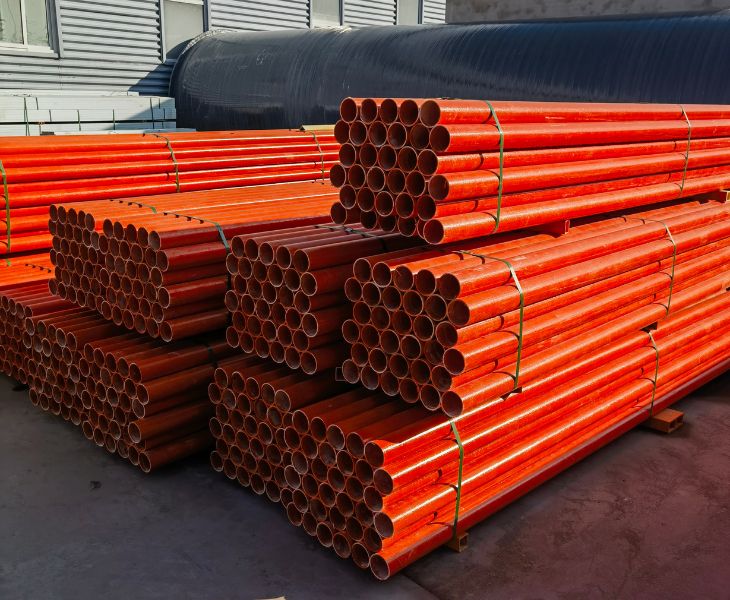
High-strength and lightweight design
FRP profiles are manufactured through pultrusion technology, combining high strength and light weight. They have excellent tensile, bending, and impact resistance, but weigh only half or less than steel. This gives them apparent advantages in transportation, hoisting, and on-site installation, and does not add additional load to the installed buildings. In projects requiring large-span support or lightweight structures, FRP profiles offer superior performance solutions that conventional metal materials cannot match.
Electrical insulation and multi-functional applications
FRP profiles possess excellent electrical insulation properties, being non-conductive and non-magnetic, guaranteeing their safe use in substations, cable trays, communication towers, electronic equipment support, and other such locations. Their low thermal conductivity and heat insulation characteristics can also improve energy efficiency and reduce thermal bridge effects. Additionally, with customizable cross-sections, lengths, and colors, FRP profiles will be widely applicable in industrial, construction, transportation, marine, and special structure projects, catering to numerous complicated requirements.
Applications of FRP Profile

In chemical or petrochemical plants, steel structures often rust and corrode due to the influence of acidic or alkaline substances. However, FRP extruded profiles have the property of defending against many chemical corrosion and can be used to manufacture support beams, columns, and platform frames. You can then focus on production management without worrying about structural safety issues.

In industrial factories or water treatment facilities, corridors and platforms are usually exposed to damp or salt fog environments. Ordinary metals are prone to rust and slip, while FRP profiles have anti-slip and corrosion-resistant properties. In addition, their lightweight design allows for quick installation or modification of equipment, guaranteeing safe passage for employees.

For power and electronic facilities, safety insulation requirements are extremely high. FRP profiles are non-conductive and non-magnetic. They can tolerate long-term outdoor environments and humid conditions, avoiding the danger of short circuits caused by steel corrosion. You can be safer in wiring and equipment support.

Cooling towers and sewage treatment stations are usually in high-humidity environments, where steel is prone to rust and wood is prone to rot. FRP extruded profiles have waterproof, corrosion-resistant, and UV-resistant properties, and can defend against the effects of water vapor, chemical cleaning agents, or temperature changes for a long time.

In marine environments, salt fog and humidity accelerate steel corrosion, increasing maintenance costs for products. FRP profiles are lightweight but sturdy, and they are resistant to seawater corrosion, so they are always used to make docks, ship decks, offshore platform support structures, and railings.

In chemical storage tank areas, acid washing zones, or other hazardous environments, metals may react with corrosive gases or liquids, posing safety hazards. FRP pultruded profiles have non-conductive, corrosion-resistant characteristics, and do not produce sparks, so they are always applied for use as supports or pipe support structures.
FRP profiles are structural components made from glass fiber reinforced polymers. They are produced through the continuous pultrusion process, where the fibers are first impregnated with resin and then cured in a heated mold.
FRP profiles have excellent corrosion resistance, lighter weight, and lower maintenance needs, which give them an advantage over steel or aluminum materials. They do not rust, rot, or conduct electricity, so they are always applied for harsh, corrosive, or electrically sensitive environments.
Yes. FRP profiles have extremely strong resistance to chemical substances, moisture, salt fog and ultraviolet erosion. Therefore, they are well-suited for outdoor corrosive environments, as conventional metal materials tend to deteriorate rapidly in such environments.
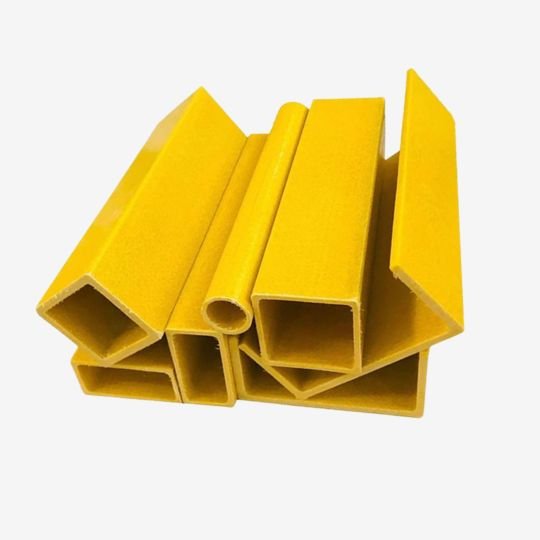
FRP profiles come in various standard shapes, including angular, trough-shaped, I-beams, H-beams, square tubes, rectangular tubes, rods and pipes. Customized profiles by pultrusion can also be made according to specific project drawings and size requirements.
Yes. The cross-sectional design, wall thickness, resin system, color and length of FRP profiles can all be customized individually. These profiles can cater to the requirements in terms of structure, environment and installation.
Common resin systems include polyester, vinyl ester and epoxy resin. Each type of resin affects its corrosion and temperature resistance, fire resistance and mechanical strength.
The design of FRP profiles aims to guarantee a long lifespan, even in harsh circumstances. Since they do not rust, rot or require painting, the maintenance requirements are extremely low, which makes their life cycle cost lower than that of conventional materials.
What are FRP Profiles?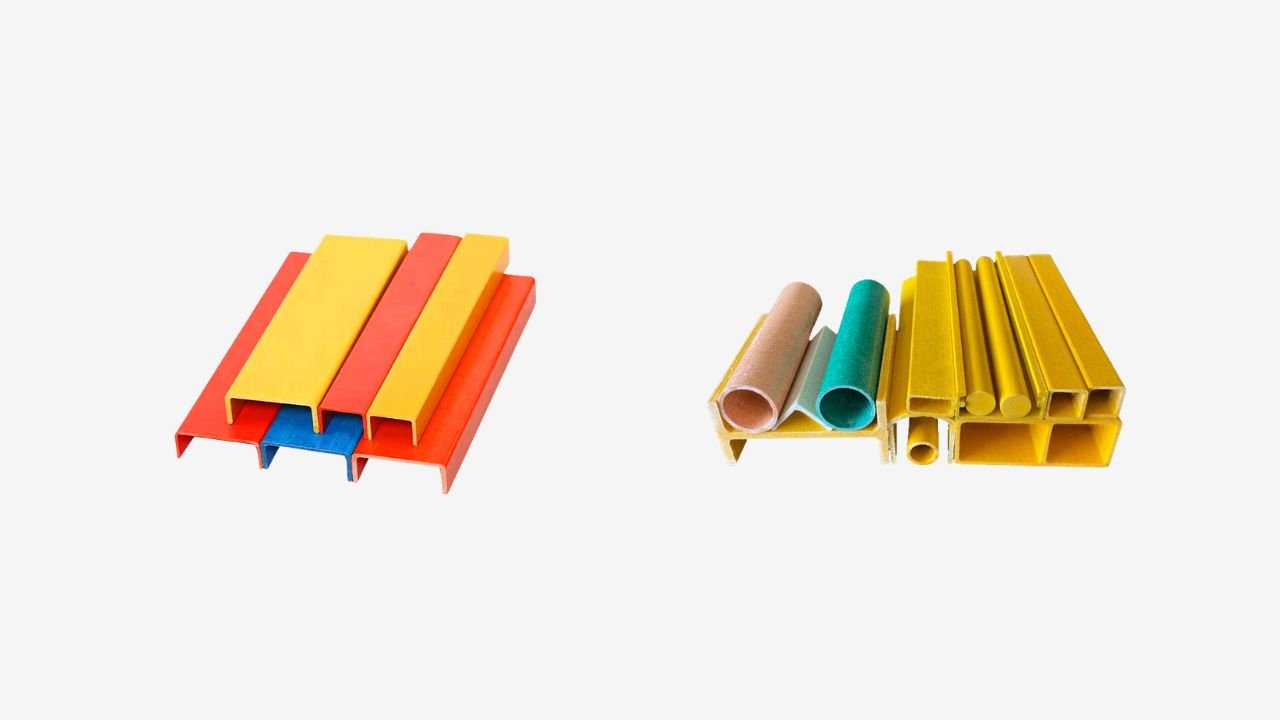
FRP Profile is a standardized structural profile made of fiber-reinforced plastic (FRP), such as I-beams, channel steel, angle steel, square tubes, etc. It is not a single material but a composite structure. Through the combination of high-strength fibers and resin matrix, the material performs better than conventional materials about strength grade and environmental adaptability.
FRP profiles usually use glass fibers as the main reinforcing material, combined with epoxy resin, polyester resin, or vinyl ester resin as the matrix. The fibers are responsible for bearing and enhancing strength, while the resin serves to fix the fibers, transfer loads, and defend against exterior environments. This “fiber + resin” structure makes the profiles both lightweight and very sturdy, and they are also unlikely to deform when subjected to external forces.
FRP profiles are not simply cast together, but are manufactured through mature composite material molding processes. Frequently-used molding methods include pultrusion molding, compression molding, and winding molding, etc. During the molding process, the fibers will be arranged in an orderly manner, then, through resin impregnation and curing, a dense and stable structure is formed.
FRP Profiles VS Metal Materials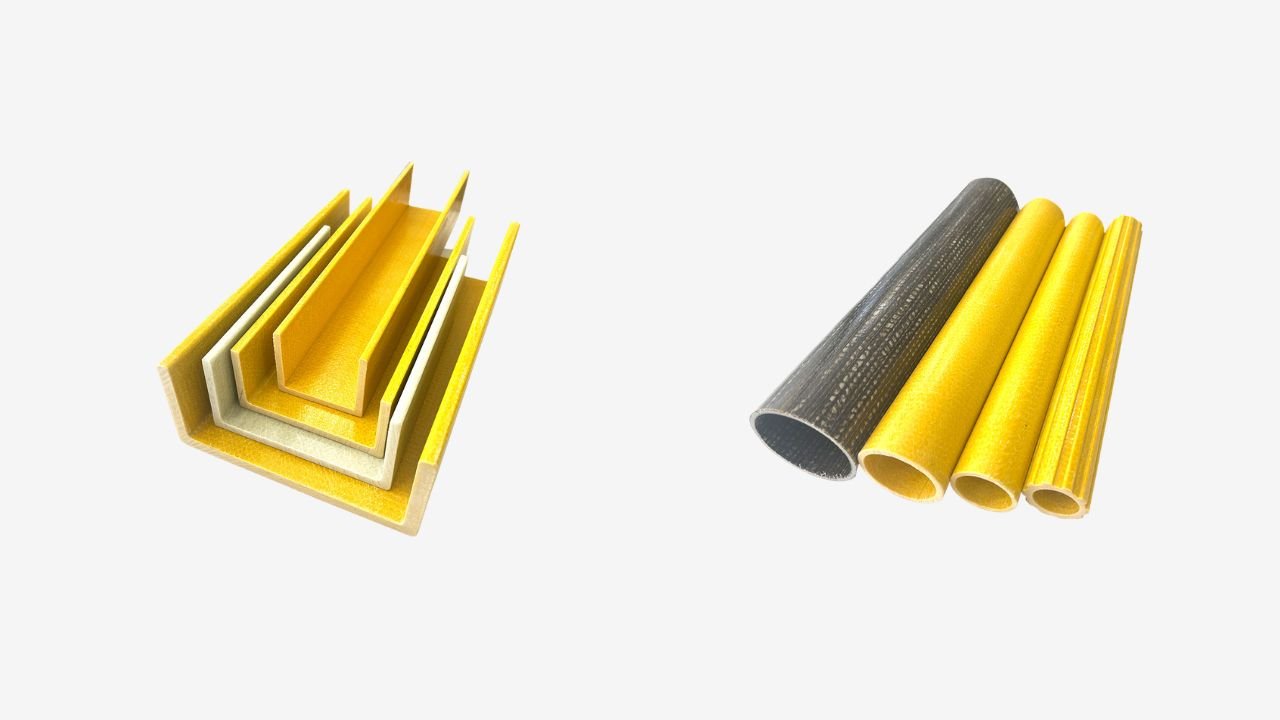
| Property | FRP Profiles | Metal Materials |
| Strength | Slightly lower absolute strength, but very low density. | High absolute strength, but higher density results in lower efficiency per unit weight |
| Compressive Performance | Short-term compressive strength can approach that of metals; long-term performance may be worse in harsh environments | Stable compressive performance with predictable long-term load capacity |
| Bending Performance | Better bending efficiency at the same weight, suitable for large-span designs | High bending strength, but heavier structural weight |
| Impact Resistance | High energy absorption, resistant to impact damage, and able to recover from minor deformation | Prone to yielding or denting under impact; some metals become brittle at low temperatures |
| Stiffness | Lower stiffness, easy to deform under load | High stiffness and good dimensional stability |
| Fatigue Resistance | Excellent resistance to cyclic loads and vibration | Standard metals are more prone to fatigue cracking over time |
How to Choose the Right FPR Profile?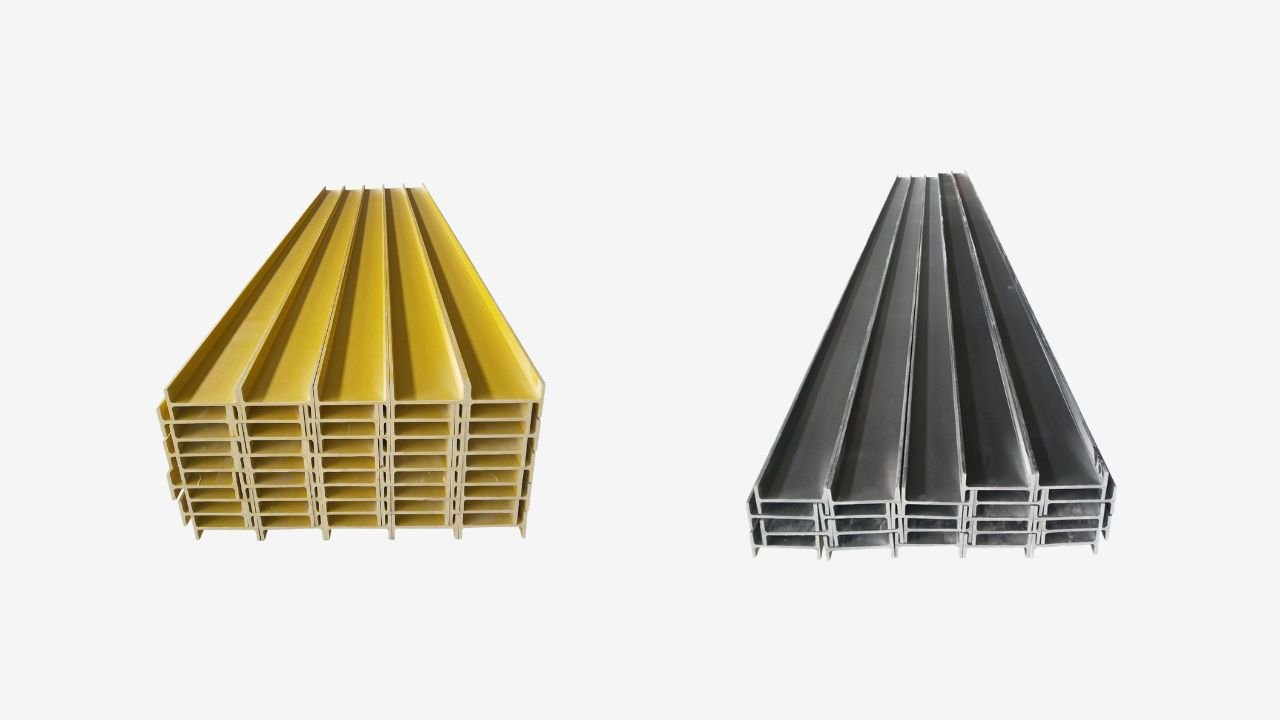
Clarify the structural load-bearing requirements
First of all, you need to understand the role of the FRP profile in the structure, whether it is a load-bearing beam, a supporting column, or a platform, walkway, or equipment frame. They have different requirements for tensile, bending, and shear properties, and these properties depend on the fiber content, fiber laying direction, and molding process.
The upper limit of FRP profile performance largely depends on the resin type. Different resin systems are applicable for various industrial environments.
- Unsaturated polyester FRP: High cost performance, stable comprehensive strength, suitable for building structures, equipment supports, and general industrial environments.
- Epoxy resin FRP: Stronger mechanical and temperature resistance performance, suitable for high-load structures, chemical equipment, and marine engineering.
- Vinyl ester FRP: Extremely strong corrosion resistance, suitable for acid, alkali, salt spray, and high-humidity circumstances.
If your project is exposed to chemical factories, coastal areas, sewage treatment, or electroplating environments for a long time, the choice of resin will directly determine the product’s lifespan, not just the performance difference.
Evaluate the corrosion resistance level
In industrial settings, corrosion resistance is a quantifiable technical parameter. You should judge whether there are strong acids, strong bases, salt fog, or long-term humid environments at the site, and accordingly select the appropriate FRP profiles. High-quality FRP profiles not only do not rust but also can keep excellent mechanical properties in corrosive media for a long time.
Consider the working temperature range
FRP is not an “infinite heat-resistant material”. The heat resistance properties of different resins vary greatly.
- For normal temperature to medium temperature conditions, Polyester FRP can meet the needs.
- For medium-high temperature environments, it is recommended to select epoxy or vinyl ester.
- For continuous high-temperature loading, attention must be paid to the heat distortion temperature (HDT)
If your engineering project includes high-temperature equipment, outdoor areas exposed to intense sunlight, or hot air environments. So you must take the temperature resistance grade as one of the core parameters to consider when making a choice.
Emphasize surface treatment and protective layer configuration
In outdoor or harsh circumstances, the surface structure of FRP profiles can influence their service life. High-quality FRP profiles usually come with UV protection layers, wear-resistant coatings, or anti-permeation resin layers to enhance resistance to improve their resistance to aging and chemical erosion.
Evaluate the processing and installation
From the perspective of engineering implementation, whether FRP profiles are easy to process and install is equally important. Standardized cross-sections, cuttable and drillable designs can meet the installation logic of steel structures, reducing on-site welding and complex construction.