
Why Our FRP Grating Platform?
FRP Grating Platform for Industrial Access and Maintenance
- The design, production and installation are done by the same technical team, which ensures that the platform dimensions and loads are accurate and reliable.
- More than ten years of cooperation with research institutes and universities, we have accumulated mature FRP platform engineering experience.
- According to the corrosive environment and temperature, we provide o-phenylene, m-phenylene, vinyl, phenolic resin solutions, the service life can be more than 20 years.
- Equipped with M, L, C type fixtures and construction guidance, the on-site installation cycle can be shortened by about 30%.
- It has been in operation for more than 10 years in municipal, wastewater, chemical and overseas projects, with proven load-bearing and anti-corrosion performance.
Your Trusted FRP Grating Platform Solution
Relying on our 30,000m2 production base and 130-strong technical team, coupled with years of experience in industrial applications, our FRP grating platforms are able to provide you with a complete service from design, production to installation. Each platform will undergo rigorous engineering calculations before delivery to verify the bearing capacity and deflection (≤1%) to ensure that it is safe and reliable under the regular working conditions of personnel passage and equipment operation, and to ensure that there will be no problems in long-term use.
The company has long cooperated with research institutes and universities and completed many projects, including chemical plants, sewage treatment plants and overseas offshore platforms. Some projects have been in operation for more than 10 years, but the performance still meets the design requirements. The platform adopts a standardized and modular installation scheme, with M, L and C type clamps, which can be quickly installed on the existing steel structure or concrete foundation. Compared with traditional construction methods, the installation period can be shortened by 20-30%, effectively reducing the site labor cost.
Our FRP Grating Platform Types
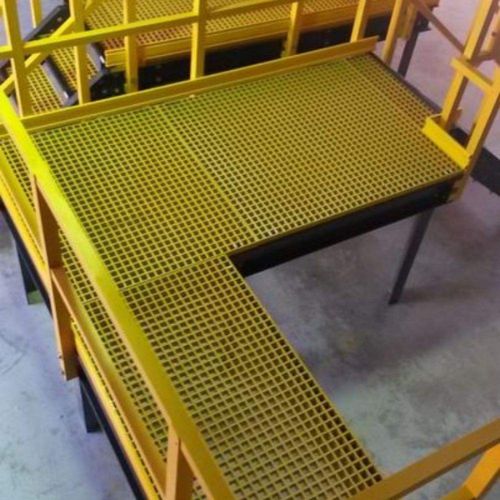
One-piece molding, uniform bi-directional force and stable corrosion resistance make it the most commonly used type of foundation platform.
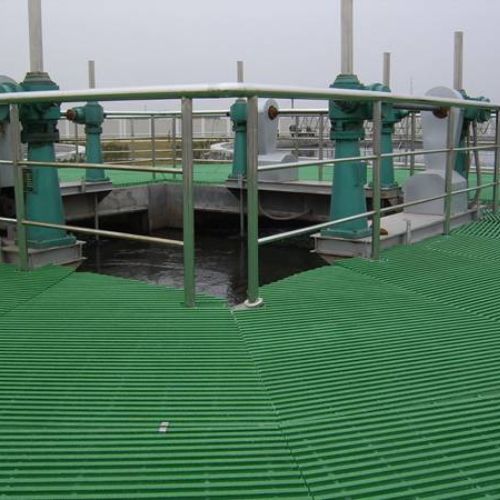
Pultruded, with fibers aligned in the direction of force, suitable for large spans or unidirectional loads, with higher longitudinal load capacity.
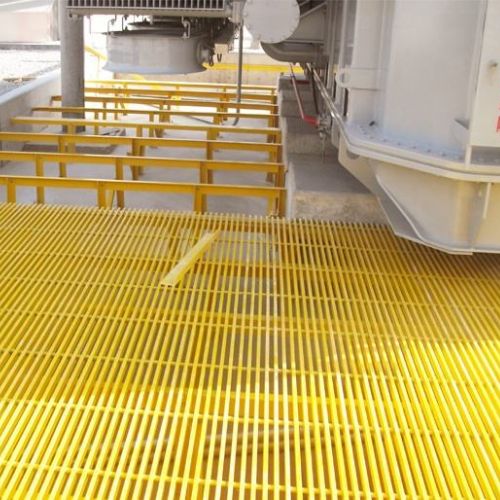
Made of special phenolic resin, which is structurally stable at high temperature and has less smoke during combustion, suitable for industrial or offshore environments with high fire resistance requirements.
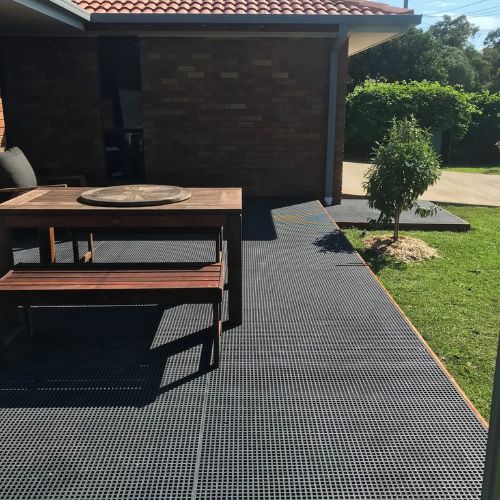
Has a small aperture, which prevents small tools or parts from falling out and ensures the safe passage of people.
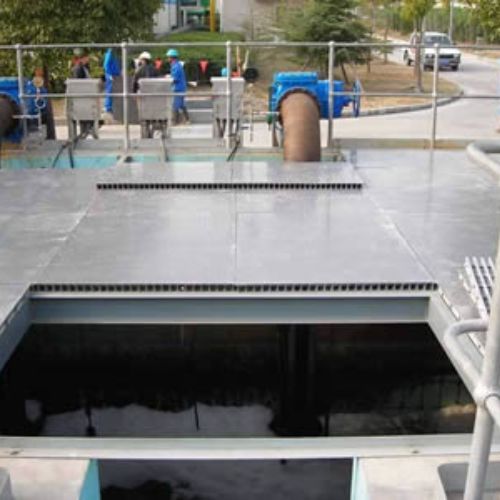
Closed surfaces with no openings are ideal for walkways and work areas where odor, liquid drips or slip resistance is important.
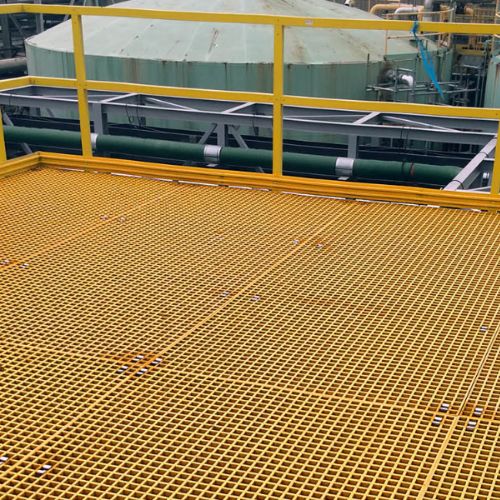
Conductive fillers are added to the resin to prevent static buildup, making it suitable for flammable, explosive or static-sensitive environments.
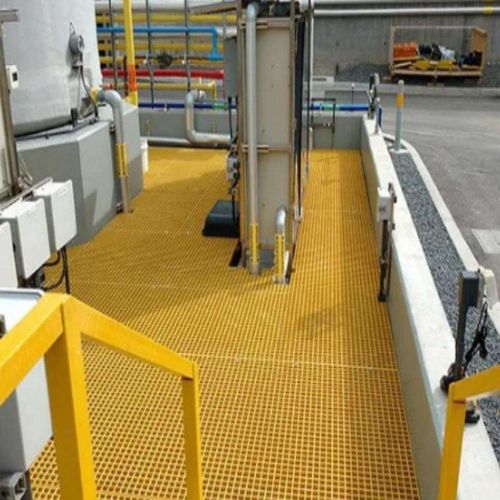
Thickened cross-section and reinforced structure are designed to increase the load-bearing capacity to withstand vehicles or heavy equipment, suitable for high load conditions.
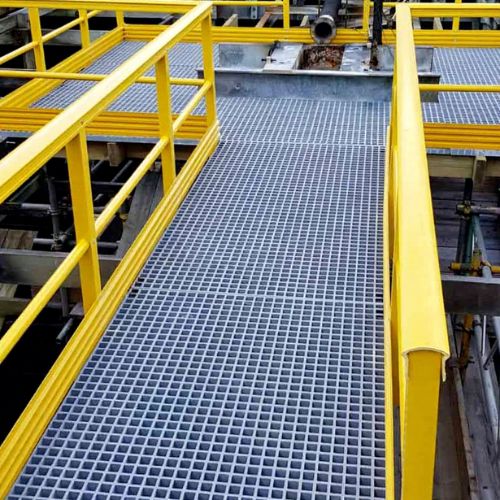
Made of vinyl ester resin and are resistant to strong acids and alkalis, suitable for industrial environments with high chemical corrosion levels.
Features of FRP Grating Platform
FRP Grating Platform provides load-bearing, reliable, corrosion-resistant, and efficiently constructed industrial platforms for complex environments such as chemical plants, wastewater treatment plants, and offshore platforms. It can help projects reduce construction time while lowering total lifecycle costs.

The platform’s load capacity and deflection are designed for real-world use, ensuring stability and reliability for personnel and equipment operations.

Resin is optimized to resist acids, alkalis, salts and other corrosive media, making it suitable for long-term use in wet or corrosive environments without frequent maintenance.

Approximately 75% lighter than an equivalent steel platform, making it easier to handle and install.

Platforms use standardized modules and special fixtures that can be quickly assembled on-site, allowing complex layouts to be completed even when space is limited.

Can be cut or spliced to fit different steel or concrete foundations to match any complex terrain.

Provides a variety of anti-slip surface options (e.g., sand surface, diamond-shaped cover, etc.), which improves the safety of people walking and reduces the risk of accidents.

Anti-aging and corrosion resistance allows the platform to be used for long periods of time without the need for coatings or regular maintenance, resulting in low operating costs.

It is suitable for a wide range of industrial scenarios such as operation platforms, maintenance access, stair treads and gutter covers.
Stable and Reliable Load Carrying Capability
FRP grating platforms are designed with detailed load calculations, including uniform load and span analysis, and deflection is controlled to no more than 1%. Whether it is for personnel passage, equipment operation, or on operation platforms, maintenance access and stair treads, Our FRP Grating Platform will not show any obvious deformation or shaking. Through modular design and precise calculations, the platform remains lightweight while providing high load-carrying performance.
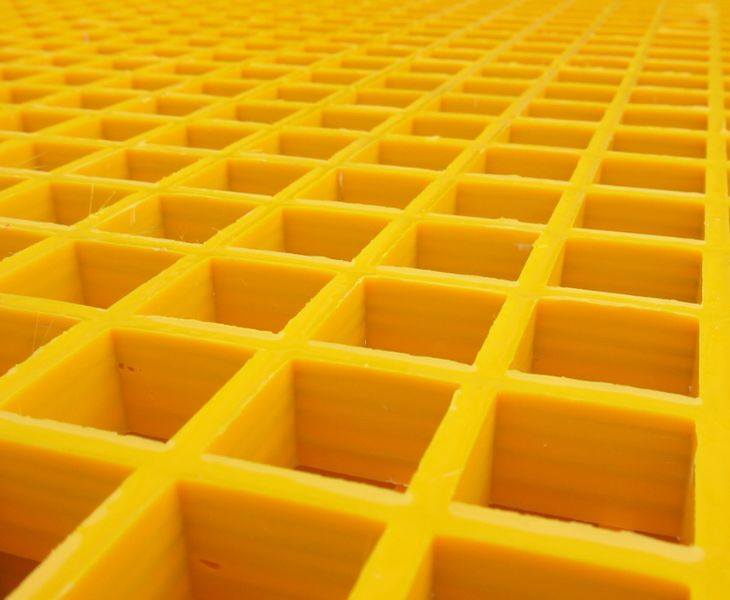
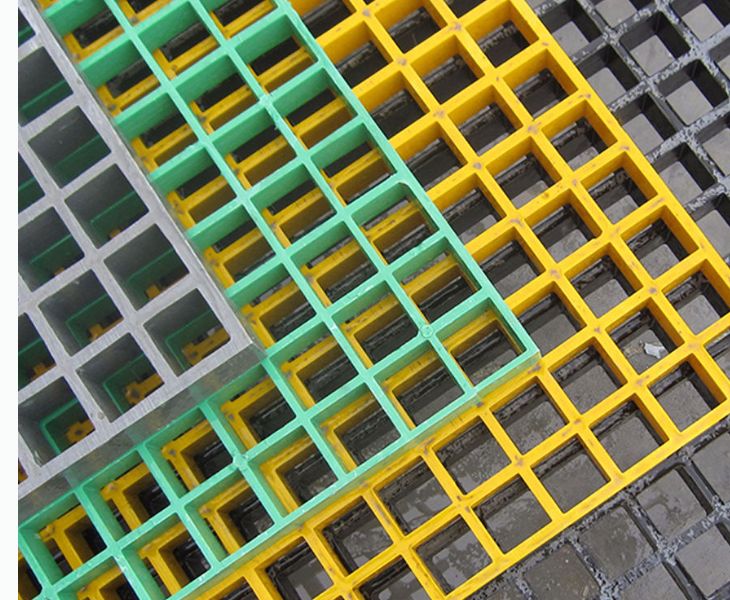
Flexible Layout and Customized Adaptation
Our FRP Grating Platform can be cut and spliced in the field, so it can be flexibly adapted to various steel structures or concrete foundations. The modular design allows the platform to be installed quickly in complex terrain, limited space or special conditions, avoiding additional modifications or construction delays due to standard panels not matching the site.
Reduce Operating Costs
Our FRP Grating Platforms are made with o-phenyl, m-phenyl, vinyl or phenolic resins and optimized material selection for different corrosive environments so the platforms won’t rust or flake even after prolonged use in acid, alkali, salt and humid environments. This means you don’t need to coat or replace metal platforms on a regular basis, which drastically reduces maintenance costs and the risk of downtime. Real-world examples show that platforms used in wastewater treatment plants and chemical plants for more than 10 years still maintain their surface integrity and structural strength, saving companies 20-30% in maintenance expenses.
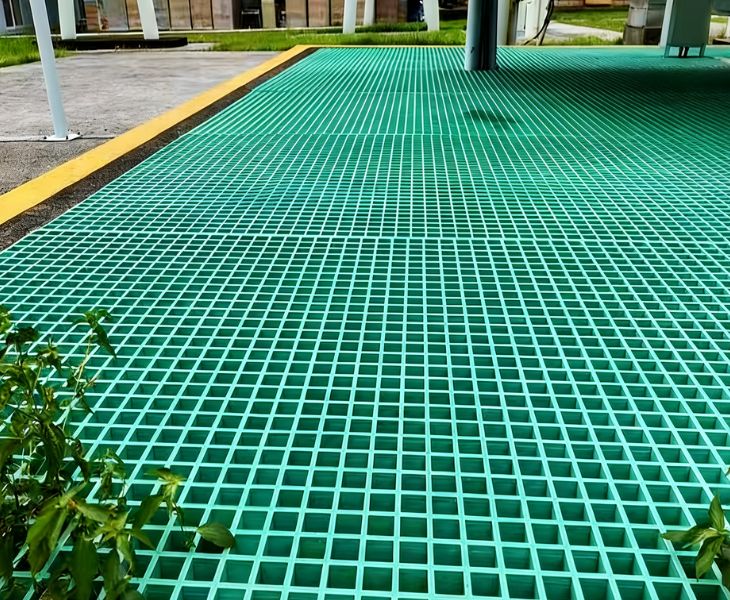
Industrial Application Scenarios of FRP Grating Platform
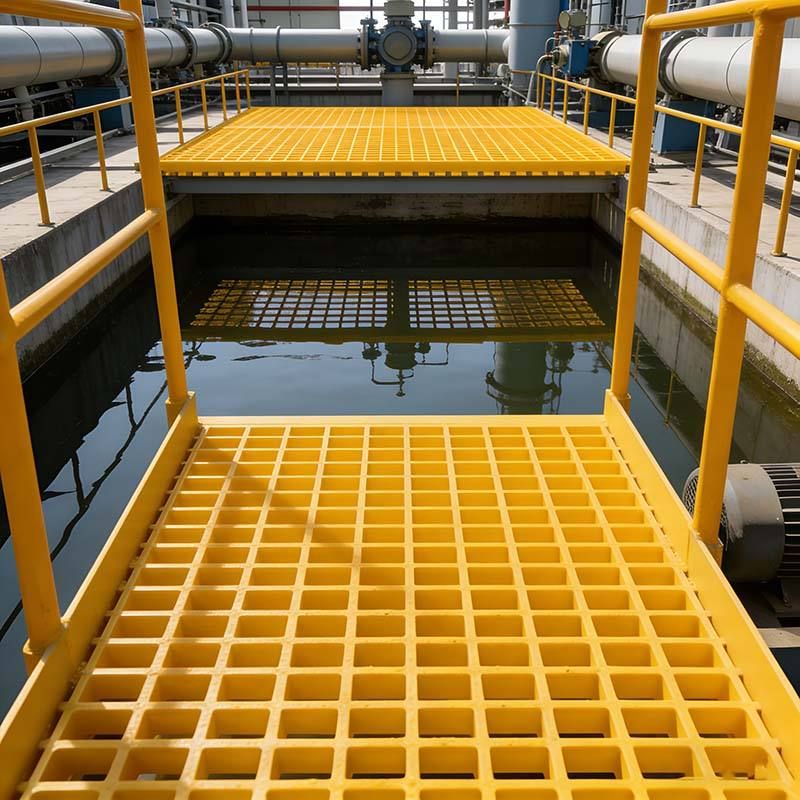
FRP Grating Platform is suitable for a variety of industrial environments, mainly used for operation platforms and maintenance access, providing stable and safe support for personnel access and equipment maintenance.

Acid, alkali and organic solvents are always present in chemical plants, and these media will continuously corrode the steel platforms, leading to rust and strength degradation.FRP Grating Platform is made of fiberglass reinforced composite material, and unsaturated polyester or phenolic resin is commonly used as the matrix. The resin is fully combined with the glass fiber so that the platform itself is not easily eroded by chemical media and will not rust, so it can be used stably for a long period of time in a chemical environment.

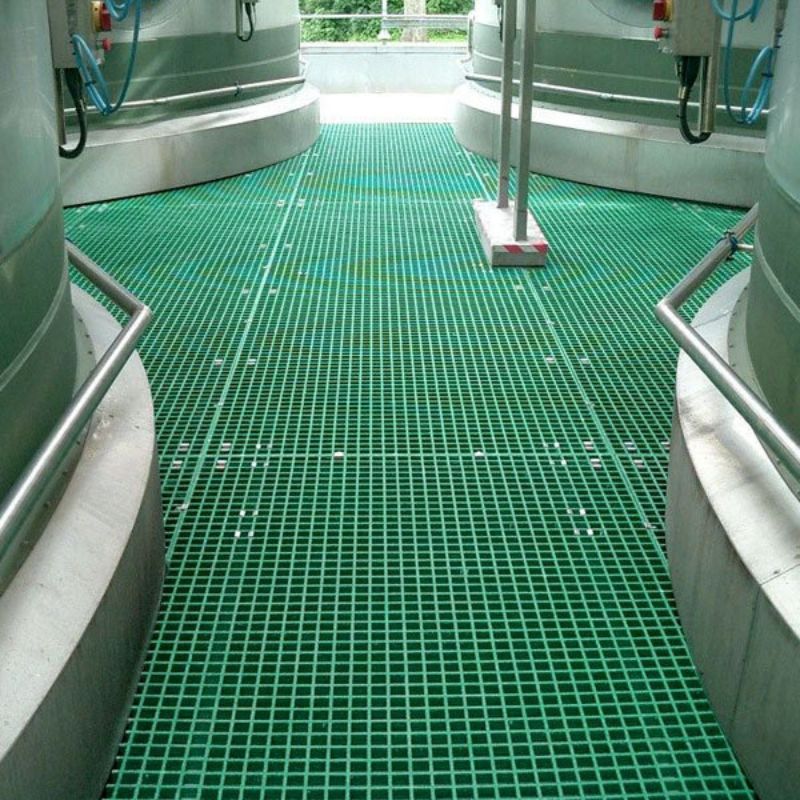
The sewage treatment plant has high humidity and many kinds of corrosive gases and liquids at the same time, the steel grating is easy to rust and corrode, the surface becomes slippery, which increases the risk of personnel slipping and falling. FRP platform material has a dense structure, doesn’t absorb water, is not easy to crack, and possesses stable chemical corrosion resistance, so it can still maintain its performance in the humid environment.

The offshore environment is affected by salt spray, UV radiation and high loads for a long time, and the steel structure is prone to corrosion or deformation. FRP Grating Platform is made of high-strength alkali-free glass fibers, which are formed by continuous pultrusion or molding process. The overall weight is about 3-4 times lighter than steel structure, but the load capacity can reach 5-8 kN/m2, which can meet the requirements of offshore platforms. At the same time, the material itself has good resistance to salt spray and ultraviolet rays, which can slow down the aging and reduce the maintenance frequency.

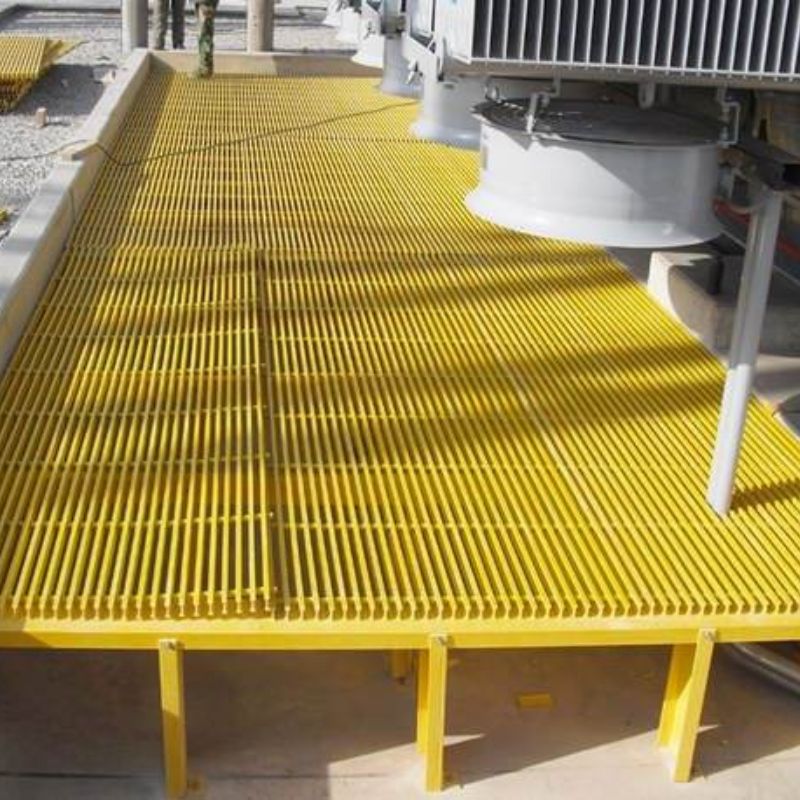
Maintenance walkways in substations and plants are often subject to uneven loads and relatively humid environments. FRP platforms are lighter than steel platforms with the same load capacity, about 75% lighter than steel platforms, and can safely support personnel and mobile equipment, while also helping to reduce the burden on the underlying structure.
If you only focus on the one-time purchase price, steel platforms are usually cheaper; however, when compared to the actual use environment, especially in corrosive, wet or outdoor scenarios, FRP Grating Platform has a lower overall cost.
FRP does not require anti-corrosion coating, does not rust, and does not have the problem of repeated repainting and repair. Under normal industrial conditions, FRP platforms can be used continuously for more than 20 years, with little downtime for maintenance.
In the chemical industry, sewage treatment, offshore industry, electric power and other industries, steel platforms usually need to be replaced or overhauled in 5-8 years, while FRP platforms are often installed once and then used for a long time. This difference in maintenance is the main reason why many industrial customers gradually switch from steel platforms to FRP.
The service life of FRP Grating Platforms in offshore platforms, coastal factories or in environments with high salt spray concentrations depends mainly on the resin chosen.
If vinyl ester resins or high-performance m-phenyl polyester resins are used, FRP platforms are typically designed to last 20-25 years under long-term salt spray and UV exposure conditions.
In contrast, steel platforms, even with hot-dip galvanizing or heavy-duty anti-corrosion coatings, still require periodic inspections and recoating. the advantages of FRP include a slower decay process, less frequent maintenance, and a long-term structural condition that is easier to predict.
Yes, FRP Grating Platform is non-conductive and does not require additional insulation.
In high-voltage or strong electric environments such as substations, power plant maintenance corridors, and electrolysis workshops, FRP platforms can effectively reduce the risk of electrocution and meet the basic requirements for personnel safety.
FRP Grating Platform will not peel off like coated platform.
The slip resistance of FRP platforms comes from a monolithic molded quartz sand layer or non-slip texture, not from a post-sprayed non-slip paint. The anti-slip effect is maintained over a long period of time under normal conditions of personnel access and equipment maintenance. For areas of high wear and tear, a surface solution with a higher slip resistance rating is generally recommended at the selection stage.
The following are common engineering selection reference values, specific design calculations shall prevail:
| Type | Typical Span | Typical Load Capacity(Uniform Load) Omitted: Citation | Typical Applications |
| Molded FRP Grating Platform | ≤1000 mm | 2.5–4.0 kN/m2 | Walkways, maintenance platforms |
| Reinforced Molded FRP Platform | ≤1200 mm | 4.0–5.0 kN/m2 | Multi-person access, light equipment areas |
| Pultruded FRP Grating Platform | 1200–1800 mm | 5.0–7.5 kN/m2 | Industrial operating platforms, equipment zones |
We provide load and deflection calculations at the project stage to facilitate engineering review and purchasing decisions.
Molded FRP grating platforms are generally more suitable for shorter spans, irregular structural shapes, or long term exposure to strong corrosive environments. These platforms are monolithically molded for greater stability and are easier to cut on-site to accommodate complex areas.
Pultruded FRP platforms are more suitable for platforms with larger spans, higher design loads or higher overall stiffness and structural strength requirements. Pultruded profiles have strong directionality and clear forces, making it easier to meet the design requirements of large spans and high loads, and are suitable for standardized platform structures.
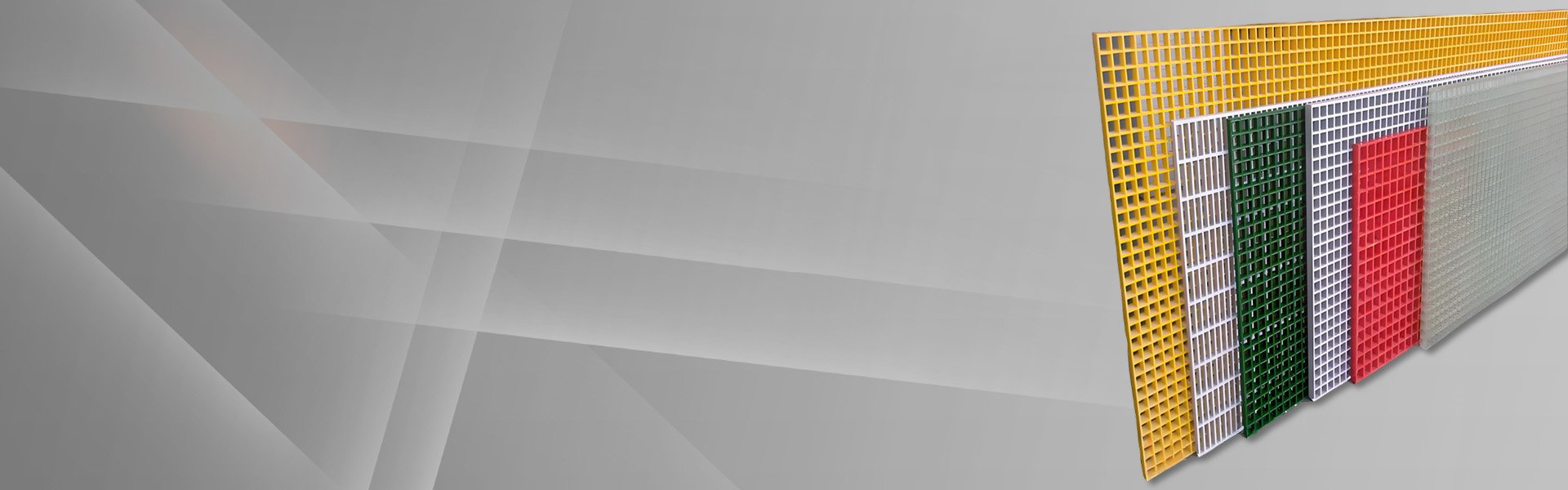
Yes. We support customization based on the actual needs of the project, including platform size and aperture locations, surface types with different slip-resistance ratings or claddings, and color configurations to differentiate between access and equipment areas.
This customization typically does not significantly increase lead times or affect product stability. On the contrary, because the dimensions and features are pre-matched, on-site cutting and secondary construction can be reduced, making the installation process more efficient.
Yes, FRP Grating Platforms are lightweight and can be installed directly onto existing steel beams or concrete foundations without the use of heavy lifting equipment.
We provide standard fixtures or fixing solutions to avoid welding and open flames, which is especially important in retrofit projects or non-stop upgrades.
Because of the short construction period, minimal disruption to the site, and overall risk control, many plants prefer FRP platforms for platform retrofits or expansions.
Design and Selection Guide for FRP Grating Platforms in Different Industries
FRP Grating Platforms are becoming more and more popular in industrial platforms due to their lightweight, high strength and corrosion resistance. However, the load, corrosivity, humidity and anti-slip requirements under different working conditions are different, which directly affect the safety and service life of the platform.
Chemical Plant Platform Anti-Corrosion Design
Chemical plant platforms are often exposed to acids, alkalis, solvents, and the environment may also be alternately corrosive. Selection depends on the specific medium: weak acid and alkali can use o-phenyl or m-phenyl type resin, strong acid or solvent environment is recommended vinyl ester resin. For short spans or places with low loads, molded platforms can be used, and when the span is more than 1.2 meters or the load is more than 5 kN/m2, it is better to use pultruded platforms.
Anti-Slip and Moisture-Resistant Platforms for Sewage Plants
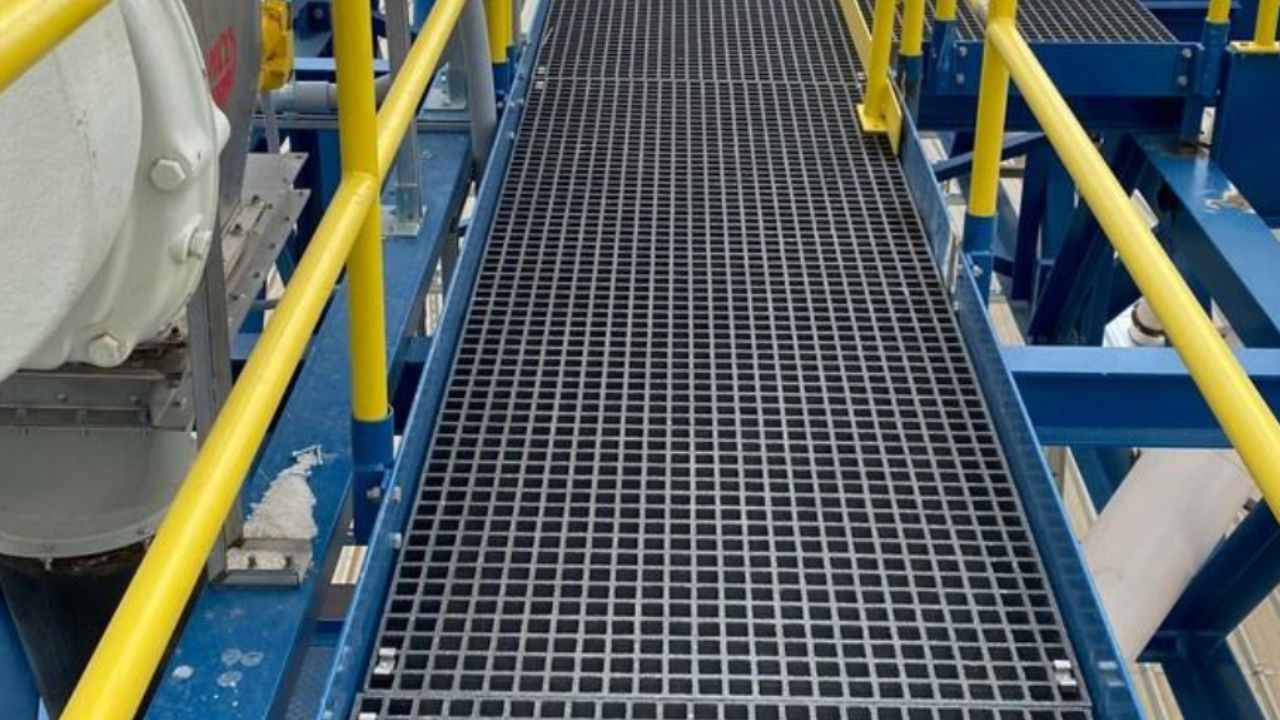
Sewage plants are characterized by high humidity, corrosive liquids and sludge. It is recommended to use a resin that is resistant to heat and humidity and to make an integrally molded non-slip texture. The span is usually 0.8-1.2 meters and the load capacity is 2.5-4 kN/m2. The width of the support beam should not be less than 40mm, and the fixture spacing should be configured according to the standard, which can reduce vibration and improve stability.
Design Of Insulated Platforms for Power Installations
Power installations require platforms that are insulated and can also carry maintenance personnel and light equipment. The resin can be m-phenylene or vinyl ester type. The span is generally 1.0-1.5 meters, and the support point should be adjusted where the concentrated load is large. The friction coefficient of the non-slip surface should be high. When installing, avoid direct contact of metal with high-pressure equipment, and use M-type or L-type clamps for fixing.
Corrosion-Resistant Design of Offshore/Maritime Platform
The offshore platform is affected by salt spray, high humidity and strong UV irradiation for a long time, so it should be made of vinyl ester or high-performance mesophenyl resin, and adopt high-strength pultruded platform. Anti-slip surface choose integral molding sand surface or diamond-shaped cover, while ensuring smooth drainage. Seal the edges and interfaces to prevent salt water penetration.
Chemical Protection for Special Environments
In strongly corrosive, high humidity or toxic gas environments, the platform design must focus on the chemical resistance of the resin, surface protection and drainage. For special gases or highly corrosive environments, while localized coverings or the use of chemically resistant coatings can provide some protection, the most reliable practice is to use a monolithic molded resin platform. In such environments, vinyl ester resins or high-performance m-phenylene resins are often recommended as integral molding platform materials because vinyl ester resins are resistant to strong acids, alkalis, and a wide range of organic solvents, while high-performance m-phenylene resins perform well in high humidity and oxidizing environments.