

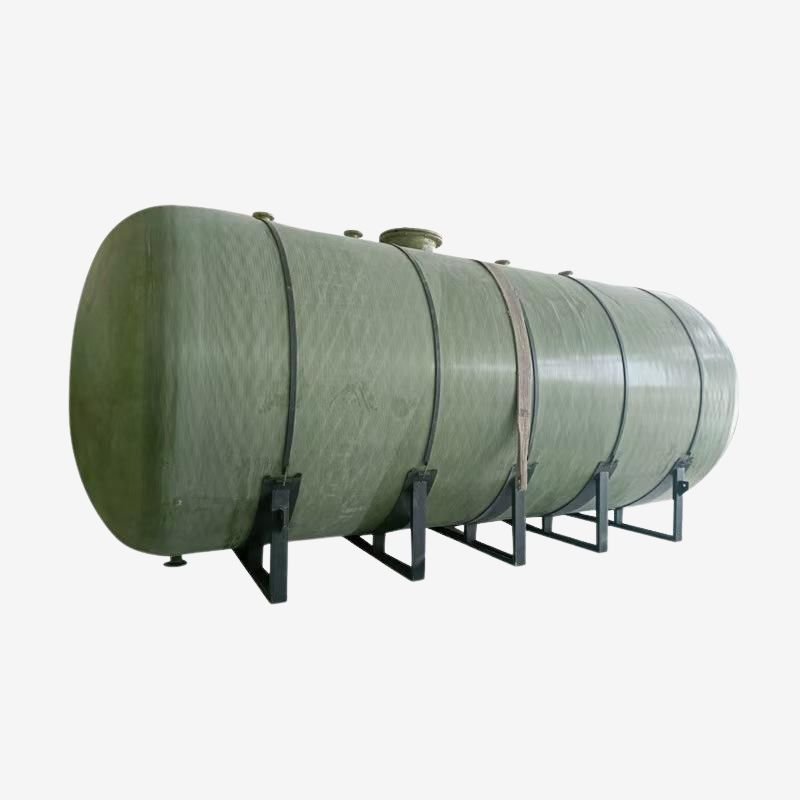
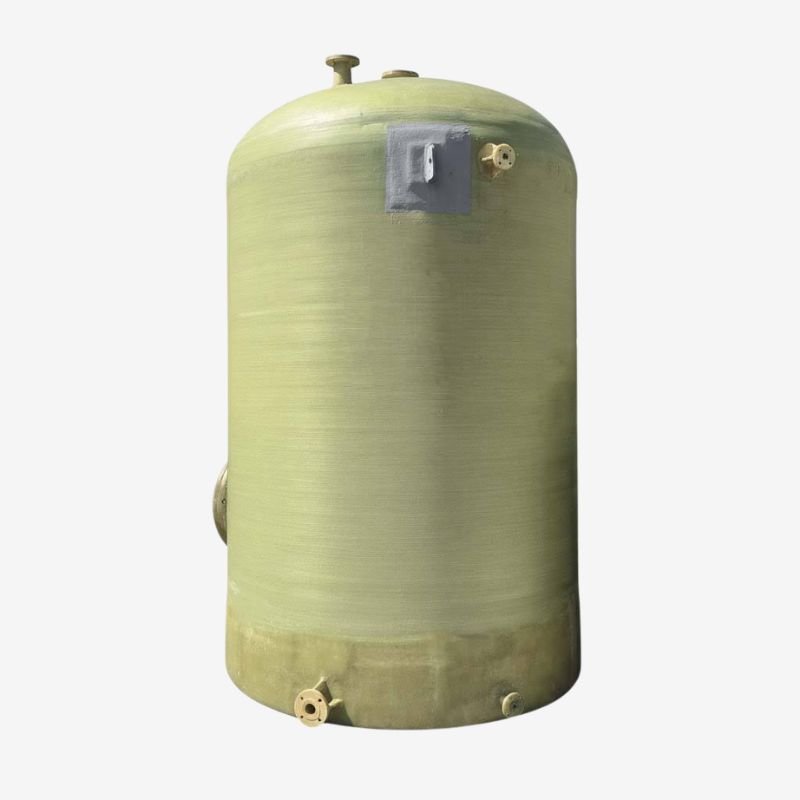
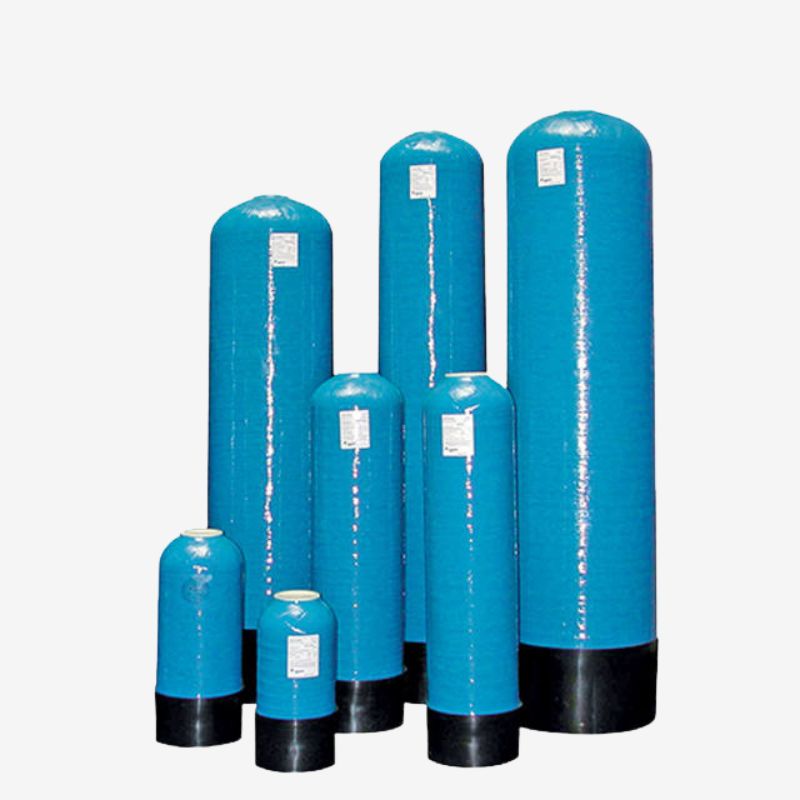
Why Choose Our FRP Tank
FRP Tank Manufacture | Corrosion-Resistant & Environmentally Friendly
- Independently develop an extreme temperature-resistant resin system.
- Master the layering process, where the thickness of the inner lining layer is maintained at 3mm approximately.
- Developing a special resin formula and fiber ratio for use in high-sulfuric-acid-resistant applications.
- Innovate the rapid curing technology.
- The double-layer leak-proof structure design shows an effective solution that enables.
Your Reliable Chinese FRP Tank Manufacturer
Are you still troubled by the corrosion and leakage of metal storage tanks? Our fiberglass reinforced plastic (FRP) storage tanks can effectively solve this problem for you. Our FRP tanks have a corrosion-resistant lifespan of over 20 years and are made without welds through a single-piece molding process. The storage tank surface uses a special anti-freezing agent, which creates complete protection against leakage. Contact us now, and we will provide you with a one-stop service from selection, installation, to maintenance, helping you find the most suitable storage solution for your factory!
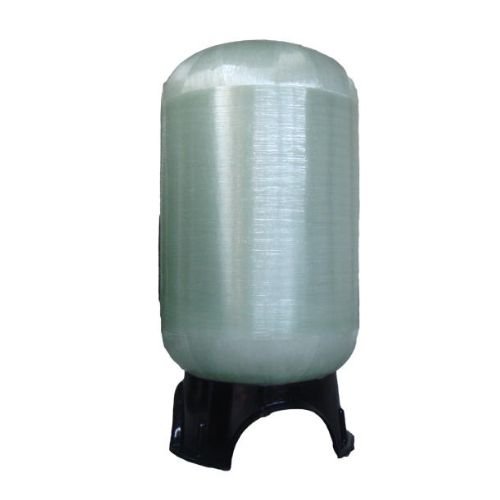
The area is very small and suitable for confined spaces. You can find a large amount of storage available.
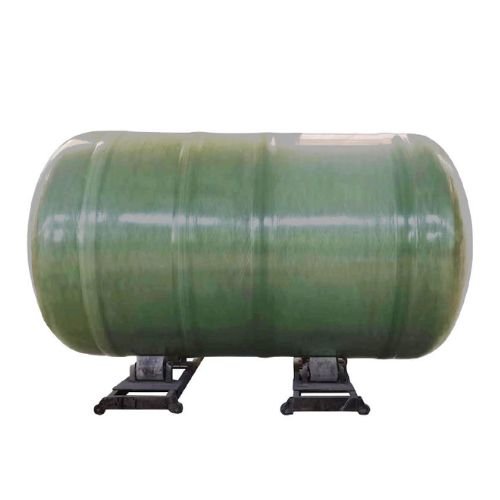
Better stability, an ideal choice for frequent material loading and unloading.
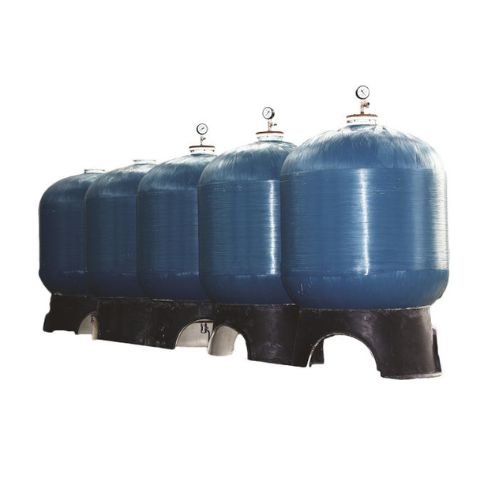
Customized according to your unique production requirements, it can perfectly match any complex working conditions.
Features of FRP Tank

You can store highly corrosive media such as strong acids and bases.

It is lighter than steel tanks and is more convenient for you to install and transport.

Integrated molding, with FRP surface having no seams, reduces the risk of leakage.

We can customize various sizes, shapes, and interface configurations according to your needs.

Under normal conditions, it can be used stably for 20-30 years, with extremely high cost-effectiveness.

We have added ultraviolet-resistant components to ensure its strength for outdoor use.

You can use it safely in the temperature range of -40℃ to 120℃.

FRP is non-toxic and harmless, and it complies with the environmental protection regulations of various countries.
Excellent Protection Against Corrosion
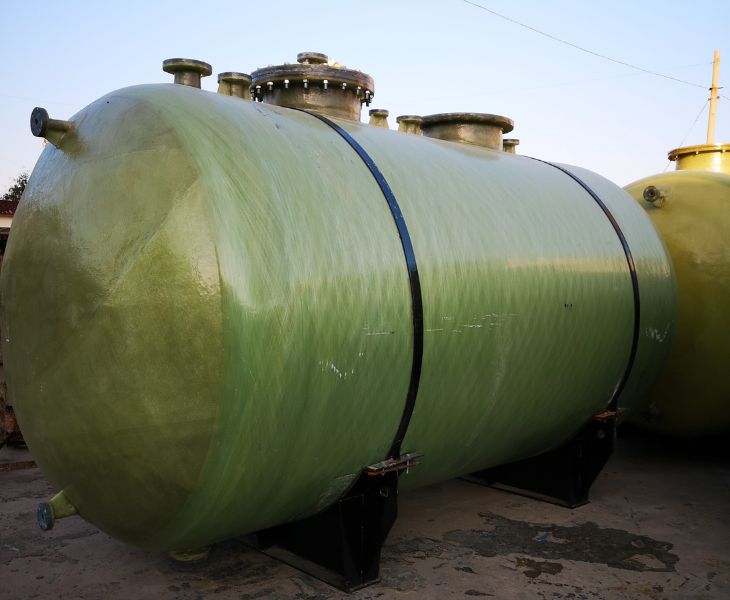
The main benefit of FRP storage tanks lies in their ability to withstand chemical substances through their superior protection. FRP material has the ability to withstand concentrated sulfuric acid, hydrochloric acid, and various organic solvents for extended periods. The combination of chemical inertness from the resin matrix and glass fiber stability enables you to achieve total metal tank protection against rusting and perforation while extending their operational lifespan.
Lightweight and High-strength Structure
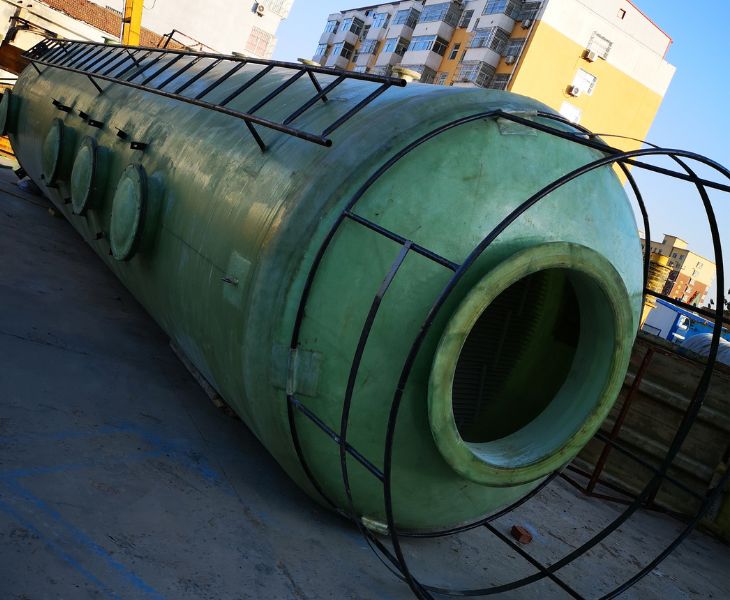
The weight of FRP storage tanks reaches only one quarter of that of steel tanks, which have the same storage capacity but still preserve outstanding structural integrity. The lightweight design enables you to transport and install the equipment while requiring less foundation strength and resulting in significant cost reductions.
One-piece Molding
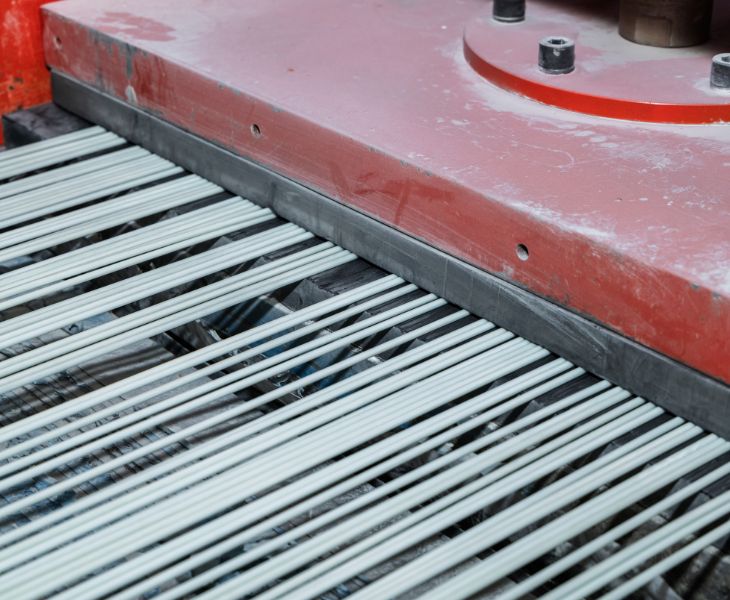
We manufacture storage tanks using the integral winding process, which creates a structure without any welded or jointed sections for better protection against leaks. The system requires no special maintenance after it enters operational use. The system has operated for more than twenty years through continuous service when combined with regular inspection.
Applications of FRP Tank

You can use it to store various acids and alkali solutions, organic solvents, and chemical raw materials.

In the sewage treatment plant, you can use FRP tanks to store wastewater.

You can use it to store petrochemical products such as crude oil, refined oil, and additives.

The system allows storage of different surface treatment solutions, which include electroplating solutions, acid washing solutions, and passivation solutions.

The system exists to store food-grade liquids, which include purified water, fruit juice, and edible oil.

The system functions as a storage facility for textile chemicals, which include dyes and auxiliaries, and bleaching agents.

The facility enables storage of pulp liquids, bleaching liquids, and waste liquids used in papermaking.

The facility enables storage of seawater, concentrated brine, and product water within the seawater desalination project.
The service life of FRP (fiberglass reinforced plastic) storage tanks is typically 20 to 30 years. The operating time depends on the materials you store and the storage conditions.
The tank can operate without issues for more than 30 years if the stored medium contains less corrosive substances at normal temperatures and the tank receives routine maintenance. The equipment will experience reduced operational time when it stores highly corrosive chemicals under extreme conditions. The storage tank requires regular inspections together with correct maintenance procedures to achieve extended operational time.
You need to establish a regular inspection system that will check for surface cracks and leakage, and deformation on the tank body. The stored medium temperature and pressure must be maintained at designated limits to prevent system overload. The inspection process should be improved to identify weak areas, which include connections and flanges, so that all detected problems can be fixed before they develop into major failures.
The FRP storage tank completely meets all environmental protection requirements. The FRP materials are safe,non-harmful, and have recycling capabilities. The system achieves outstanding sealing efficiency, which stops all hazardous materials from leaking to protect environmental safety.
What Is an FRP Tank
FRP storage tanks are also known as GRP storage tanks, which are storage containers made of glass fiber reinforced plastic (fiberglass reinforced plastic). The storage tanks made from FRP materials demonstrate superior resistance to corrosion compared to standard steel tanks, which serve as your factory’s acid and alkali solution and chemical storage requirements.
The process combines resin with glass fibers to restore plastic anti-corrosion capabilities while maintaining the original strength of the glass fibers. Therefore, it is highly favored by industries such as chemical engineering and petroleum.
What Chemicals Can Be Stored in an FRP Tank
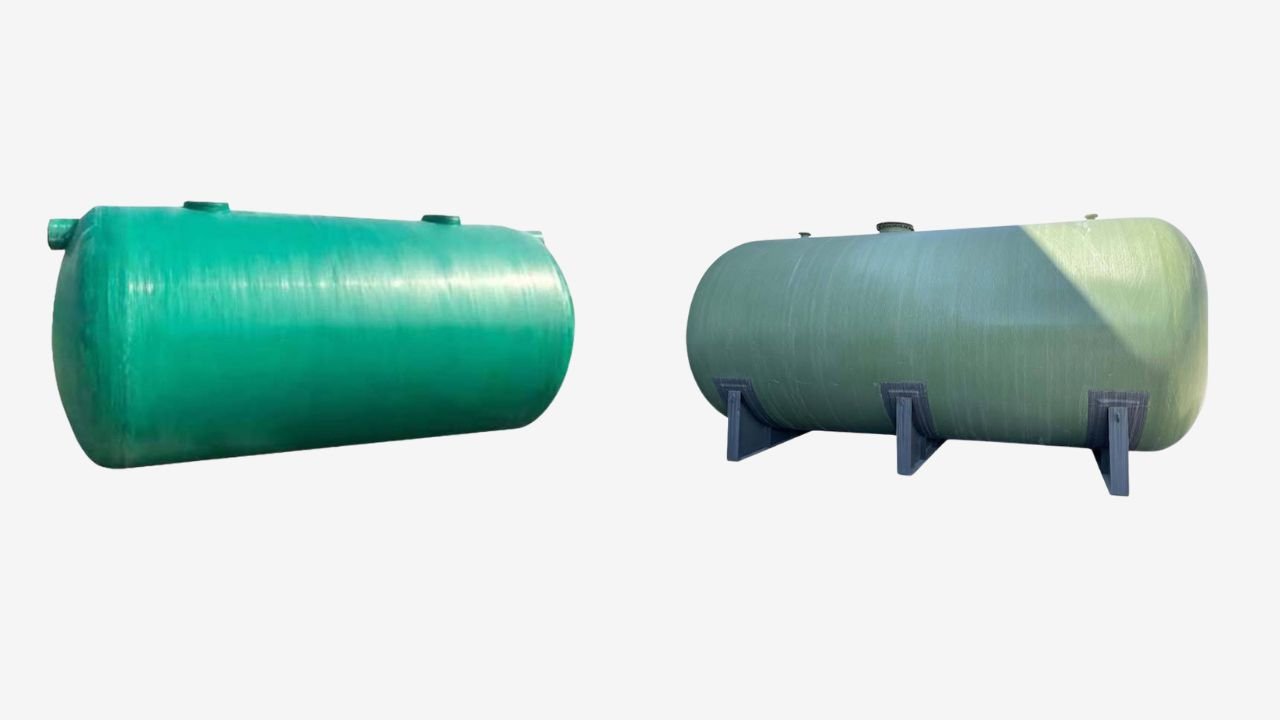
Strong Acid Chemicals
FRP tanks function as the most suitable storage solution for factories that require sulfuric acid, hydrochloric acid, and nitric acid storage. Do you know? because strong acids corrode ordinary steel tanks, which results in high maintenance expenses. The FRP tanks can handle sulfuric acid at 98% concentration and 37% hydrochloric acid, and all types of mixed acid solutions.
In industries such as electroplating, fertilizer production, metal surface treatment, and titanium dioxide manufacturing, FRP tanks provide excellent corrosion protection with an internal lining that needs minimal maintenance, which leads to significant savings in maintenance expenses and production downtime throughout their operational lifespan.
Alkaline Solution
The factory uses sodium hydroxide, potassium hydroxide, and ammonia water for its operations. The resin layer of FRP storage tanks provides complete protection against alkaline corrosion. The three solutions, which include 30-50% caustic soda solution, industrial ammonia water, and sodium carbonate solution, can be stored safely and securely.
Industries such as papermaking, textile printing and dyeing, soap and detergent production, as well as bauxite processing, which involve a large amount of alkaline solutions, often need to understand the crucial role of alkaline storage tanks.
Organic Solvents
organic solvents, which include methanol, ethanol, acetone, toluene, and xylene. The materials possess flammable and volatile properties, which create specific requirements for storage tank material compatibility. The incorrect material selection will result in either material swelling or structural cracking.
You can design FRP storage tanks with different resin formulations that match your storage requirements for vinyl ester resin and modified epoxy resin to achieve permanent chemical compatibility and material strength.
Industrial Wastewater and Sewage Systems
Industrial wastewater contains complex chemical components, which include corrosive materials, heavy metal ions, and organic waste substances. The inner walls of FRP tanks maintain a smooth and flat surface, which can prevent scaling. The system will provide you with reduced expenses for daily maintenance work, along with shorter cleaning periods.
Chlorides and Hypochlorites
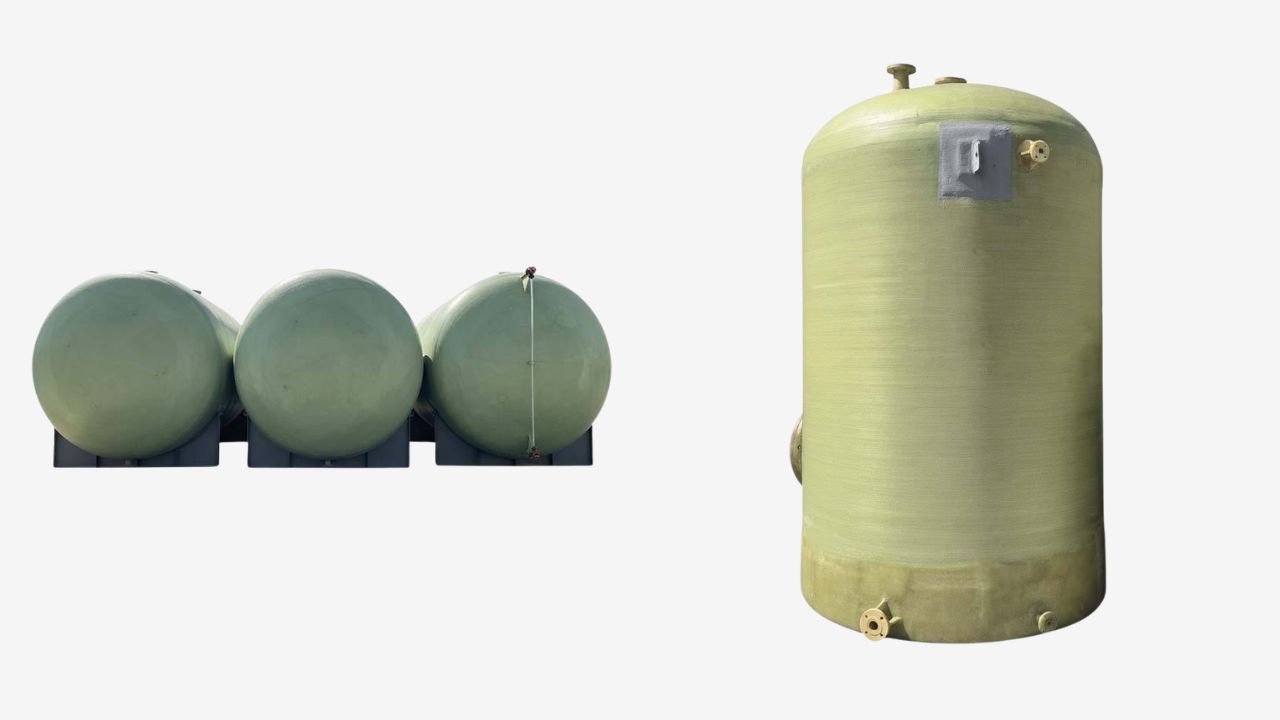
Which disinfection method does your water plant use between liquid chlorine, sodium hypochlorite solution, and chlorine dioxide? No matter which kind, the chlorine-based compounds all exhibit extreme oxidizing power and corrosive strength.
The special resin system used in FRP storage tanks protects against chlorine corrosion while keeping the tank safe from hypochlorite damage. At the same time, the FRP material itself does not react with chlorine through oxidation-reduction reactions, which prevents contamination of the stored liquid at the source.
Salt Water and Seawater
The problem of equipment corrosion in a high-salt environment is a very troublesome issue.
The corrosion process of carbon steel tanks, which come into contact with highly concentrated sodium chloride solutions, saturated brine, and natural seawater, shows an alarming speed that standard coatings cannot protect against.
FRP storage tanks provide complete protection against salt and chloride ion erosion, which enables their continuous operation for three decades in environments with 3-30% salt content. The benefits become especially clear when marine conditions produce humid weather together with salt fog.
Petrochemical Products
Does your oil field, refinery, or petrochemical enterprise need to store crude oil production water, sulfur-containing wastewater, demulsifiers, or various chemical additives? After research, the three storage facilities find FRP tanks suitable for holding sulfur-containing wastewater and oil field materials, polymer solutions, demulsifiers, corrosion inhibitors, scale inhibitors, and all other petrochemical auxiliary materials and chemical substances.
Food-grade Liquid
The production of FRP storage tanks can custom special resins which meet both FDA specificationsand food-grade standards. The containers can securely hold multiple substances, which include pure water, deionized water, softened water, concentrated fruit juice, edible alcohol, and various food additives. The system ensures both product quality and safety while it simplifies tank cleaning through its disinfection capabilities and decreases the risks of microbial contamination.
What are the Advantages of FRP over Traditional Storage Tanks
Superior Corrosion Resistance
FRP storage tanks can withstand strong corrosive media such as 98% concentrated sulfuric acid and 50% caustic soda. Your steel tank might be corroded within three years. The resin lining and glass fiber structure prevent chemicals from penetrating deeply. You won’t have to worry about tank leakage and replacement intervals.
Up to a 30-year Lifespan
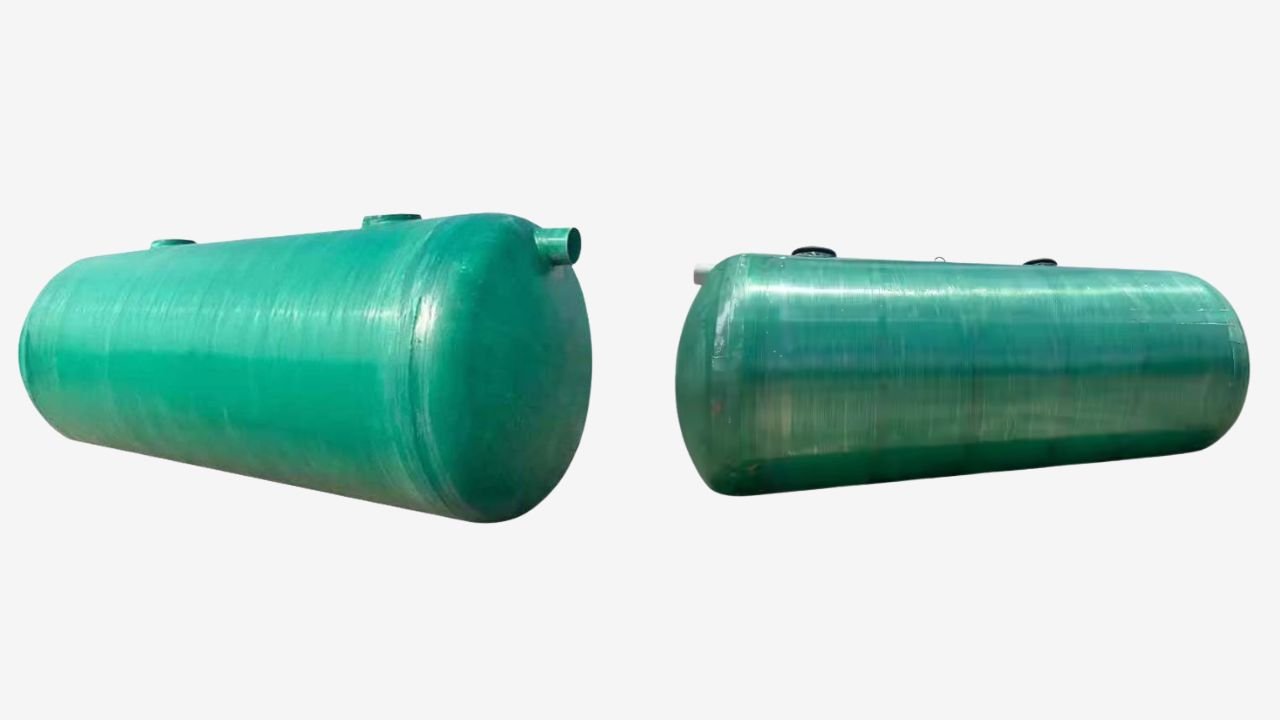
If you’ve calculated the total cost, you’ll understand that although the initial investment of FRP storage tanks may be similar to that of steel tanks, their lifespan can reach 30 years or even longer. FRP storage tanks require minimal maintenance. This means you can save multiple replacement costs and countless repair expenses throughout the entire lifecycle.
Lightweight and Easy Installation
The weight of FRP storage tanks is only one-quarter of that of steel tanks of the same volume. This saves a significant amount of foundation engineering costs. The lifting equipment requirements are low, and transportation costs are also significantly reduced. Especially if your factory is on a rooftop or in a space-constrained area, the lightweight advantage of FRP storage tanks becomes even more obvious.
Almost Zero Maintenance Cost
FRP storage tanks do not rust or accumulate deposits. The inner wall is smooth and easy to clean. You basically don’t need to arrange for dedicated personnel for maintenance. This saves labor costs while also saving a considerable amount of money.
Flexible Design and Customizable
FRP storage tanks can be customized in shape, size, and configuration according to your specific requirements. Whether you want a vertical, horizontal, or shaped tank, regardless of the volume (5 cubic meters or 500 cubic meters), or even the接管 position and number of manholes, they can all be customized according to your process flow. The configurability is very strong.
Excellent Insulation Performance
The thermal conductivity of FRP materials is very low, lower than the pores. This is beneficial for storing media with temperature requirements. Good insulation performance means better refrigeration efficiency. If you need to store hot water or need to maintain dry chemicals, FRP storage tanks can help you save energy costs for adequate heating or insulation.
Excellent Seismic Performance
If your factory is in an earthquake zone or has equipment vibration, you can take advantage of the benefits of FRP storage tanks. Its toughness and impact resistance are stronger than those of rigid steel tanks and concrete tanks. It is more prone to cracking under earthquake or environmental vibration. This is very important for your safe production and long-term stable operation, avoiding losses from disasters.
Environmentally Friendly and Safe without Pollution
FRP storage tanks do not corrode the stored medium after corrosion prevention and do not release harmful substances into the environment. Its sealing performance is good, effectively preventing chemical volatilization and leakage, helping to meet stricter environmental protection requirements, and reducing your environmental risks.
Non-conductive and Safer
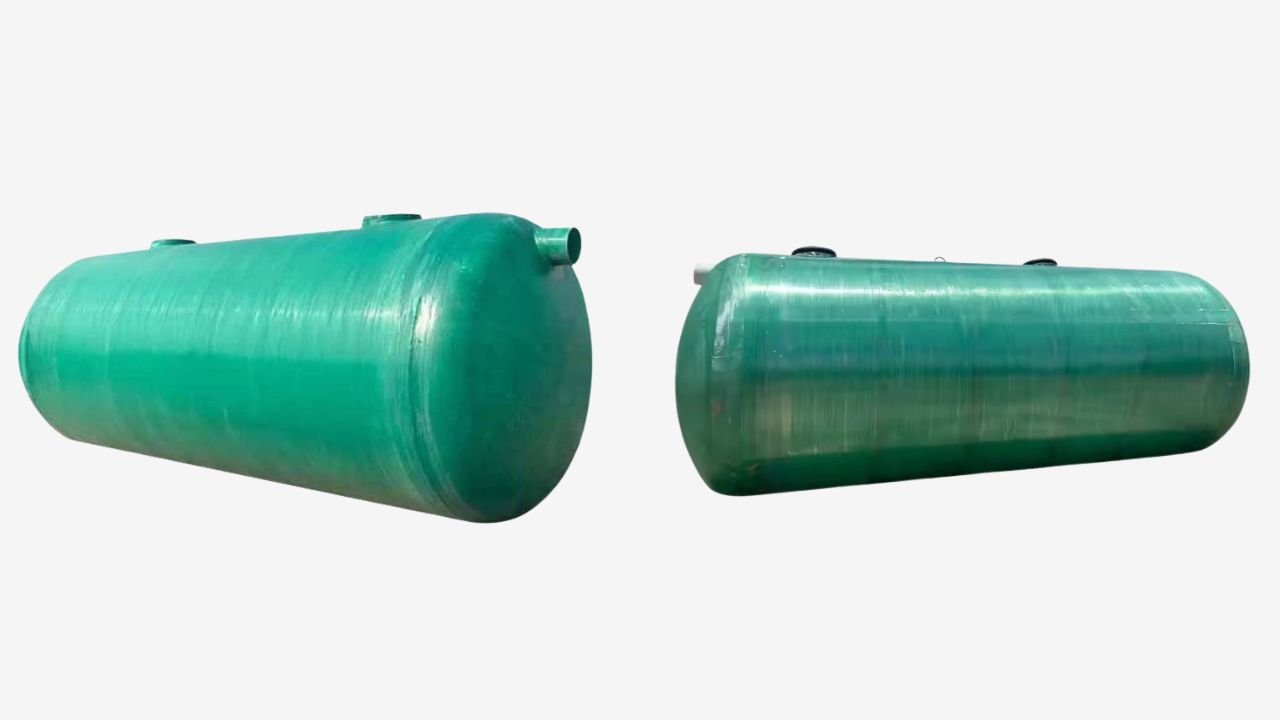
FRP tanks are insulating materials that do not conduct electricity or generate static sparks, making them safer to use in explosion-proof areas. Compared to metal tanks, which require grounding to prevent static electricity, FRP tanks have inherent advantages in terms of intrinsic safety and can reduce your safety risks.
Smooth Inner Walls without Scaling
The inner walls of FRP tanks are as smooth as mirrors and can be cleaned thoroughly with a simple rinse. This is particularly beneficial for your water treatment plant or any factory that needs to clean the stored medium, as it can maximize your cleaning efficiency and equipment utilization.
What Are the Potential Disadvantages of FRP Tanks
The water vapor that develops on the fiberglass tank surface during the wintertime cold will transform into ice, which creates numerous ice crystal structures. The ice layers that build up will contribute additional mass to the FRP storage tank. The fiberglass material exhibits lower hardness and impact resistance capabilities than metals, which creates a potential danger of cracking and deformation. The pressure tank can be protected against freezing through the implementation of heating and insulation methods or by selecting FRP pressure tanks that contain anti-freeze agents.
Where Are FRP Tanks Commonly Installed
Outdoor Chemical Plant Area
FRP chemical tanks are generally installed in the open area of the chemical plant. The storage tanks receive direct sunlight and rain exposure while they store multiple acids and alkali solutions and organic solvents. FRP materials provide better corrosion protection than metal tanks. You can store chemicals outdoors for a long time.
Wastewater Treatment Plant
FRP water tanks in wastewater treatment plants are mainly located in the chemical agent storage area and the sludge treatment area. You can allow their placement on outdoor concrete foundations or inside the dosing room. The systemoperates through pipeline connections and metering pump connections, which function together with the complete treatment procedure.
Coastal Areas
Coastal areas and their adjacent regions allow to build FRP pressure tanks through their coastal facilities. Select FRP storage tanks because these tanks withstand saltwater exposure. You can use fiberglass tanks for storing fresh water and temporary chemicals at your unloading area.
Remote Open Areas
Installation and transportation become challenging in remote areas that include mines and oil fields. At the construction site, FRP storage tanks require only basic foundation work to operate as storage units for production water, waste liquid, and chemical reagents.
Underground Installation
FRP tanks can be buried underground according to specific needs. Underground storage tanks serve two main purposes, which include storing oil at gas stations and conserving groundwater through water storage. The products provide you with space-saving benefits while delivering an attractive visual appearance.
Building Rooftops
Factories and commercial buildings keep firefighting water supplies to handle unexpected fire emergencies. You can install FRP water tanks on the rooftop platform. The system requires the installation of small-sized equipment, which needs a steel frame support to prevent structural damage to your building.