
Why Choose Our FRP Square Tube
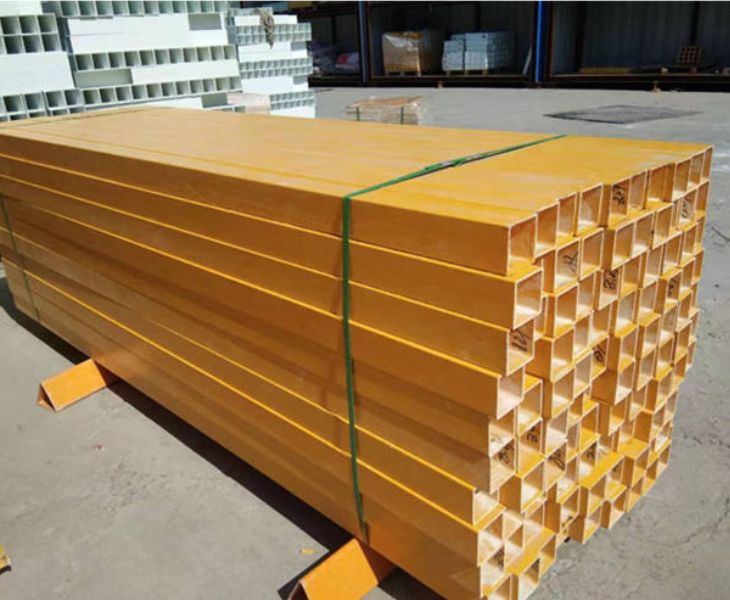
- Our FRP square tube is produced by a computer-controlled winding composite molding process with wall thickness ranging from 3 to 10 mm.
- During the mass production process, we will control the key dimensional tolerances of the FRP square tube within ±0.2 mm.
- Apart from the FRP square tube, we also produce and match elbows, flanges, supports, and other sealing parts to achieve seamless connection.
- From prototyping and sample production to mass production, you can communicate directly with our engineering team and receive a prompt response within 24 hours.
FRP Square Tube Supply Solution Designed for the Project
If your project requires maintaining structural strength while reducing weight, FRP square tubes offer a more cost-effective solution than steel. We provide standard specifications and also understand your project’s structural requirements, assembly logic, and long-term operating environment at the same time. Contact us for your customized FRP square tube solution.
Types of FRP Square Tube
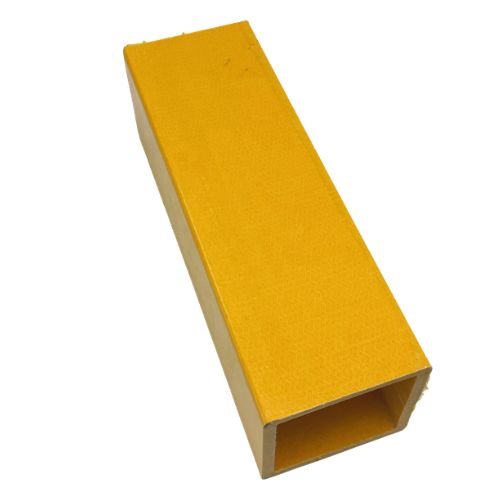
Its inner layer adopts a pure resin anti-corrosion inner lining structure, which effectively isolates acid mist, sulfides, and highly corrosive media, avoiding performance degradation caused by fiber exposure. Suitable for continuous operation chemical and environmental protection projects.
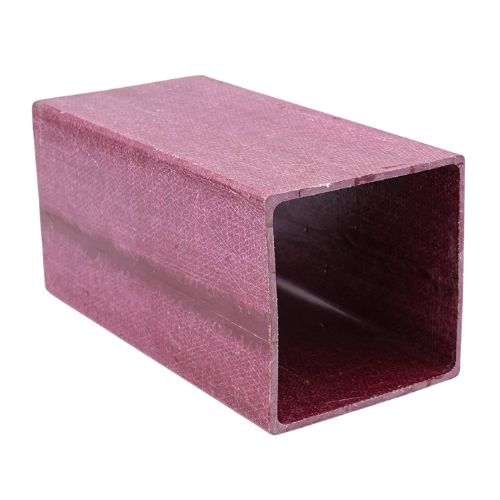
Incorporate a quartz sand filling layer in the structural reinforcement layer. The sand-filled structure significantly enhances the tubes’ circumferential stiffness and external pressure resistance without increasing a lot of cost.
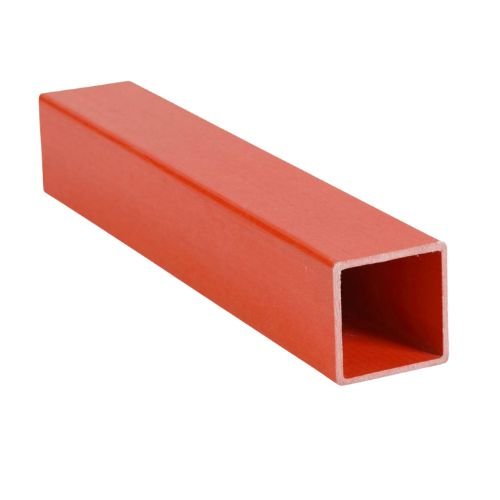
By adding an efficient flame-retardant system, it can achieve national standard B1-level flame-retardant standards. It shows self-extinguishing when separated from the fire, does not produce toxic smoke during combustion, and is commonly used to meet strict fire requirements.
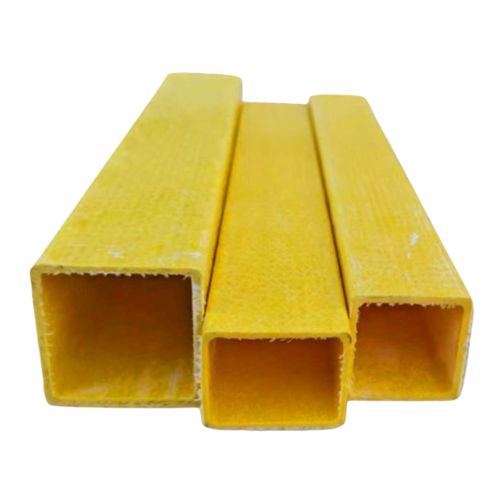
Add UV stabilizers and weather-resistant pigments to resin systems, enabling your pipes to withstand outdoor exposure, preventing chalking, fading, and strength degradation for a long time. Widely used in photovoltaic mounting structures, outdoor guardrails, coastal facilities.
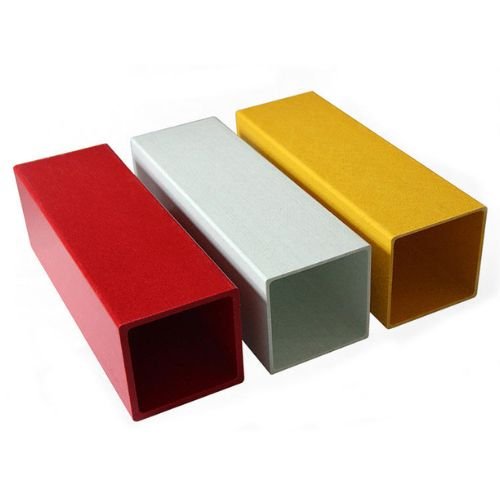
Made with a special resin system and demolding process, achieving a surface roughness of Ra less than 0.8 μm. The surface is not prone to dust adhesion and makes your cleaning and maintenance cost low, suitable for high-cleanliness environments.
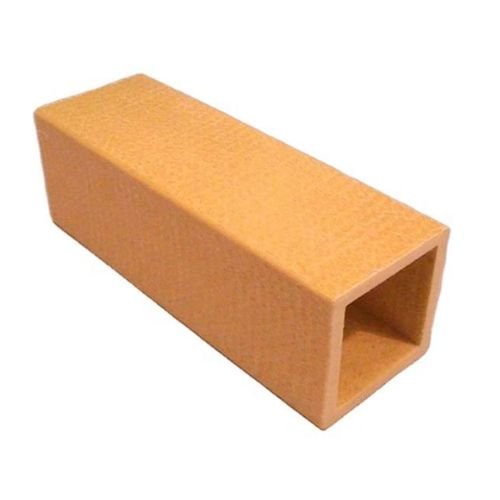
Control the surface resistivity less than 10¹¹ Ω through adding anti-static agents, effectively preventing static electricity accumulation. It is suitable for places with flammable and explosive hazards, avoiding safety accidents caused by static electricity.
Features of FRP Square Tube

The FRP square tube has a service life of over 50 years, significantly outperforming ordinary steel and greatly reducing the costs of later replacement and maintenance.

It has good tolerance to acids, alkalis, salts, organic solvents and marine environments, does not rust or age, and is particularly suitable for chemical industries, and coastal projects.

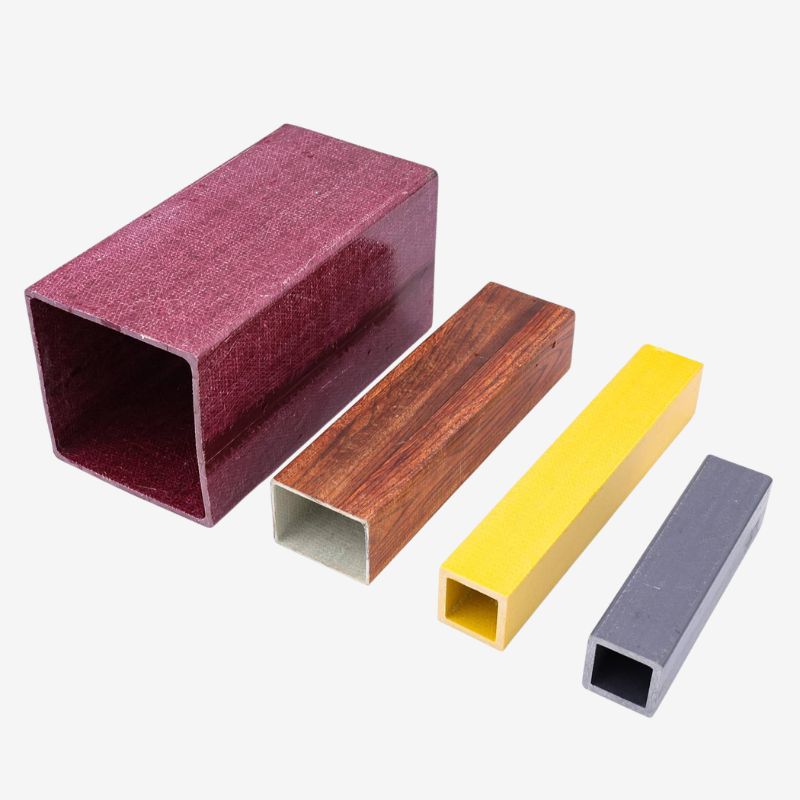
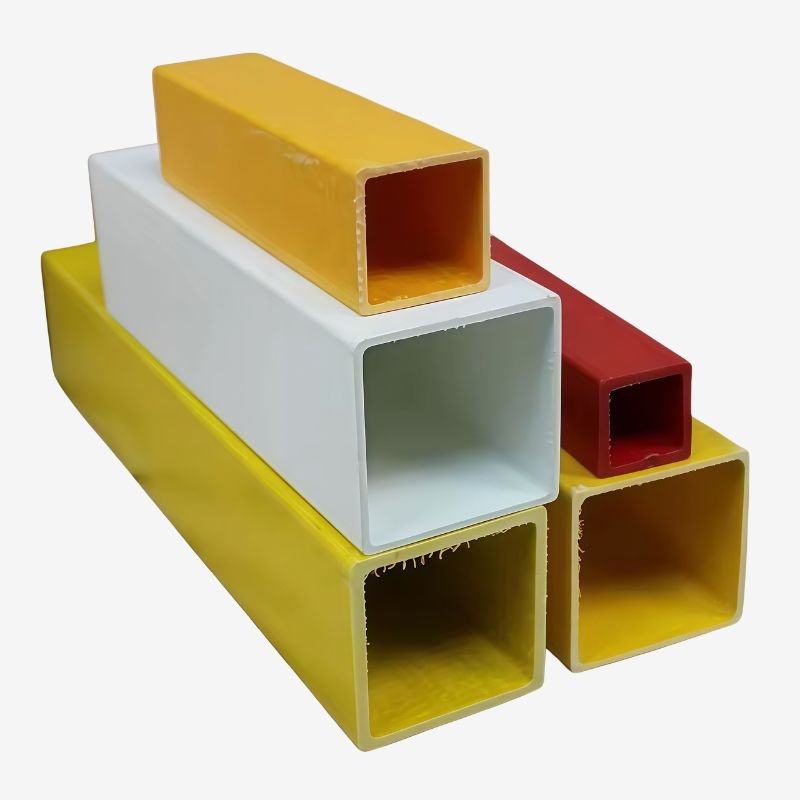
It can be customized in cross-sectional size, thickness, color and flame retardant grade,according to your project requirements, to keep a high match between material performance and structure.

FRP square tube performs stably in internal pressure resistance, external pressure resistance and impact resistance, usually used in load-bearing structures and dynamic conditions.

It can be used for a long time in an environment ranging from -70℃ to 250℃, does not crack or fail under low temperatures or freezing media conditions.

Its density is approximately 1/4 of that of steel and 2/3 of that of aluminum, significantly reducing transportation and installation cost, especially suitable for large-span or high-altitude structures.

FRP is non-conductive and you can customize it with flame retardant formulas to reach B1 flame retardant grade, commonly applied in power distribution rooms and explosion-proof workshops.

It supports cutting, drilling, bonding, and can be connected by bolts, snap or flange without the need for special processing equipment. It offers a high on-site construction efficiency.
Highly Customized FRP Square Tube
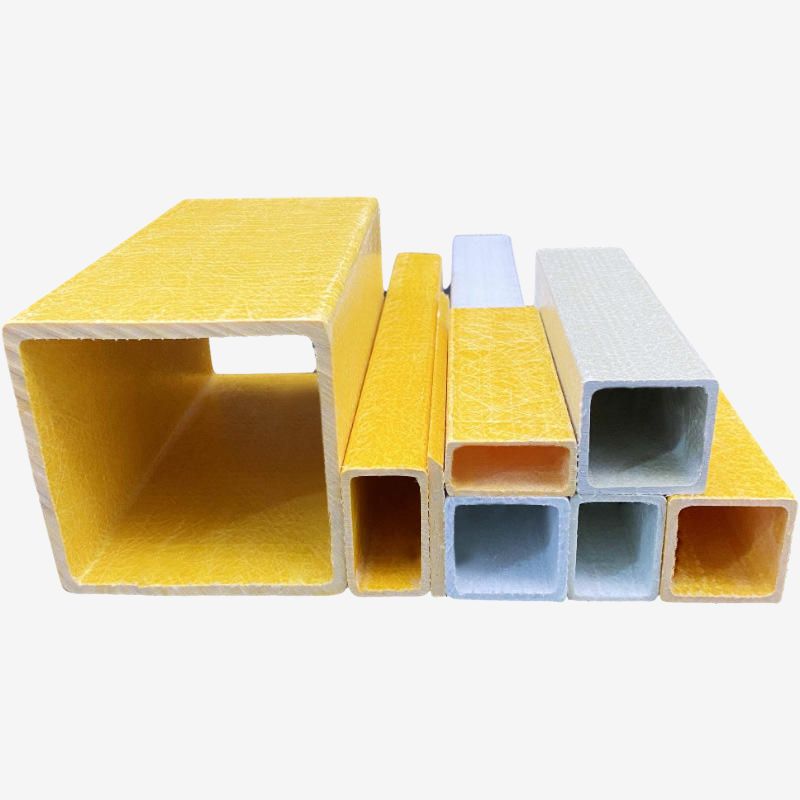
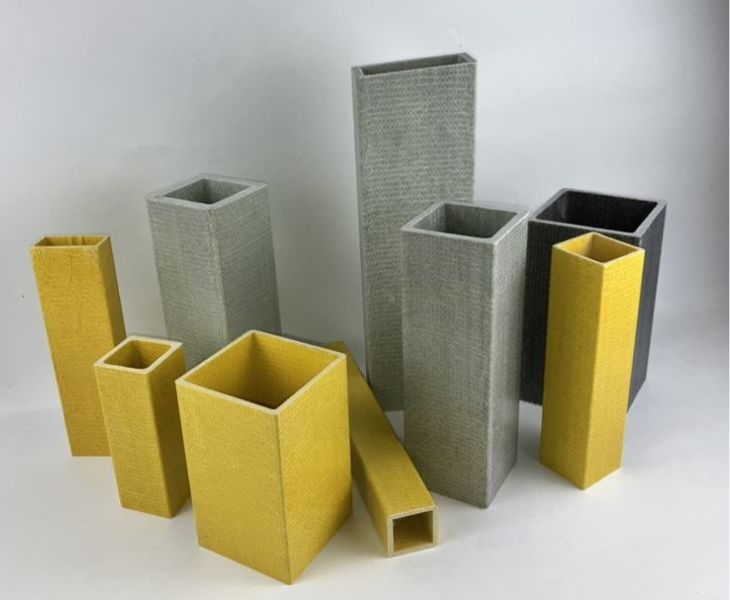
We support flexible customization with different outer diameters, inner diameters, wall thicknesses (from 3 to 10 mm) and lengths with individual lengths up to 12 meters. This helps you to reduce the joint number and improve the structural stability and installation efficiency. We can also match different resin systems such as polyester, epoxy vinyl and epoxy according to your project requirements. At the same time, we provide surface treatment options such as smooth surface, polished surface and UV-resistant coating.
Stable FRP Square Tube Production Capacity
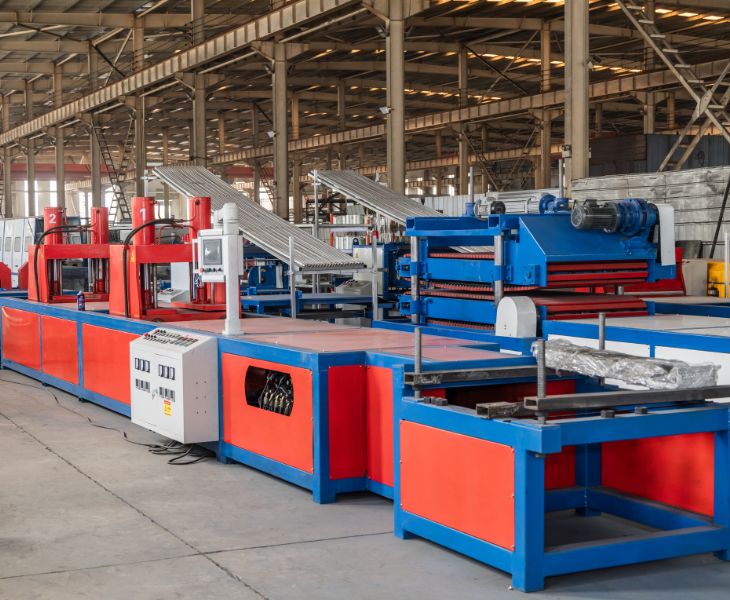
For long-term or batch projects, we focus on controlling FRP square tubes’ batch consistency and structural reliability. We strictly control the tolerances of each key dimension. All products undergo load tests and bending performance tests before leaving the factory to ensure that the pipeline will not deform or break under harsh conditions. Whether you need a supporting structure or a pressure-bearing tube, we can guarantee that the products meet your actual working conditions requirements.
Certifications And Testing Reports
All FRP square tube products have obtained ISO 9001, ISO 45001, and ISO 14001 management system certifications. The production process is traceable and the quality standards are clearly controllable. In addition to providing high-quality products, we can also deliver materials and reports that comply with local regulatory requirements for different international projects or market demands, including third-party testing reports such as SGS and TÜV.
Applications of FRP Square Tube

FRP square tubing is widely used in industrial workshops, municipal projects, and civil construction due to its lightweight, maintenance-free, and anti-aging properties. Compared to steel structures, it requires no periodic anti-corrosion treatment, resists corrosion and deformation over extended use, particularly suitable for projects demanding low maintenance costs and high construction efficiency.

In chemical workshops, storage and transportation areas, and production lines, FRP square tube is often used as pipe supports, equipment supports, and structural frameworks. It has long-term tolerance to acids, alkalis, salt fog, and organic solvents, avoiding structural failure and frequent replacements due to corrosion, and helping you achieve more stable and controllable operating costs in harsh corrosive conditions.

In environments with high humidity, multiple corrosive media and complex impurities, FRP square tube shows excellent dimensional stability and long-term reliability as the supporting structure for sewage treatment equipment, pumping stations and pipe galleries. Even in immersion in water or humid conditions for a long time, it will not occur the common rusting and peeling problems of steel materials.

Depending on its fully insulated, non-conductive, no electromagnetic interference and customizable flame-retardant properties, FRP square tube has become one of the commonly used structural materials in the electrical power field. It is often used in applications requiring high safety standards and compliance, such as distribution room frames, cable supports, and electrical equipment support structures.
In most medium-load structures, FRP square tubes effectively replace steel or aluminum square tubes. Compared to steel, it does not rust or corrode. And it is more stable under long-term loads and outdoor conditions than aluminum one.
We will help you evaluate whether it is suitable depending on the load requirements, span, and usage environment.
Regular specifications are usually deliverable within 2-3 weeks. If you need custom specifications, it will typically take 3-5 weeks according to the mold and order quantity. We will clearly communicate the delivery time before confirming the order to ensure it matches your project schedule.
Yes. On the one hand, FRP square tubes are naturally corrosion-resistant which hardly rust or mold, and are ideal for outdoor environments. On the other hand, we can add UV anti-aging coatings or weather-resistant resin systems on the surface to delay surface aging and maintain the stability of the structural performance.
What is FRP?
FRP , also known as Fiber Reinforced Plastic, is a composite material made of glass fibers as the reinforcing material and resin as the matrix. The glass fibers mainly bear the structural strength and stiffness, while the resin is responsible for bonding, corrosion resistance and environmental stability. FRP square tubes do not rely on the metal strength. Instead, through the combination design of the fiber layup direction and the resin system, it keeps lightweight while delivering you long-term load-bearing capacity and handling complex operating conditions.
Resin Types for FRP Square Tubes
Unsaturated Polyester Resin
Unsaturated polyester resin has low cost and stable molding with basic corrosion and weather resistance properties. It is commonly used in general industrial structures, building frameworks, and ordinary equipment supports, especially for projects with clear performance requirements and sensitive budgets.
Vinyl Ester Resin
Vinyl ester resin performs outstandingly in acid, alkali, salt resistance, and solvent resistance. It is suitable for chemical workshops, sewage treatment systems, marine and highly corrosive environments. If your project is exposed to chemical media or salt spray for a long time, this is a more reliable choice.
Epoxy Resin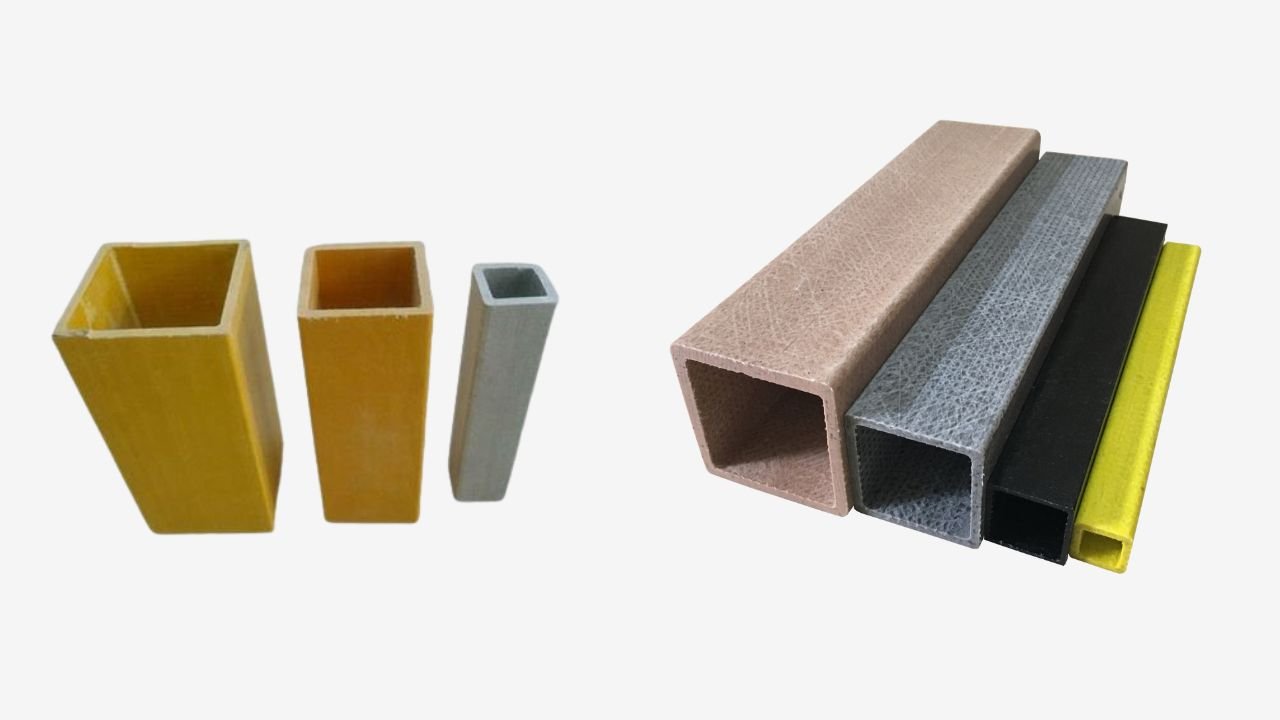
Epoxy resin has higher structural strength, temperature resistance and bonding performance. So it is usually adopted in high-end equipment brackets, precision mechanical frames or high-temperature working conditions. When the project has high requirements for structural stability and service life, the epoxy system is a more ideal solution for you.
How to Produce The FRP Square Tube?
Winding Process
The glass fiber winding process forms FRP square tubes through a computer-controlled. The fibers are laid at multiple angles in both circumferential and axial directions to create a bidirectional reinforced structure. This ensures that the resin fully penetrates the fibers, which could improve the material’s torsional resistance, pressure resistance, and overall structural strength. It is particularly suitable for engineering projects that require high bearing capacity and long-term reliability.
Laminated Molding Process
The laminated molding process adopts a continuous automated production method. It combines the glass fibers with the resin, then shapes and cures them in a mold. This process can stably control the cross-sectional dimensions and fiber content, offering you highly consistent dimensions during mass production. For standard-sized FRP square tubes, the laminated molding process is an ideal choice, especially for long-term supply, repeat order projects, such as municipal engineering, large-scale buildings, and public facilities.
How to Install FRP Square Tubes
Tools
You can directly use a puzzle saw, circular saw or hand saw for cutting. The cuts are neat and there will be no sparks like those from steel pipes. Its operation is simple and safe.
Connections
The connections can be flexibly selected according to your structural design and force requirements. Common solutions include structural adhesive bonding, mechanical fastening, resin welding, and others. They can meet the requirements for temporary installations as well as the stability demands of permanent structures. It is common to take the combination of bonding and mechanical fastening in most projects which could provide you a good strength and quick installation.
It is important to note that stainless steel fasteners or composite fasteners are recommended to avoid potential hazards caused by metal corrosion or electrochemical reactions.
Protection
During the processing and installation process, please properly protect the FRP square tube to avoid impact from hard objects or improper dragging. Those may damage the surface resin layer or UV protection layer. If your tubes’ surface coating is damaged, it may affect the long-term weather or corrosion resistance.