
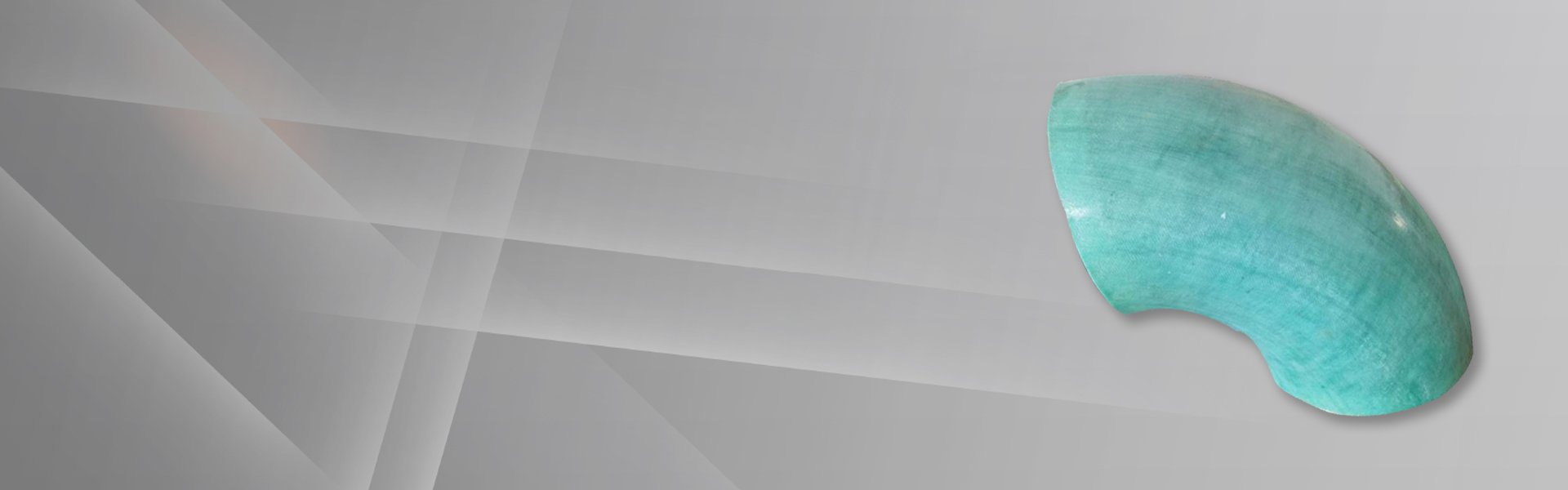
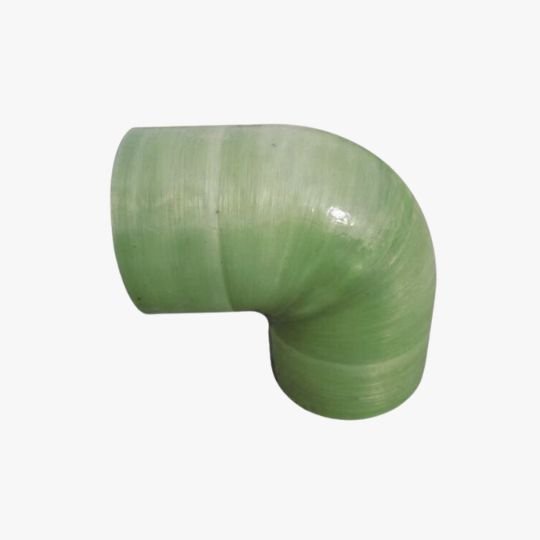
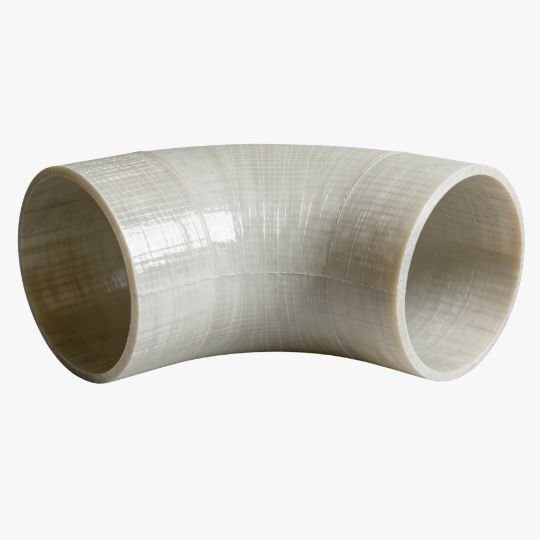
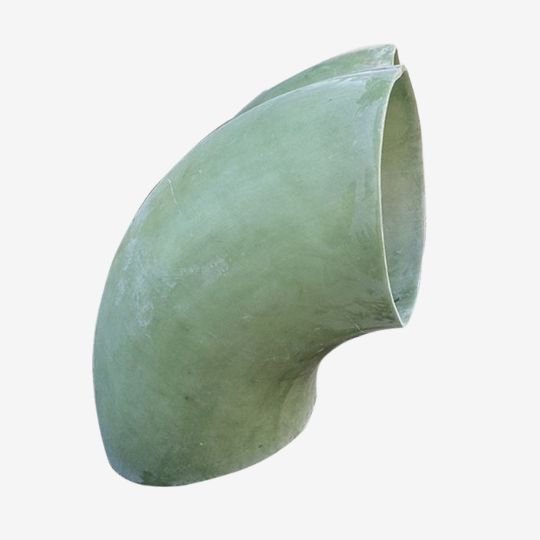
Why Choose Our FRP Elbow?
- Support customization of any angle, radius, and special connections, facilitating on-site installation.
- Design the FRP elbow structure and resin solution precisely according to the medium type and pipeline environment.
- Each FRP elbow undergoes strict hardness, corrosion, and spark tests before leaving the factory, ensuring quality compliance.
- Use brackets and bubble columns for packaging to ensure that the products remain undamaged during long-distance transportation.
Reliable FRP Elbow Manufacturer in China
We are a FRP elbow manufacturer with 20 years of experience and are dedicated to providing FRP elbows for the chemical, power, and food industries. Our Chinese factory is certified to ISO9001 and strictly controls product quality to prevent corrosion, perforation, and leakage at connections. We support full customization, including angles, radii, sizes, special connection openings, etc.
Classification of FRP Elbow
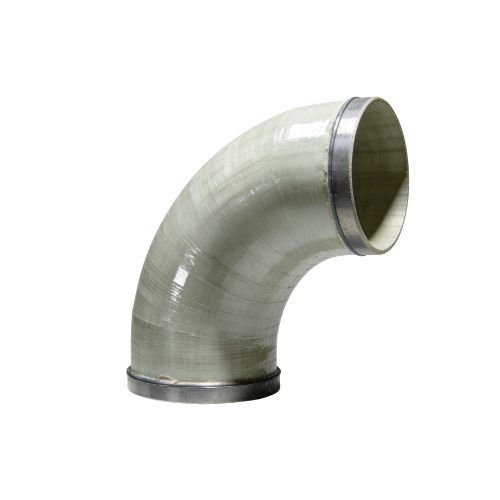
The 45° FRP elbow allows fluids to change direction smoothly. This reduces the impact and wear on the pipe wall. It is used in long-distance transportation and high-speed fluid.
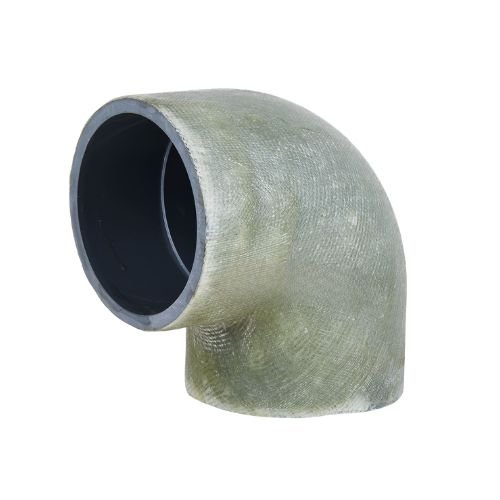
The 90° FRP elbow is most used in the chemical and power industries and saves space for the pipeline system. It withstands large fluid impact and pressure, and is used for media of a general nature.
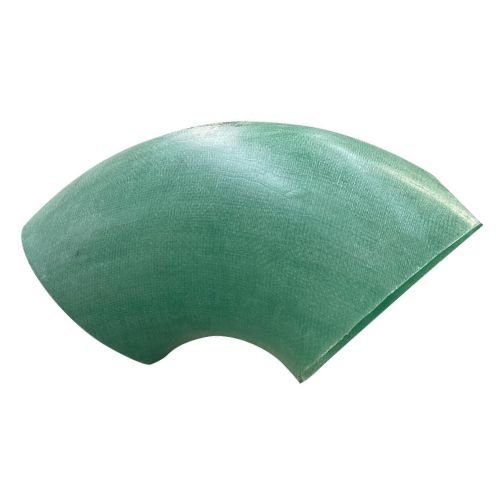
The 180° FRP elbow has a U shape and is used in the circulation system of pipelines to cause the medium to reverse flow. It is suitable for a heat exchange system and a reflux pipeline.
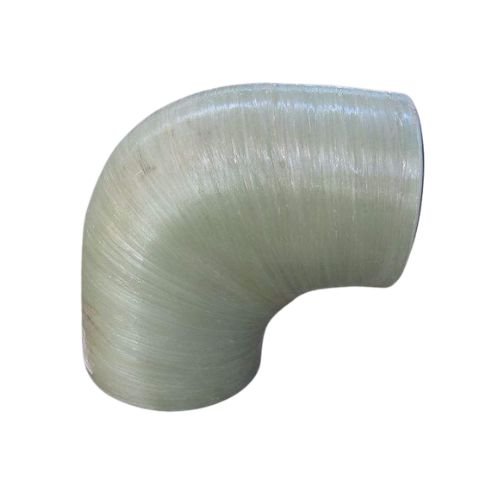
Non-standard angle FRP elbows can be customized according to your requirements, including 15°, 30°, 60°, 135°, etc. They are used for renovation projects and special equipment interfaces.
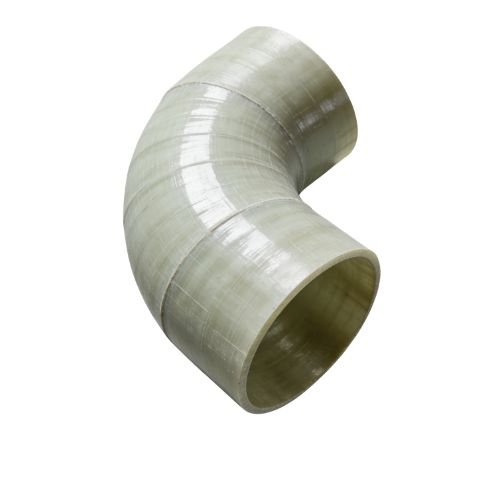
FRP pressure elbows have high strength and pressure resistance, and are suitable for >1.6 MPa high-pressure systems, such as high-pressure chemical transportation and natural gas pipelines.
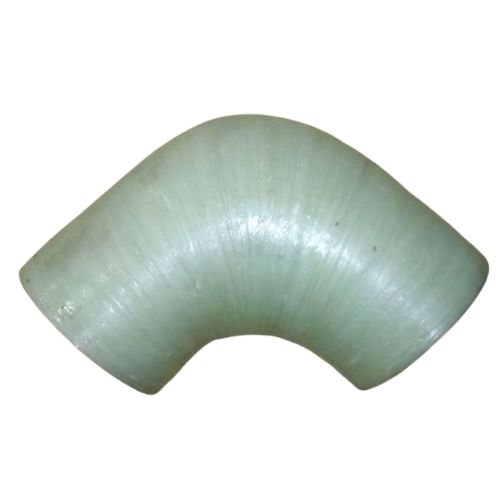
FRP ventilation elbows are suitable for low-pressure and low-flow environments, such as ventilation and air conditioning systems. They reduce energy consumption and improve ventilation efficiency.
Features of FRP Elbow

Local plies were added at the bend of the FRP elbow during manufacturing, which enhances their wear resistance and impact resistance.

The molds used for manufacturing FRP elbows are precisely processed to ensure the angle error of the elbows within ±1°, thereby guaranteeing a perfect fit during installation.

A dense molecular structure is formed through high-temperature and high-pressure treatment. It effectively prevents the penetration of the medium and avoids the corrosion of the elbow.

The surface of the FRP elbow is smooth, resulting in low friction resistance when the medium passes through. It is less prone to scaling, ensuring hygiene and transposition efficiency.
Thermal Properties That Match Steel
When the piping systemis installed, it often involves pipe connections made of different materials. When the temperature changes, the inconsistent expansion of the pipes causes the connection points to crack. As a professional manufacturer of FRP elbows, the thermal expansion coefficient of our FRP elbows is close to that of steel, so they are less likely to crack when the temperature changes.
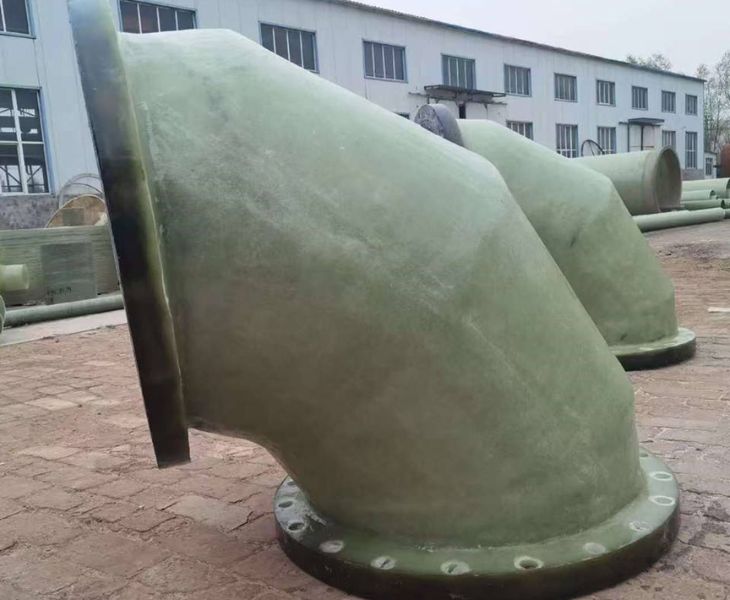
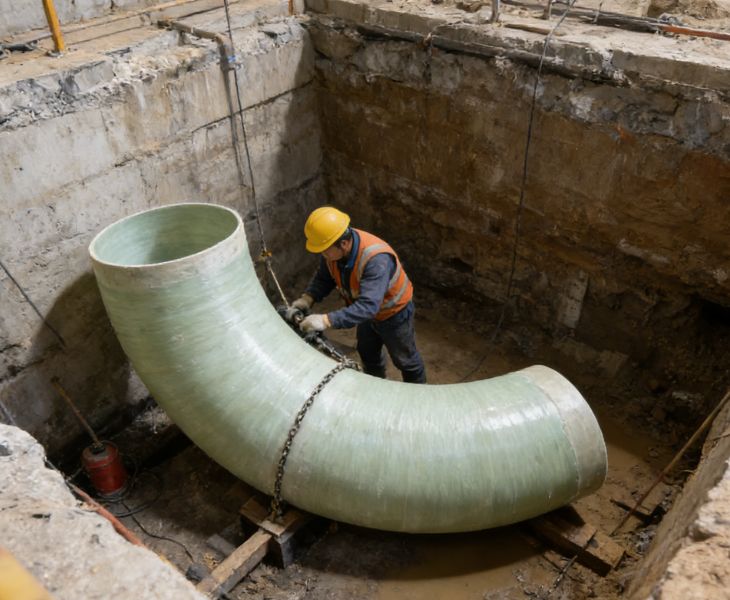
Improve Construction Efficiency
FRP elbows are lightweight and high-strength, and they do not require mechanical transportation in complex underground environments. They can withstand the corrosiveness of the underground environment and do not need to be wrapped with concrete after installation, thus shortening the construction period.
Application of FRP Elbow

FRP elbows can withstand the corrosion caused by H₂S during oil transportation and are often used for transporting sulfur-containing crude oil. They prevent economic losses from crude oil leakage.

Vinyl ester FRP elbow can withstand the corrosion of HCL, H2SO4, and NaOH without cracking, avoiding medium leakage and production halt.

The FRP elbow with ceramic lining can withstand the high-speed impact of solid particles,, often used for the transportation of mineral materials, coal powder, and slag.

The corrosion resistance of FRP elbows makes them used in the flue gas desulfurization system of power plants. Their light self-weight also makes them suitable for wind turbine blades.

The smooth FRP elbow surface makes it less prone to scale during transporting food raw materials. Its stable chemical properties avoid chemical reactions with food, thus ensuring the safety of the food.

The inner wall of the FRP elbow is smooth without dead corners and can withstand ozone disinfection, meeting the high hygiene standards of the pharmaceutical industry.
We offer sealant specifically for the installation of FRP elbows. It is compatible with FRP and forms a sealing layer after curing.
All our FRP elbows undergo airtightness tests before leaving the factory, ensuring zero leakage during use.
For industries with strict hygiene standards, such as the food and pharmaceutical industries, we offer food-grade FRP elbows. They are made of food-grade resin. The inner wall is smooth and doesn’t have dead corners, making it difficult for bacteria to grow. It does not release harmful substances and will not adsorb anything over long-term use.
FRP materials convert vibration energy into heat energy to achieve vibration reduction, rather than transmitting and amplifying vibrations like metal elbows.
If your pipeline system experiences strong vibrations, we recommend using thickened FRP elbows or adding supports to the pipeline.
The surface of FRP material is smooth, and the inner wall of our FRP elbows is mirror-polished, which is less prone to particle adhesion and scaling. This facilitates the cleaning of your pipelines, reducing the frequency and cost of cleaning.
The ordinary FRP elbows can intelligently withstand positive pressure for transportation. Taking this into account, we design FRP elbows that can operate in negative-pressure environments. They are thicker and more rigid than ordinary elbows. Additionally, external strengthening ribs have been added to increase their stability during operation under negative pressure and prevent collapse.
What Is An FRP Elbow?
FRP elbows are connectors made of FRP and are used on the bends of pipeline systems. FRP elbows have excellent performance and can eliminate the problems of corrosion and leakage caused by metal elbows. They are widely applied in fields such as chemical engineering, petroleum, and power.
Our FRP elbows are scientifically designed, and the materials are proportioned precisely, ensuring no leakage or safety hazards throughout their 20-year lifespan.
Key Designs of FRP Elbows
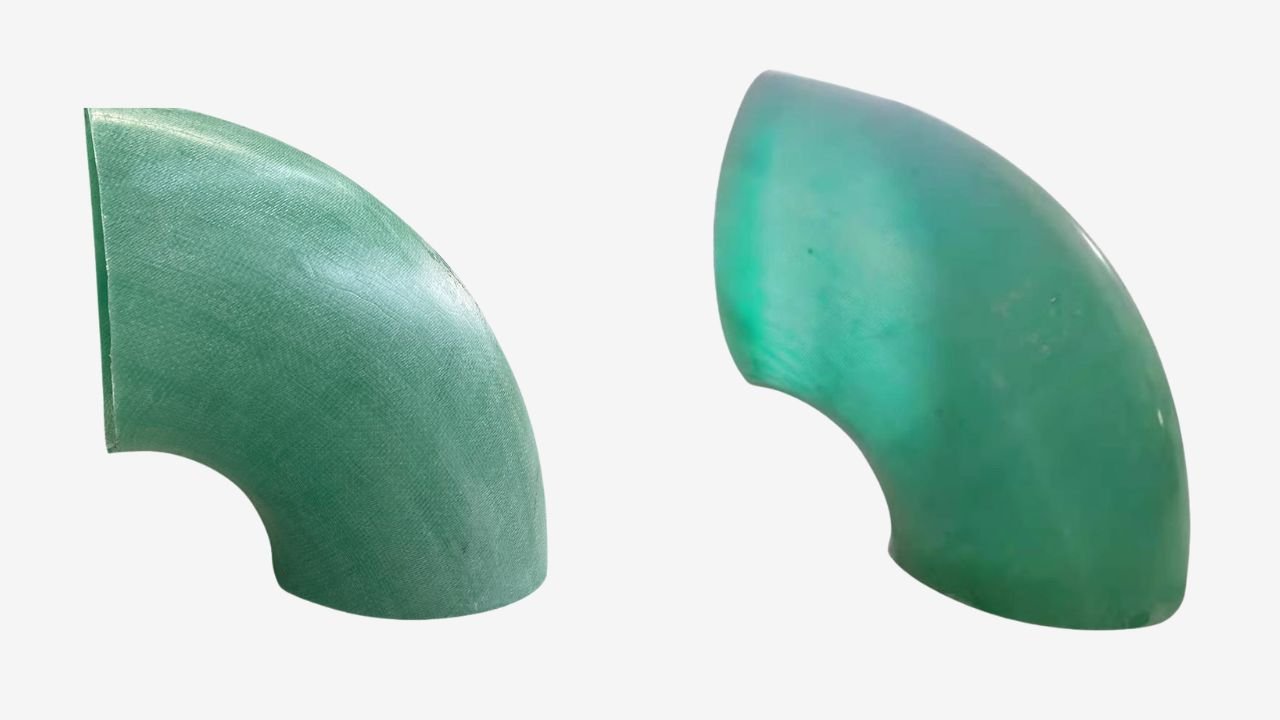
Radius of Curvature
In the pipeline system, the bends in the piping system bear a greater impact force compared to the straight pipes. Therefore, 80% of leakage incidents occur at connections. The flow resistance is closely related to the curvature radius of the FRP elbow. At the same flow rate, the larger the curvature radius, the smaller the resistance.
We offer various curvature radius options, such as 1.5D, 3D, and 6D. If the medium in the pipeline is a high-speed fluid or particles, we recommend FRP elbows with larger curvature radii, such as 3D or 6D, which reduces losses caused by fluid impact. If the space of your pipeline system is narrow, we recommend short-radius FRP elbows, such as 1.5D.
Non-Standard Angle Design
In some special equipment interfaces and pipes that need to avoid obstacles, standard angles such as 45° and 90° cannot be precisely connected. Forceful installation may cause the pipeline to burst.
The FRP material is highly customizable, enabling flexible design of angles and shapes. For elbows with special angles, we use segmented molds and manual layering to achieve customizations ranging from 15° to 135°, perfectly fitting your piping system.
Layup Design
The layup design is an important factor in preventing deformation of FRP elbows. The uniform distribution of fibers ensures the consistency of the mechanical properties of each part of the FRP elbow. However, the back of the elbow is prone to thinning due to stretching during the actual manufacturing, and can not resist fluid impact.
We add reinforcing layers at the corners of our FRP elbows, which is 25% thicker than the straight part, to better withstand the impact of fluids. This thickened layer design enhances the impact resistance of FRP elbows by 50%, eliminating the problems of wear and perforation.
How to Choose The Appropriate FRP Elbow
Although FRP elbows have excellent physical and stable chemical properties, differences in manufacturing processes and raw materials can lead to variations in their outstanding performance advantages. Choosing the right FRP elbows extend the lifespan of your pipeline project.
Resin Raw Material
Isoprene-Type Unsaturated Polyester Resin
Isoprene-type unsaturated polyester resin is the basic raw material for FRP elbows. It can withstand general acid and alkali corrosion, such as ≤10% HCL and ≤30% NaOH. It is most used in low-corrosive sewage treatment pipelines.
It has a high cost-performance ratio and can meet the basic industrial requirements. If your medium is not highly corrosive and your budget is limited, we recommend isoprene-type unsaturated polyester resin.
Vinyl Ester Resin
Vinyl ester resin can withstand strong oxidizing media, such as concentrated hydrochloric acid with a concentration of ≤ 37% and concentrated sulfuric acid with a concentration of ≤ 70%. If your chemical pipeline needs to transport demanding chemical media, we recommend custom FRP elbows for chemical plants that are made with vinyl ester resin. Moreover, its strong tolerance to concentrated sulfuric acid makes it also suitable for a gas desulfurization system in power plants.
Epoxy Resin
The inner wall of the epoxy resin FRP elbow is smooth and dense, with no impurity precipitation. It can withstand temperatures sterilization above 80℃, ensuring that the inner wall of the pipeline meets the hygiene standards for food and medicine.
If your pipeline transports food or purified water, or if your project needs to be certified by the FDA, epoxy resin FRP elbows are a good choice.
Phenolic Resin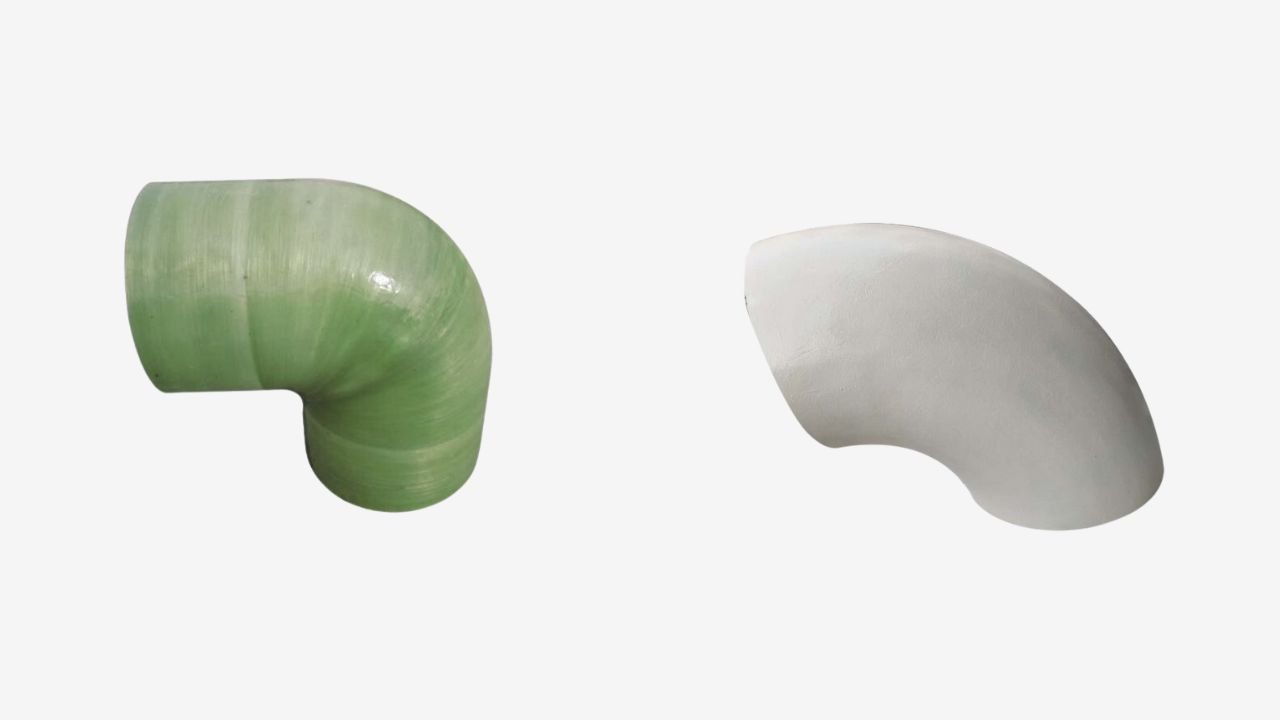
Compared with other resin raw materials, phenolic resin has excellent flame retardancy. It can withstand temperatures of 150 ~ 180℃ and does not release toxic gases.
If your piping system has strict requirements for insulation and fire protection, such as ventilation systems or high-temperature pipe fittings, phenolic resin FRP elbows can meet your safety and compliance needs.
Work Environment
The temperature and pressure of your pipeline space determine the thickness of the FRP elbow.
Normal Temperature and Pressure Environment
-15℃ to 80℃ is the normal operating temperature range for most pipeline systems. A non-pressure conveying system with a pressure of ≤ 1.0 MPa will not cause the matrix resin to soften or internal structure damage. We recommend standard thickness FRP elbows.
High-Temperature and High-Pressure Environment
In high-temperature working environments ranging from 80℃ to 180℃ or in high-pressure conditions of 1.0 – 1.6 MPa, we recommend thickened high-pressure FRP elbows made by phenolic resin. During manufacturing, it increases the number of winding layers to make the internal structure more solid.
A Working Environment below -40℃
The low-temperature environment increases the brittleness of FRP elbows, and they are prone to cracking under the impact of the fluid. We recommend FRP elbows with a CPVC inner liner, as they can maintain toughness even at low temperatures.