
Why Choose Our FRP Cooling Tower
FRP Cooling Tower Manufacturer for Industrial and HVAC Projects
- Industrial-grade FRP structure for stable and continuous operation outdoors;
- Over 10 years of industrial experience to ensure reliable product quality;
- Provide professional technical support on drawings and structure design;
- Support flexible customization on shapes and dimensions to meet actual demands.
Your Reliable FRP Cooling Tower Supplier in China
As a professional FRP cooling tower manufacturer, our product is designed based on actual project demands rather than consistent equipment. With 10 years of production experience, we have mature production lines and advanced technologies to ensure stable performance and long service life of the FRP cooling tower. If you are seeking for a reliable FRP cooling tower supplier, please feel free to contact us for customized solusions.
Product by Structure
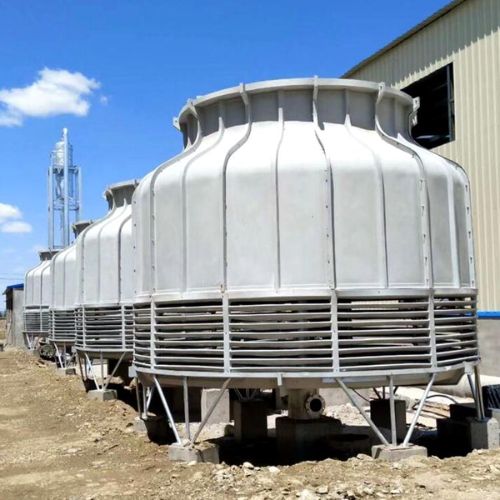
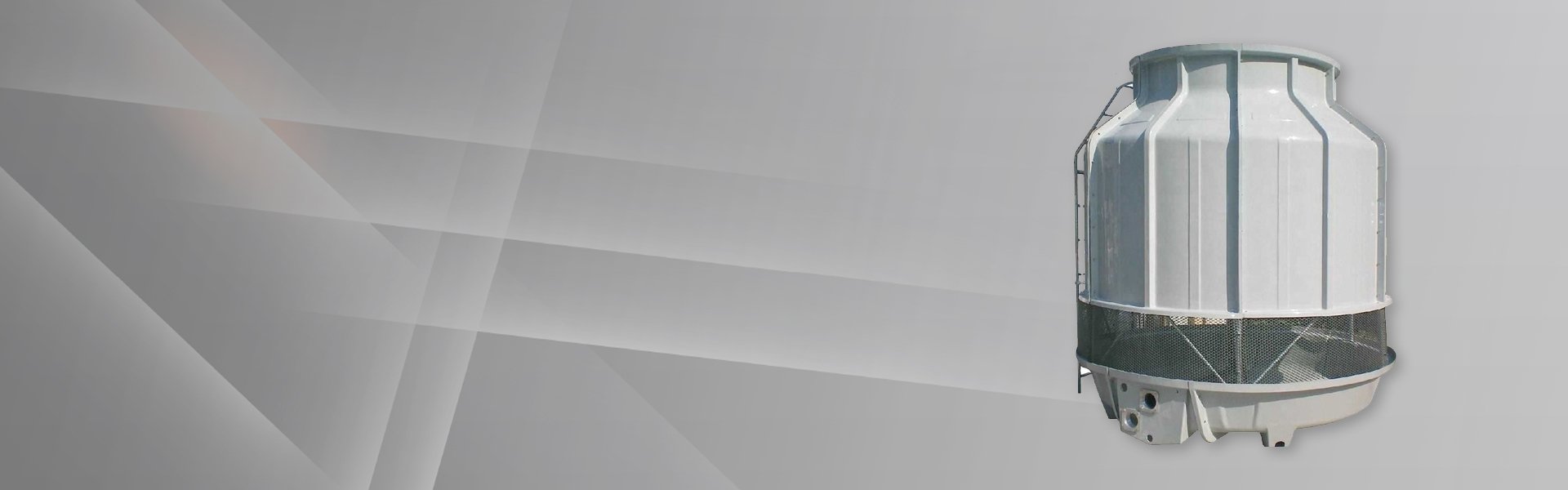
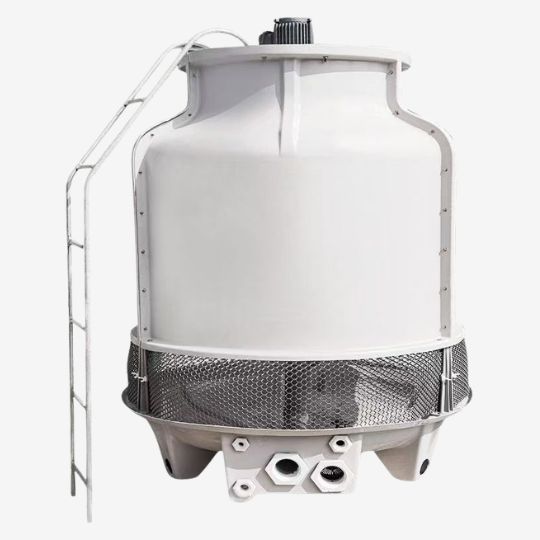
A FRP round cooling tower typically features a tight structure with uniform force to enhance stability. It takes up a relatively small footprint, which is suitable for small to medium scale project with limited space. This type of cooling tower offers convenient installation and controllable cost as a practical solution.
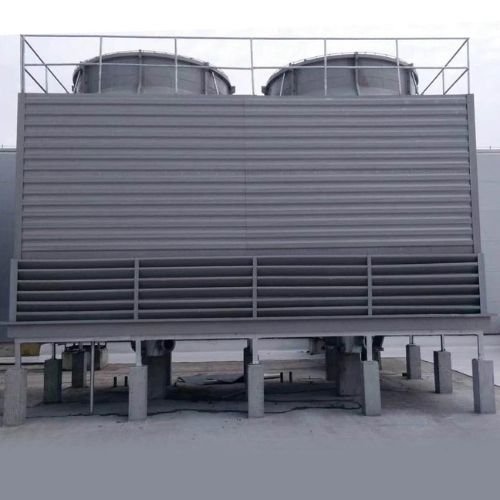
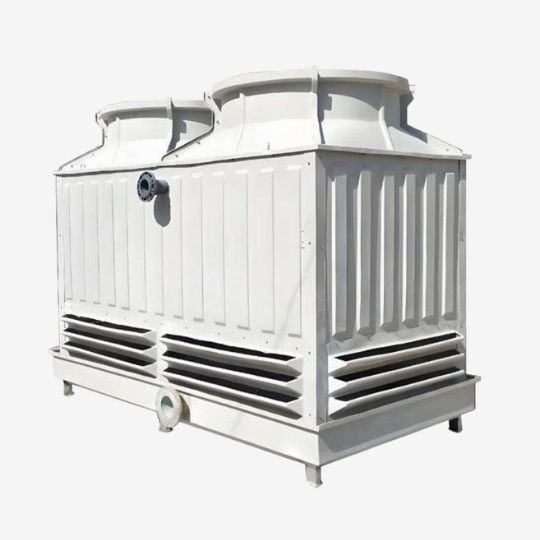
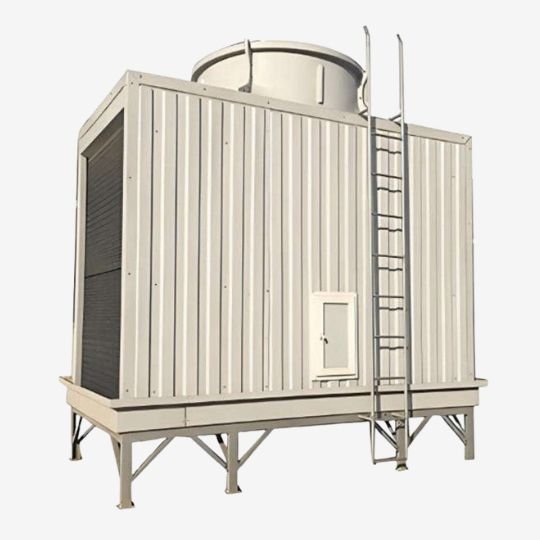
The FRP square cooling tower is the most widely used type in industrial applications. It features module structure that is easy to transport and on-site assembly. This cooling tower is suitable for large cooling projects such as chemical, petrochemical, and electric power. If your project has future expansion plans, it supports multiple parallel operation.
Features of FRP Cooling Tower

Designed based on actual heat load, wet-bulb temperature, and water flow rate.

High resistance on UV and chemical corrosion, suitable for outdoor operation.

Offer different structure for your selection to meet actual on-site layout.

Feature optimized airflow and fans to ensure stability during long term use.
Engineer-Grade FRP Structure for Outdoor and Industrial Environment
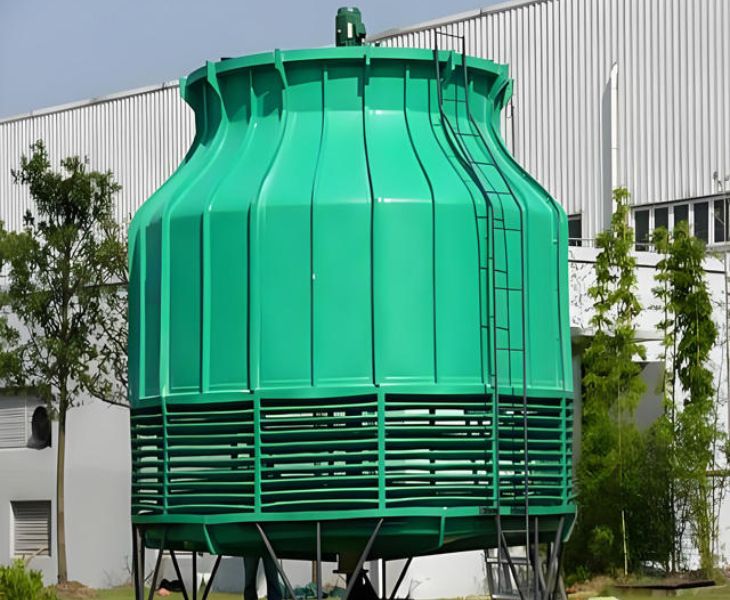
The FRP structure of this cooling tower is specially designed for long term of outdoor using, which can withstand complex industrial environments. Our FRP cooling tower features UV-resistant resin systems and components with excellent corrosion resistance to ensure stable operation. It significantly reduces the effect of different climates, thereby extending the service life.
Factory Directly Supply to Ensure Reliable Product Delivery
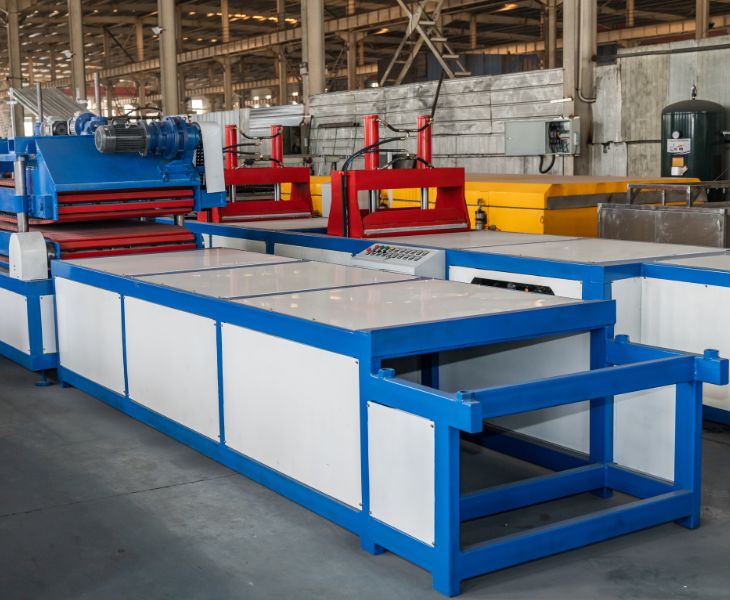
Through factory manufacturing and standard production lines, we support stable project delivery for your engineer or industrial projects. Our factory maintains strictly consistent production plan with the project timeline, reducing project loss caused by unexpected delays. From product design to spare parts support, we stay involved throughout the project lifecycle for continuous chemical guidence.
Application of FRP Cooling Tower
The FRP cooling tower is widely used for various industries due to its high capacity to suit complex conditions. It offers high corrosion resistance to withstand harsh environments and ensure stable operation. The following are common applications of the FRP cooling tower:

The FRP cooling tower is typically used for the chemical and petrochemical industry that face risks of high temperature and corrosive media. The FRP cooling tower maintains stable structure in this type of environment based on its excellent corrosion resistance. It significantly reduces downtime for maintenance caused by equipment corrosion, decreasing the factory operation risk and production loss.

Cooling systems are important components to ensure stable equipment operation in the energy and power industry. The FRP cooling tower offers flexible installation, and is suitable for energy projects that require long term working. It is especially useful to prevent salt spray and marine material erosion from the seaside power plants, thereby extending the service life.

The FRP cooling tower for commercial buildings is equipped with a silent fan and optimized air tunnel to achieve stable operation with low noise level. It significantly enhances the environmental comfort while also ensuring highly efficient cooling. The cooling tower also supports energy-saving design, suitable for HVAC systems such as large commercial complexes.

Food processors and pharmaceutical industry have high demands on the stabiliy and cleanliness of production environments. The FRP cooling tower features a smmoth surface that offers high rust resistance, making the tower is easy to clean and maintain. It is suitable for cooling production equipment or process circulating water, ensuring reliable safe and hygiene.
The maintenance work of a FRP cooling tower focuses on its water system and fan system. You should clean the fills regularly to prevent clogging issues caused by scale and algae, ensuring stable and efficient heat dissipation. The water distribution system also needs to be checked regularly to ensure uniform spraying and water distribution. You should also focus on the wear level of some mechanical components like bearing and motor.
FRP itself possesses excellent expansion resistance, so the anti-freezing works are mainly for circulating water. Installing the cooling tower indoors is one of the most useful measures of preventing freezing, and is also the fundamental solution. The FRP cooling tower supports being equipped with anti-freezing accessories, such as pipe, fills, and more. You can also install a frequency conversion fan to achieve low-speed operation during cold conditions, and an electric three-way valve to optimize hot water distribution.
High-quality FRP cooling tower is typically equipped with a gel coat layer, which can resist UV effects and ensure stable tower color. The thickness of this additional coating reaches 0.5mm or higher, and is useful to extend the service life of the cooling tower. When choosing the cooling tower for your outdoor project, you can focus on this gel coat.
The replace cycle of fills depends on the water quality and maintenance rate. It is necessary to replace fills when the original fill aging or brittle to prevent short circuits of the water flow. If the cooling tower occurs clogging issues that cannot be solved even by chemical clean, you can replace its fills to restore the cooling capacity. In addition, continuous increase in energy consumption may be also caused by the failed fill, you can try to replace it to save energy cost.
What is FRP Cooling Tower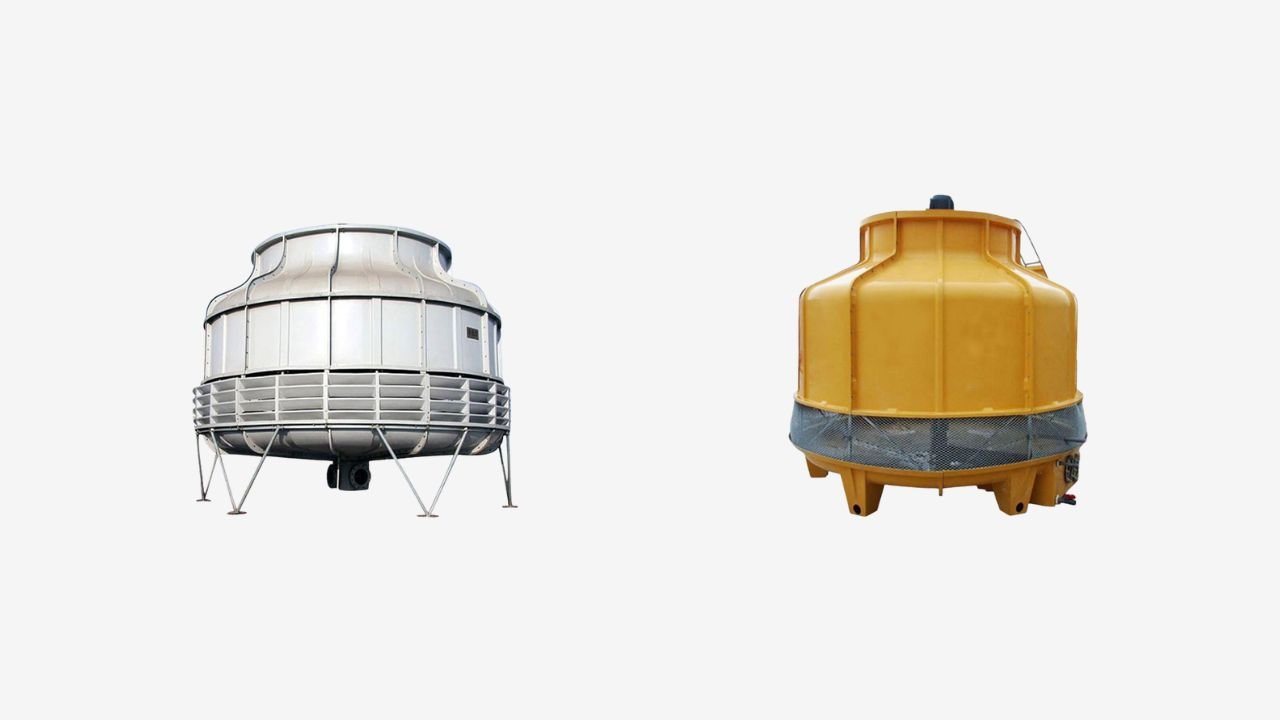
Based on the principle of heat exchange between air and water, a FRP cooling tower is used to discharge heat generated during industrial production or HVAC operation. Compared to traditional steel or concrete cooling towers, this type of tower uses FRP(Fiber Reinforced Plastic) as primary material. The FRP material significantly reduces tower weight while also enhancing its corrosion resistance, ensuring stable and continuous operation. If your project involves harsh environments, this tower is a reliable solution.
Working Principle of FRP Cooling Tower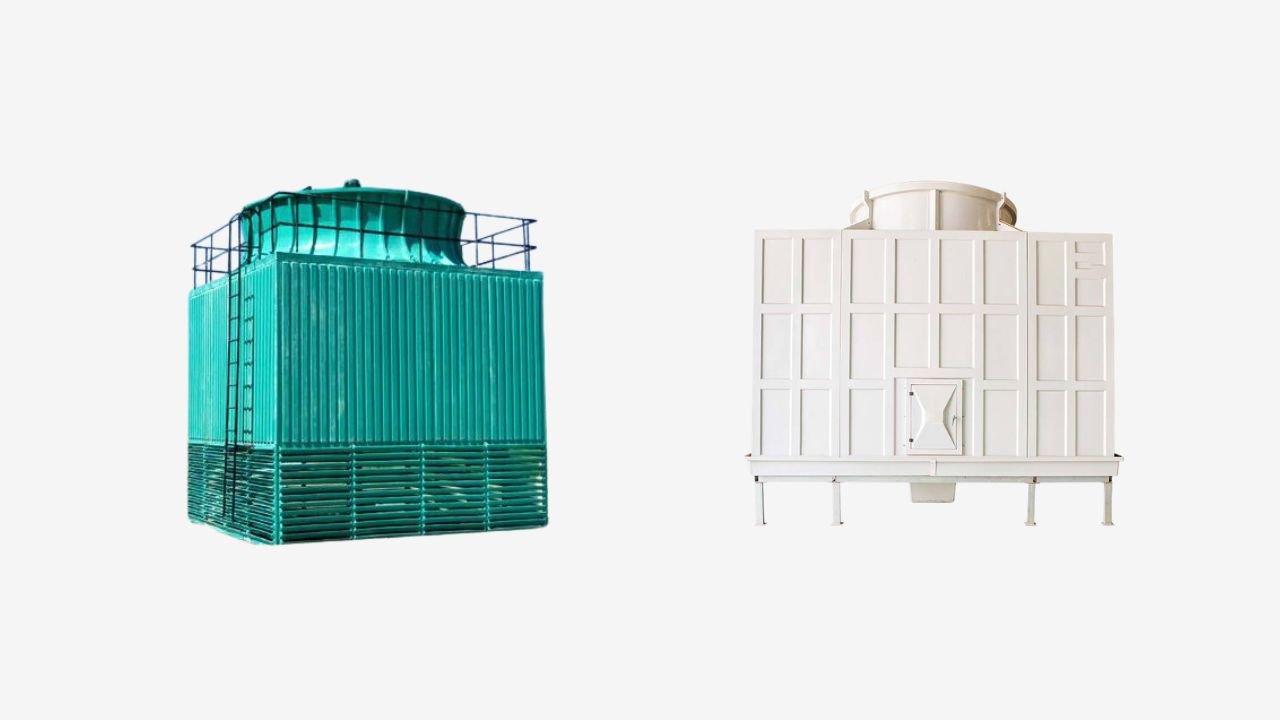
The working principle of a FRP cooling tower is mainly based on heat exchange. By removing heat from production systems, the tower can decrease the temperature of the circulating water. The following are basic working processes of the FRP cooling tower:
Heat Change Between Water and Air
Heat change is a very important process during the cooling process. The circulating water enters this cooling tower from production equipment or condenser, distributing evenly in the filler layer. By contacting with counter-current or cross-flow air, the temperature of the circulating water can be decreased. In this process, heat can be removed by either evaporative cooling or convective cooling.
Fan and Tower Operation
A FRP cooling tower is typically designed by induced draft or forced draft. The fan of an induced tower is installed on the top of the tower, sucking air out of the tower to form air flow. This type of tower design offers high efficiency and low noise level. While the fan of a forced tower is installed on the tower bottom, suitable for limited space or local exhaust needs.
Fill and Water Distribution System
The fill is useful to improve the heat exchanging efficiency by increasing the contact area between water and air. The FRP cooling tower commonly uses corrugated or honeycomb type of fills, which offer high corrosion resistance and are easy to maintain. The water distribution system is used to spray circulating water on the fills evenly, ensuring complete contact between water and air.
Water Circulation and Exhaust Air
After the cooling process, the water will be collected from the bottom of the tower, which can be returned to the production system or used for HVAC systems. The air removed from the cooling tower carries heat and part of the evaporated water vapor to achieve energy release. In addition, the FRP cooling tower offers excellent sealing performance to prevent moisture leakage during the entire process.
How to Choose Suitable FRP Cooling Tower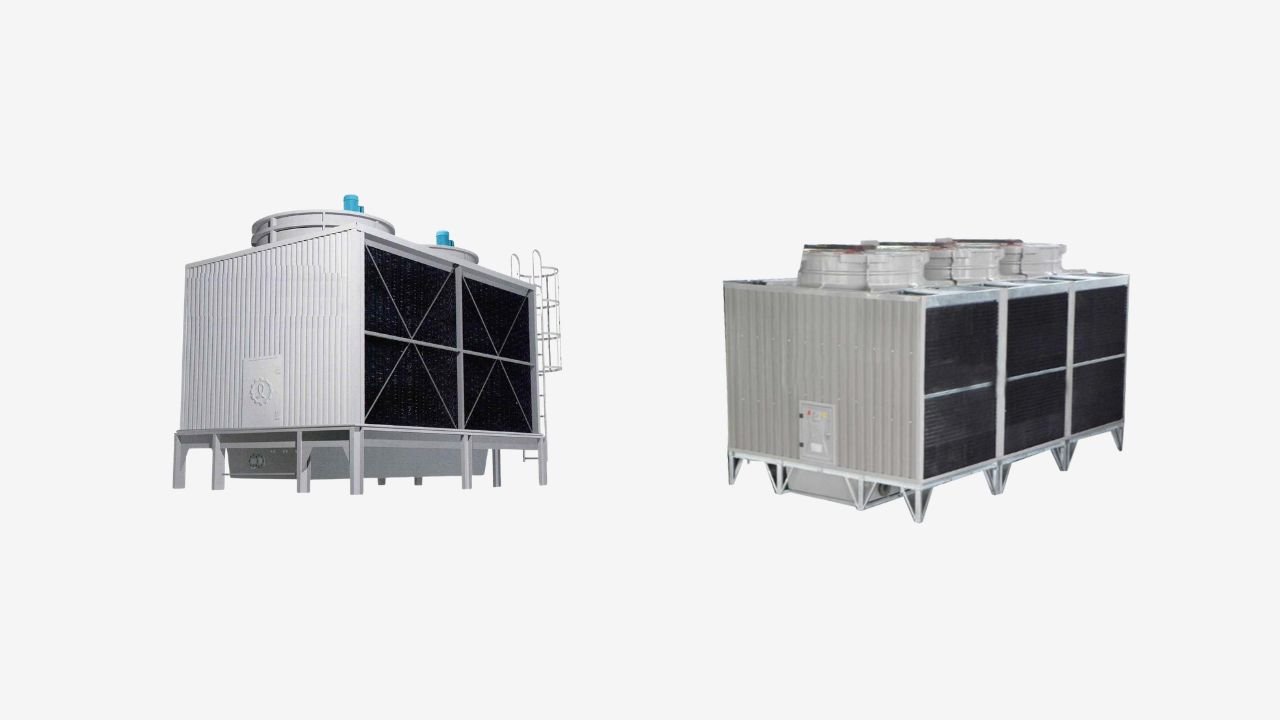
In actual production conditions, you should consider comprehensive factors, such as operation environment, installation area, and required cooling capacity. It is necessary to ensure the tower you choose can meet actual demands. The following are common factors affecting purchase decision for your reference:
Operation Condition
Different operation conditions typically require significantly different specifications. Before choosing the FRP cooling tower, you should firstly determine core working condition parameters, including cooling water volume, operation time, working environment, and more. These parameters can be a basis for selection, and are directly connected to the cooling capacity and size of the cooling tower.
Application Requirements
You should also focus on the industry positioning of your project to choose a suitable configuration of the FRP cooling tower. For example, the chemical industry requires high corrosion resistance to prevent chemical damages and reduce maintenance costs. While for the HVAC and commercial buildings, noise level and energy consumption should be controlled strictly. If your project involves the food or pharmaceutical industry, high cleanliness and water quality are necessary.
Installation Space
When selecting the FRP cooling tower, you should determine the available installation area to ensure required tower size. Based on the installation area, you can also estimate the suitable weighing capacity and other basic demands. For roof or old plant retrofit projects, the FRP cooling tower offers more advantages than traditional concrete or steel structure.
Noise Level and Energy Consumption
If your project involves commercial or public buildings, you should pay more attention to the noise level of the cooling tower. A proper fan and low-noise design is helpful to ensure quiet operation and enhance the environmental comfort. In addition, you can also choose different fans and fills to control the energy consumption. Proper types of components are useful to save electric power and maintenance costs.