Concrete structures, whether large or small, require sturdy reinforcement, with steel rebar traditionally favored. However, civil engineers and architects are increasingly adopting fiberglass rebar in certain construction projects, a testament to the material’s reliability. This article pits fiberglass rebar versus steel rebar in an attempt to help you find the right reinforcements for your building project.
What is Fiberglass Rebar?
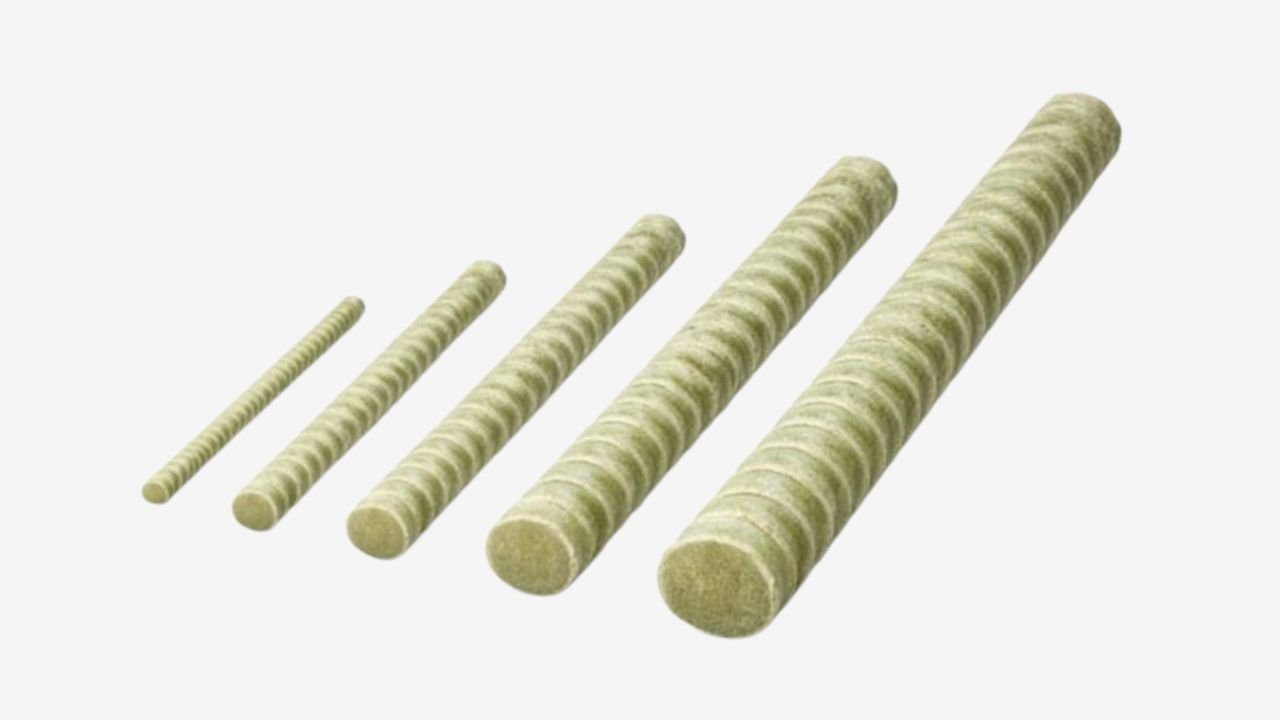
Fiberglass rebar is a corrosion-proof and relatively lighter composite material used to reinforce construction structures in highly corrosive environments. Its core is made up of high-strength glass fibers, making it lightweight and thermally neutral. In recent years, GFRP rebar has become a mainstay in most construction projects, going toe to toe with steel rebar.
What is Steel Rebar?
Steel rebar is a heavy-duty construction material often utilized to fortify concrete structures, ultimately giving them structural integrity and keeping them from collapsing. It has been the most in-demand reinforcement bar, favored by architects and engineers due to its high strength and prolonged lifespan. However, it has its share of limitations, including vulnerability to corrosion, which makes it unsuitable for certain applications.
Fiberglass Rebar Vs Steel Rebar
· Density
One of the main reasons behind the meteoric rise in the use of glass fiber reinforced polymer (GFRP) rebars is their relatively low density. These reinforcement bars boast an average density of 1900 kg/m³, making them much easier to handle, transport, and install. Additionally, thanks to their low density, they do not strain your concrete structures with additional weight.
Steel reinforcement bars, in contrast, boast a superior density, and this explains why they are significantly heavier than fiberglass rebars. Their average density stands at approximately 7850 kg/m³, and it is the main reason behind their superior mechanical strength.
· Tensile Strength
Fiberglass reinforcement bars can withstand greater pulling or stretching forces thanks to their superior tensile strength. They are, in fact, up to three times more resistant to damage caused by tension. The typical GFRP rebar boasts a tensile strength of 1000–1500 MPa.
Steel rebars, on the other hand, do not have the superior tensile strength of fiberglass rebars. However, their tensile strength is relatively decent, meaning that they can also withstand heavy tension. An ordinary steel reinforcement bar comes with a tensile strength of approximately 550 MPa.
· Corrosion Resistance
Steel reinforcement bars require additional treatment to reinforce corrosion resistance. Once the reinforcement degrades, they can corrode quickly if exposed to humid conditions. Corrosion wears down their mechanical strength, consequently diluting the structural integrity of your concrete structure and risking collapse.
Fiberglass rebars, conversely, are 100% immune to rusting or corrosion, hence they make good reinforcement bars for concrete structures in humid areas. They thrive in structures frequently exposed to saltwater and chemicals, thanks to their core material, which remains strong even under tough conditions.
· Projected Lifespan
The Fiberglass rebars are more impervious to harsh conditions than steel reinforcement bars, and this often translates into a longer lifespan. Under harsh conditions, for instance, constant exposure to salt water, GFRP rebars can stay strong for up to 100 years.
Under the same conditions, steel rebars are likely to lose structural integrity or deform in 20 to 30 years. This is because steel corrodes easily when exposed to chloride, and once it corrodes, it swells, consequently compromising the integrity of your concrete structure.
· Modulus of Elasticity
Steel reinforced bars are generally stiffer, meaning they are less likely to stretch under stress. They boast a comparatively high modulus of elasticity (roughly 200 GPa), which is three times higher than fiberglass rebars’ modulus of elasticity.
Fiberglass reinforcement bars, in comparison, have a superior tensile strength, and this translates into a relatively low modulus of elasticity. Simply put, your GFRP bars are more susceptible to damage caused by stretching or pulling compared to steel rebars.
· Weight
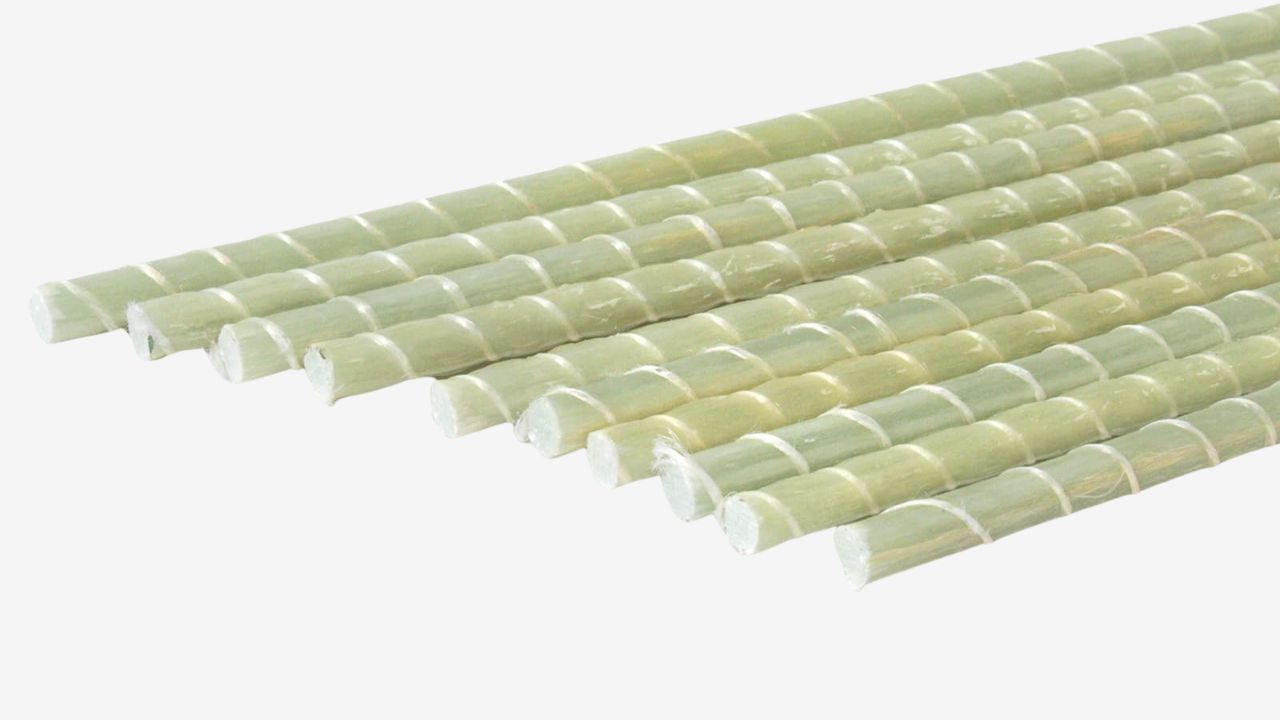
Glass fiber reinforced polymer bars are often preferred in weight-conscious construction projects since they are comparatively lighter than steel rebars. The average fiberglass reinforcement bar is typically 75% lighter than the average steel bar.
This means that fiberglass rebars are much easier and cheaper to transport and install. Furthermore, the reduced weight means that your concrete structures are not overburdened with extra weight, which can mess with their structural integrity.
· Electrical Conductivity
Steel rebars allow the passage of electrical currents, making them ideal for construction projects prioritizing electrical conductivity. They boast a myriad of free electrons, which carry electrical currents, making them highly conductive.
Fiberglass reinforcement bars, on the other hand, block the passage of electrical currents, often doubling up as electrical insulators. They have zero electrical conductivity, making them the perfect reinforcement bars for construction projects that require zero or minimal magnetic and electronic interference.
· Yield Strength
Steel reinforcement bars, particularly those made from grade steel, tend to deform under great tensile force. Once you apply pressure exceeding 500 MPa, the steel rebars are likely to lose their structural integrity before ultimately breaking.
Fiberglass rebars, in contrast, have no known point of yielding under tensile strength. When stretched under pressure, they rupture abruptly. However, they are more elastic than steel rebars, given that their tensile strength is approximately 1000–1500 MPa.
· Cost
Whilst the prices of both fiberglass and steel rebars are competitive, fiberglass rebars generally command a higher price. Standard GFRP rebars cost between $1.5 and $2.0 per kg, which is relatively higher compared to steel rebars, which cost approximately $0.75 per kg.
However, fiberglass reinforcement bars promise greater financial returns in the long run, given that they are cheaper to transport, install, and maintain. They hardly degrade due to environmental factors such as corrosion, saving you a fortune on replacement or maintenance costs.
· Thermal Conductivity
Fiberglass reinforcement bars often double up as great thermal insulators, given that they hardly conduct heat. They boast a thermal conductivity of approximately 0.3 to 0.4 W/m·K, which is significantly lower than that of steel reinforcement bars (approximately 45–60 W/m·K).
Concrete structures reinforced with steel rebars are likely to suffer thermal bridging due to the reinforcement bar’s high thermal conductivity. This is because the bars facilitate the quick transfer of heat from outside and vice versa.
Pros and Cons of Fiberglass Vs Steel Rebars
Pros
| Fiberglass Rebar | Steel Rebar |
| · Up to 75% lighter | · Highly ductile |
| · Rust resistant | · High modulus of elasticity |
| · Easier to machine | · Excellent fire resistance |
| · Non-magnetic | · Easy to bend on site |
| · Great chemical resistance | · Relatively affordable |
| · Excellent tensile strength | · Great compressive strength |
Cons
| Fiberglass Rebar | Steel Rebar |
| · Sensitive to high temperatures | · Relatively heavy |
| · Relatively low modulus of elasticity | · Prone to rusting |
| · Does not show any signs of failure | · Vulnerable to magnetic interference |
FAQs
Is fiberglass rebar better than steel rebar?
Fiberglass rebars outshine steel reinforcement bars in certain applications, thanks to their reinforced properties. For instance, they thrive better in environments with relatively higher chloride levels due to their improved corrosion resistance. Steel rebars, in contrast, thrive in construction projects prioritizing ductility and stiffness.
Is fiberglass as strong as steel?
Whereas fiberglass reinforcement bars are not as stiff as steel rebars, they boast superior tensile strength. This means that they can withstand tensile pressure way better than steel rebars. However, you need more fiberglass rebars to match the stiffness of steel rebars.
Between fiberglass and steel rebar, which lasts longer?
Fiberglass rebars generally outlive steel reinforcement bars, especially in relatively tough conditions. GFRP rebars exposed to chloride, moisture, and extreme temperatures can last 100 years, while steel rebars exposed to such conditions can only last 20 to 30 years.
Can you use steel and fiberglass rebars together?
Yes. The use of both steel and fiberglass reinforcement bars together is highly recommended since it allows you to enjoy the best of both worlds. A 50-50 collaboration means that your structure gets to benefit from the enhanced corrosion resistance of fiberglass and the stiffness of steel.
Does fiberglass rebar weaken over time?
Fiberglass reinforcement bars can maintain their robustness and structural integrity for a century despite being exposed to unfavorable conditions. They can, however, weaken prematurely if you handle them improperly.
Partner with Primefrp Today

Primefrp is a leading fiberglass rebar manufacturer in China. We have a wide range of products solutions including FRP mesh grating, FRP mini mesh grating, FRP panels and FRP roofing sheets, among others.
At Primefrp, we focus on providing custom solutions for construction materials. Tell us more about your project and we will recommend the right fiberglass rebar – Get our product catalogue now.