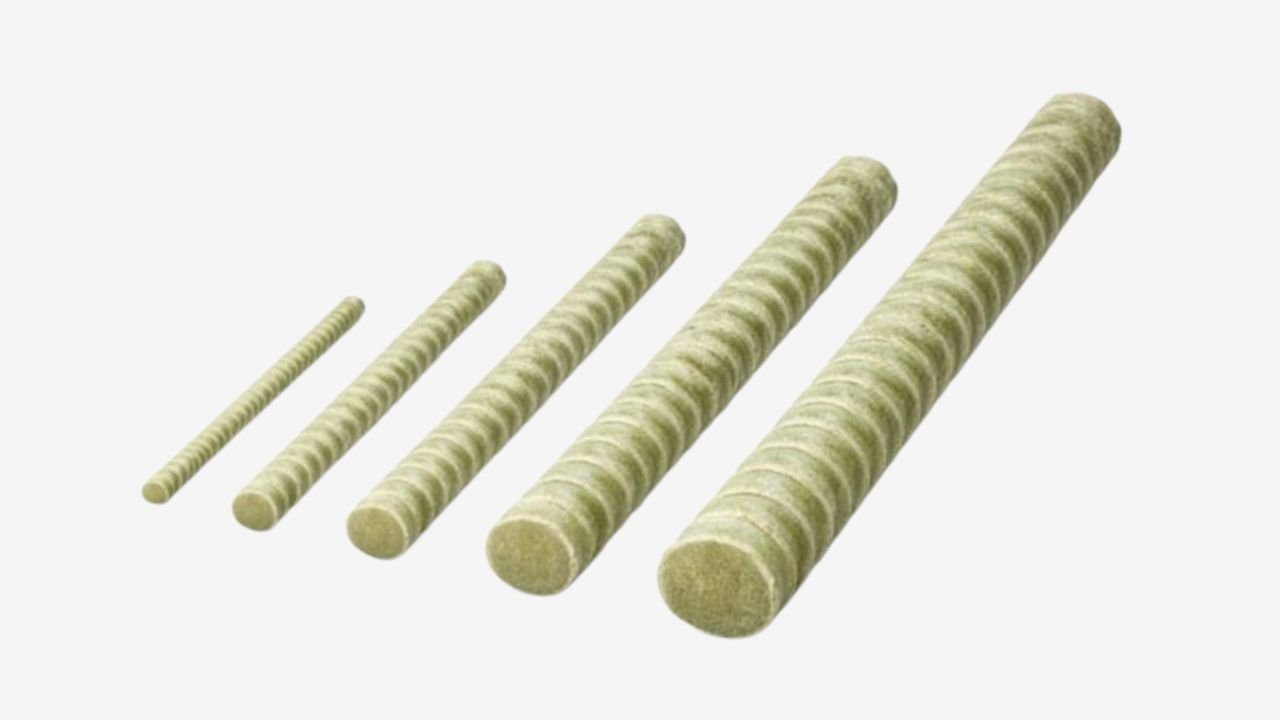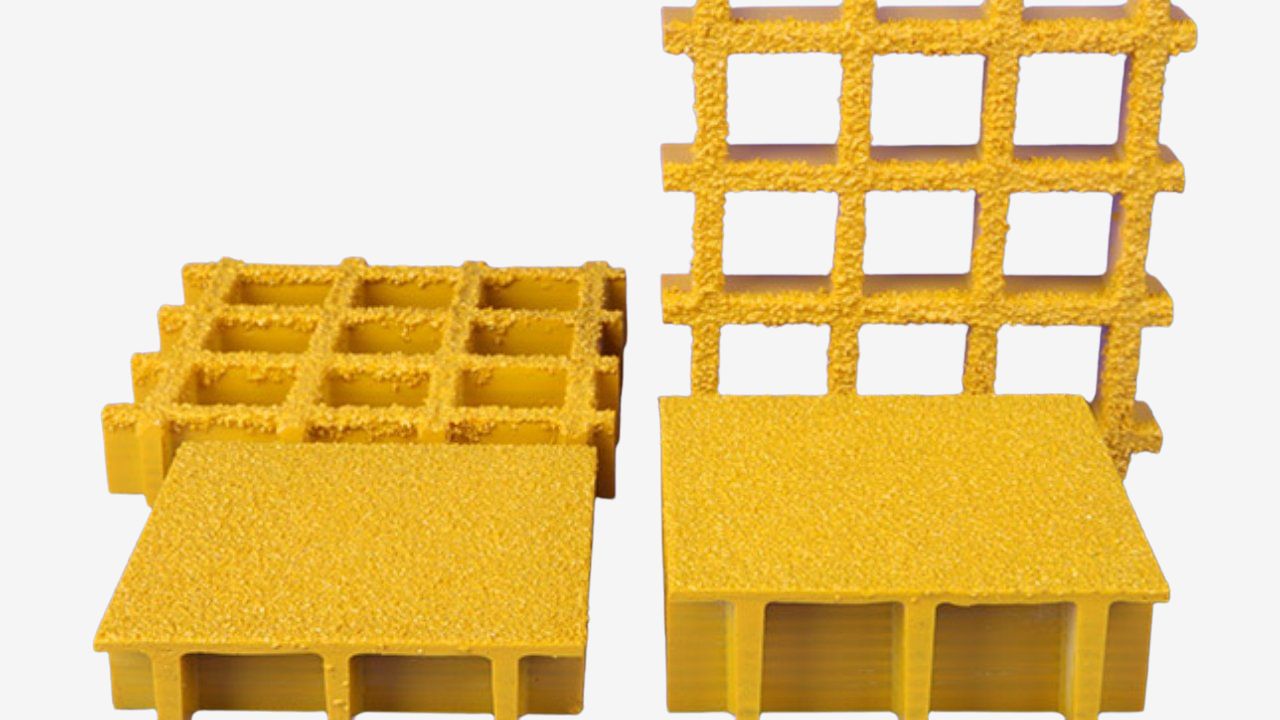
Steel remains the traditional material for grating panels thanks to its enormous strength and impact resistance. However, it has its share of shortcomings, which, comparatively, are offset by fiberglass-reinforced plastic’s strengths.
This has prompted most engineers, architects, and constructors to favor FRP grating in most industrial and commercial applications. This article stacks up steel grating against FRP grating, aiming to guide you to the best grating panels for your project.
What is FRP Grating?
FRP grating is simply a corrosion-resistant construction material designed for relatively tougher construction projects or where steel grating comes short. They are primarily composed of fiberglass, which is reinforced with a resin matrix, consequently making them up to 75% lighter than their steel counterparts. They thrive in marine environments, where the composition of moisture and chlorides is comparatively higher, thanks to their chemical inertness and 100% rust resistance.
What is Steel Grating?
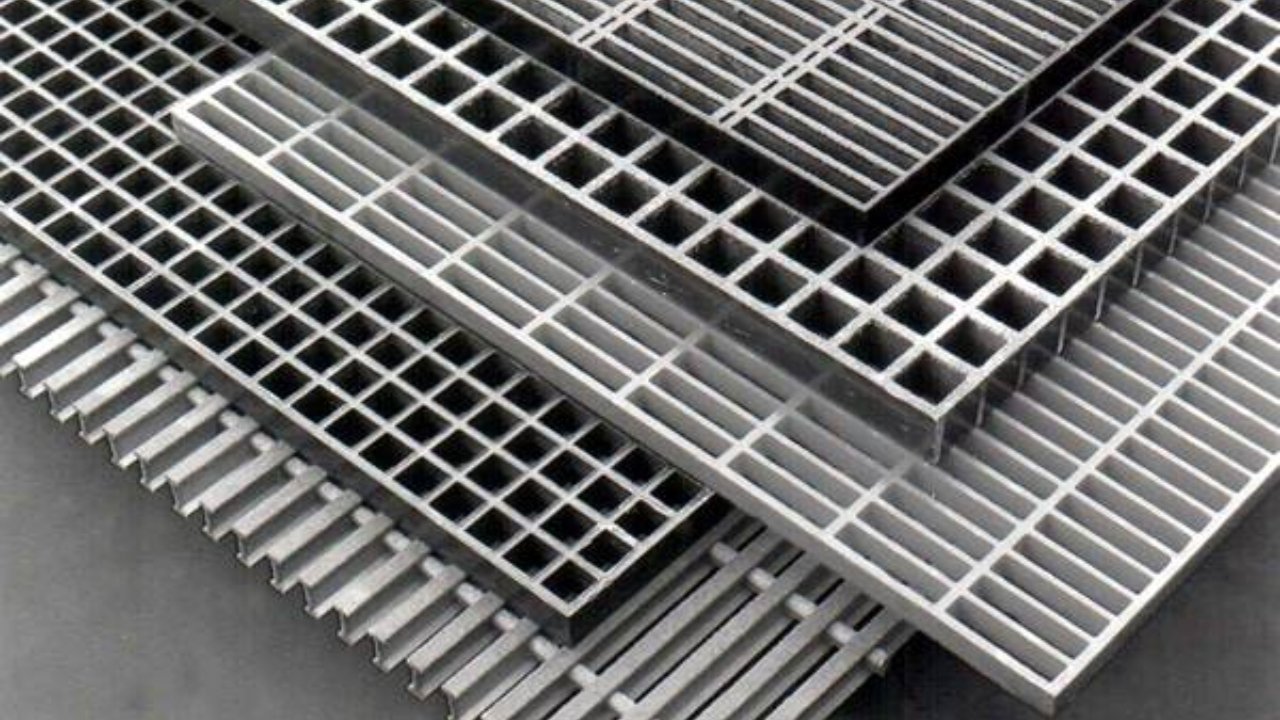
Steel grating is a heavy-duty construction material that is highly popular in industrial facilities handling burdensome loads. It is revered for its superior impact resistance, which allows it to support heavy machinery and loads. However, steel grating can be vulnerable to corrosion, especially when deployed in environments with a high chloride composition, such as coastal regions. This paves the way for FRP grating panels.
Comparing Fiberglass Reinforced Plastic Grating and Steel Grating
· Composition
Fiberglass grating panels feature a glass fiber core, which contributes greatly to their relatively superior tensile strength. This core is embedded in a thermosetting resin matrix, which gives these grating panels their unmatched resistance to corrosion, chemicals, and UV radiation. The commonly featured resins include vinyl ester and polyester.
Steel grating panels, in contrast, boast a stainless steel core high in carbon content. This explains their strong structural integrity, which allows them to handle relatively heavier loads. The core is then shielded with galvanized steel or zinc to improve the panel’s resistance against corrosion.
· Strength
Whilst FRP grating boasts greater tensile strength, its ability to handle heavy loads comes second to steel grating. FRP grating panels are, however, quite strong despite being comparatively lighter. They can handle heavy loads, including vehicles, but they are just not as strong as steel grating panels, which thrive in industrial facilities and high traffic areas designed to support enormous weights.
· Weight
Steel grating is generally 50%-75% heavier than FRP grating, hence it is often utilized in heavy-duty applications. Although this high weight can prove to be a logistical challenge, it contributes significantly to the high load-bearing capacity of steel grating panels.
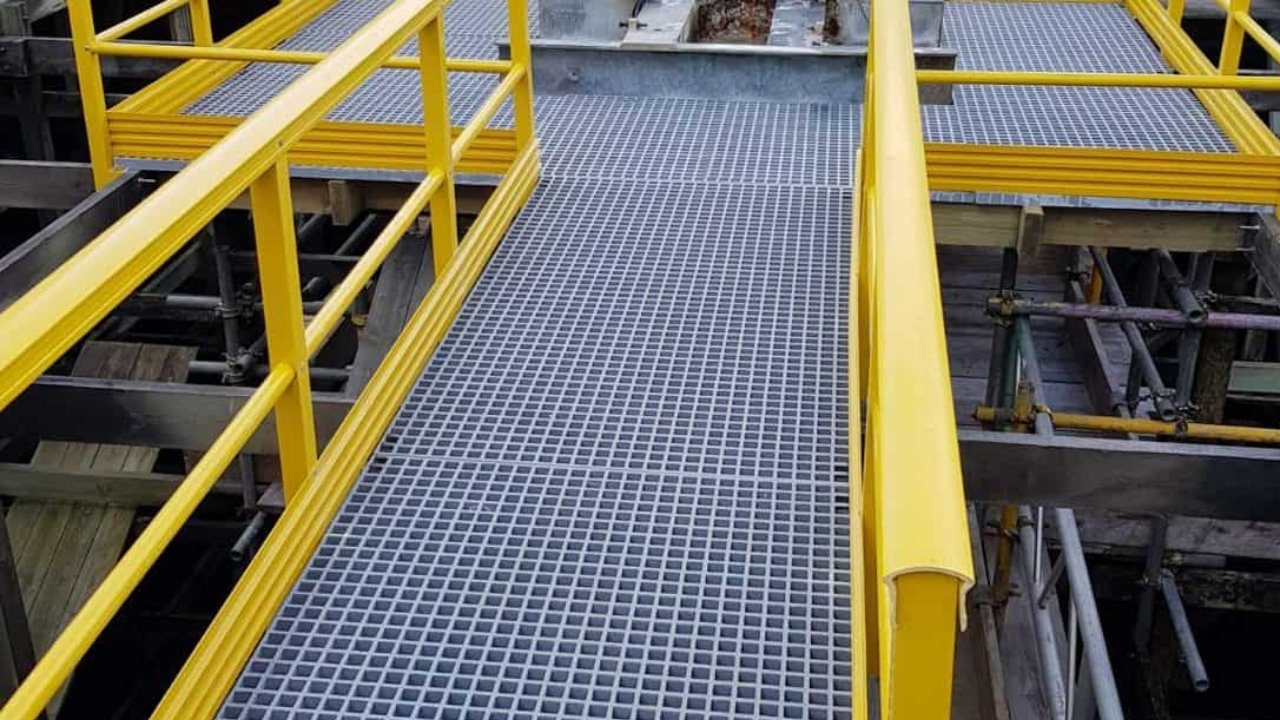
FRP grating, conversely, can be 75% lighter than steel grating and still demonstrate great strength. This makes FRP panels much easier to transport and install. It also qualifies the use of FRP grating in structures or applications sensitive to weight, such as the construction of elevated walkways or watch towers in mining sites.
· Corrosion Resistance
One of the key strengths of fiberglass grating panels is their impeccable immunity against rusting or corrosion. This is made possible by their distinct composition, which includes a resin matrix and glass fibers, which are 100% impervious to corrosion and chemicals.
Steel grating panels, on the other hand, demonstrate decent corrosion resistance, especially when coated with zinc or galvanized stainless steel. However, their rust resistance comes second to that of FRP grating, explaining the dominance of FRP in chemical processing plants and marine environments.
· Safety
Whilst both steel and FRP grating are generally safe, FRP grating boasts a higher safety profile. To begin with, FRP does not conduct electricity, meaning it reduces the chances of electrocution significantly. Furthermore, most FRP panels tend to have a rough surface, which improves traction, greatly reducing your chances of slipping. Steel grating panels, in contrast, can conduct electricity and often have a smooth surface, which puts you at risk of electrocution and falling.
· Electrical Conductivity
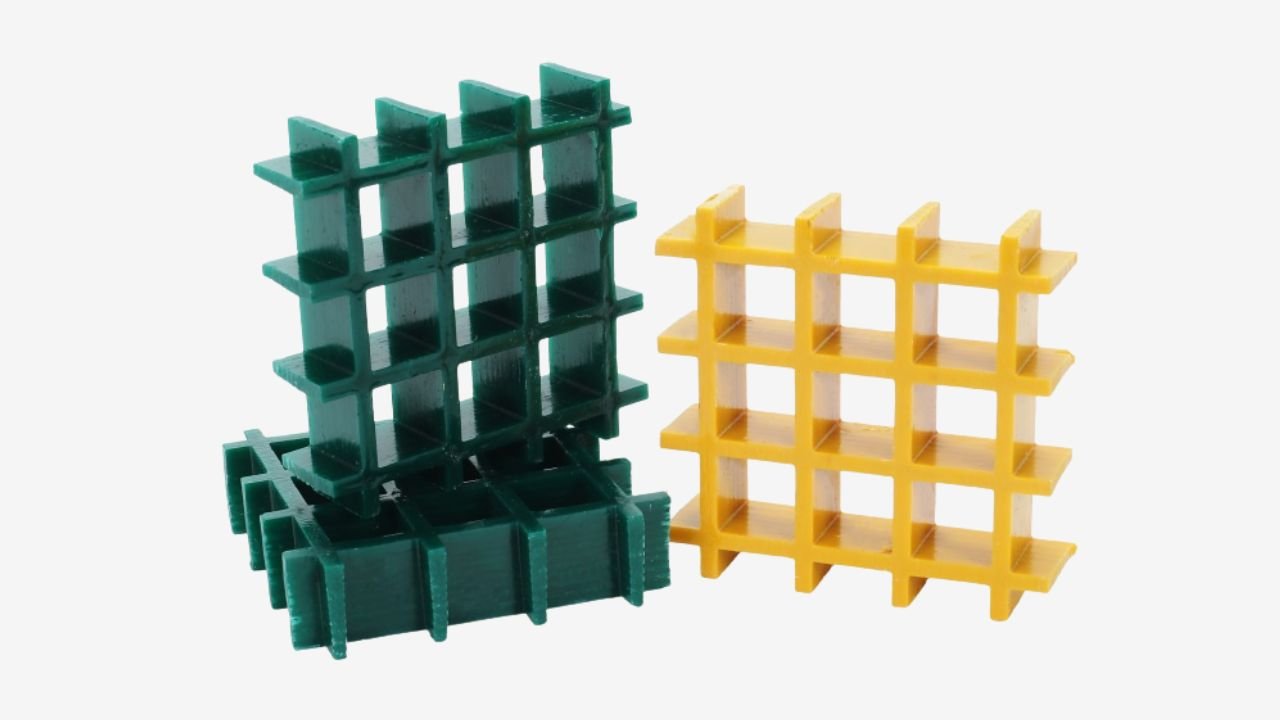
Steel grating thrives in construction projects looking to capitalize on electrical grounding thanks to its excellent electrical conductivity. These panels have a core made up of carbon and iron atoms, which facilitate the passage of electrical current.
However, this can be a safety hazard, given that they leave you at risk of electrocution. Unlike steel grating, FRP grating does not facilitate the transfer of electric current, making it perfect for projects seeking electrical insulation.
· Fire Resistance
Fiberglass grating is not as great as steel grating when it comes to fire resistance. However, it does not contribute to the spread of fires, and it does not emit toxic fumes and smoke when burnt. Additionally, FRP grating can be improved with fire-retardants to qualify its use in high-fire risk zones. Steel grating, in comparison, does not catch fire, making it the ideal grating for structures and facilities at risk of catching fire.
· Maintenance
Fiberglass grating panels are immune to corrosion, weather elements, and chemicals, meaning they are less likely to suffer any form of damage. This means they require less maintenance compared to steel grating panels, which deform easily due to corrosion. This further reduces the strain on your pockets, given that you incur comparatively lower maintenance costs.
· Cost
Steel grating panels are comparatively cheaper to buy in the first place. However, they attract higher transportation, installation, and maintenance expenses, making their overall cost of investment relatively higher. FRP grating panels, on the other hand, are priced relatively higher, but they require little to no maintenance. Additionally, they are cheaper to transport and install.
· Key Uses
| Common Uses of FRP Grating | Common Uses of Steel Grating |
| · Chemical plants | · Factory floors |
| · Battery rooms | · Airport runways |
| · Wastewater treatment | · Traffic bridges |
| · Marine docks | · Truck loading docks |
| · Ship flooring | · Stair treads |
| · Elevated mining site walkways | · Trench covers |
Choosing Between Steel and FRP Grating
In most construction projects, the decision on the best grating panels often boils down to steel grating or FRP grating. Both these grating panels are quite effective and reliable. However, the decision on the best pick for your project depends on the grating’s key attributes.
When to Choose FRP Grating
- Where the surrounding environment is highly corrosive, for example, the coast region.
- When the existing structures are sensitive to high weight or loads.
- In high moisture settings, such as bridges.
- Where electrical insulation is needed.
- Where thermal insulation is a necessity.
When to Choose Steel Grating
- When handling heavy loads.
- In high-temperature areas or applications.
- On high-impact surfaces.
- In fire-sensitive structures and surfaces.
- Where electrical grounding is needed.
FAQs
Is fiberglass-reinforced plastic grating stronger than steel grating?
Whereas fiberglass grating demonstrates greater tensile strength than steel grating, it cannot bear similar loads. It is, however, ideal for holding high loads, especially in corrosive environments such as marine docks.
Is FRP grating costlier than steel grating?
Yes. A fiber grating panel with the same dimensions as a steel grating panel will quite often have you digging deeper into your pockets. However, you will end up saving more in the long run, given that GRP grating is generally maintenance-free and more durable.
Between steel and FRP grating, which lasts longer?
FRP grating often outlasts steel grating thanks to its greater immunity against weather elements and corrosion. An FRP grating panel used to construct a walkway in a ship can last up to 50 years. A steel grating, in contrast, can last up to 30 years.
Is FRP grating as slippery as steel grating?
No. Fiberglass grating maintains high traction even in oily or wet conditions, making it almost impossible for you to slip. Steel grating has a relatively smoother surface, which increases your chances of falling when it is wet or oily.
Does FRP grating withstand extreme heat?
No. FRP grating panels tend to soften and lose structural integrity once there is extreme heat (temperatures above 65°C to 120°C). However, their thermal stability can be reinforced with fire-retardants, making them suitable for high-heat applications like power plant flooring.
Partner with Primefrp
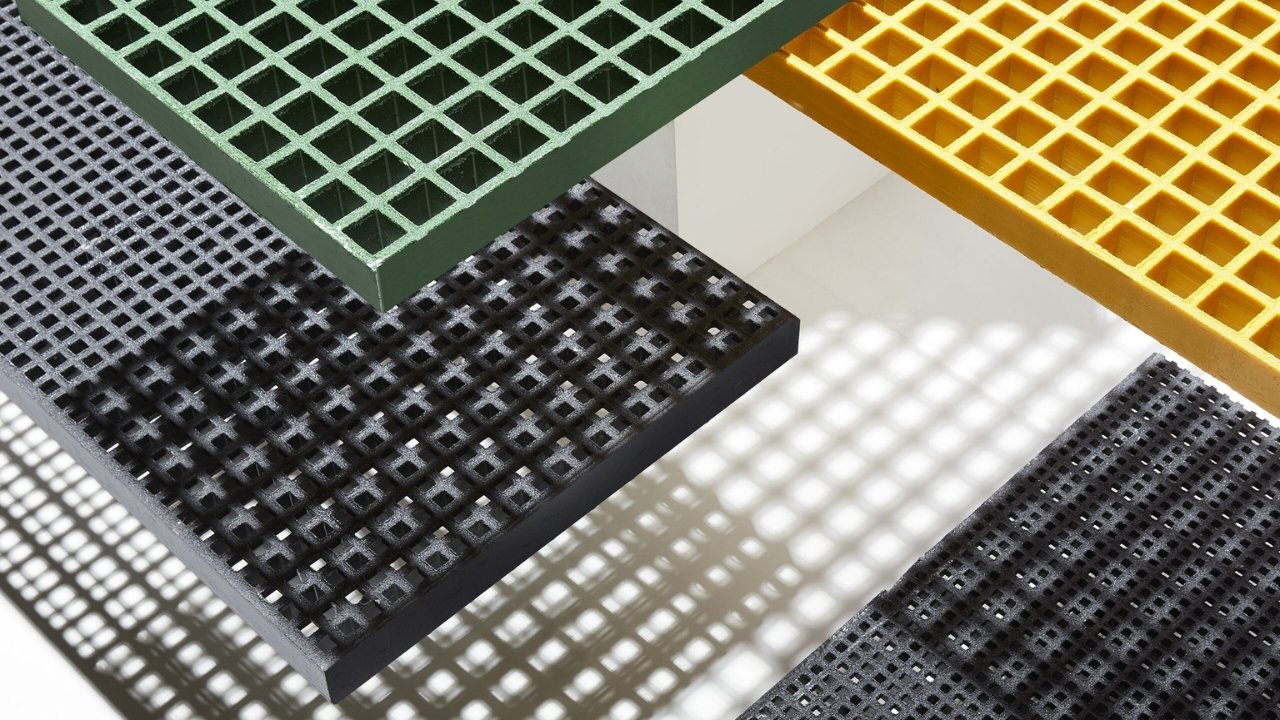
Primefrp is a leading fiberglass grating manufacturer in China. Our extensive product portfolio include FRP mesh grating, molded fiberglass grating, FRP mini mesh grating, and anti-slip grating, among others.
With every FRP grating product, we offer 100% customization to ensure the grating material meets the specific needs of your project – Download our product catalogue now.