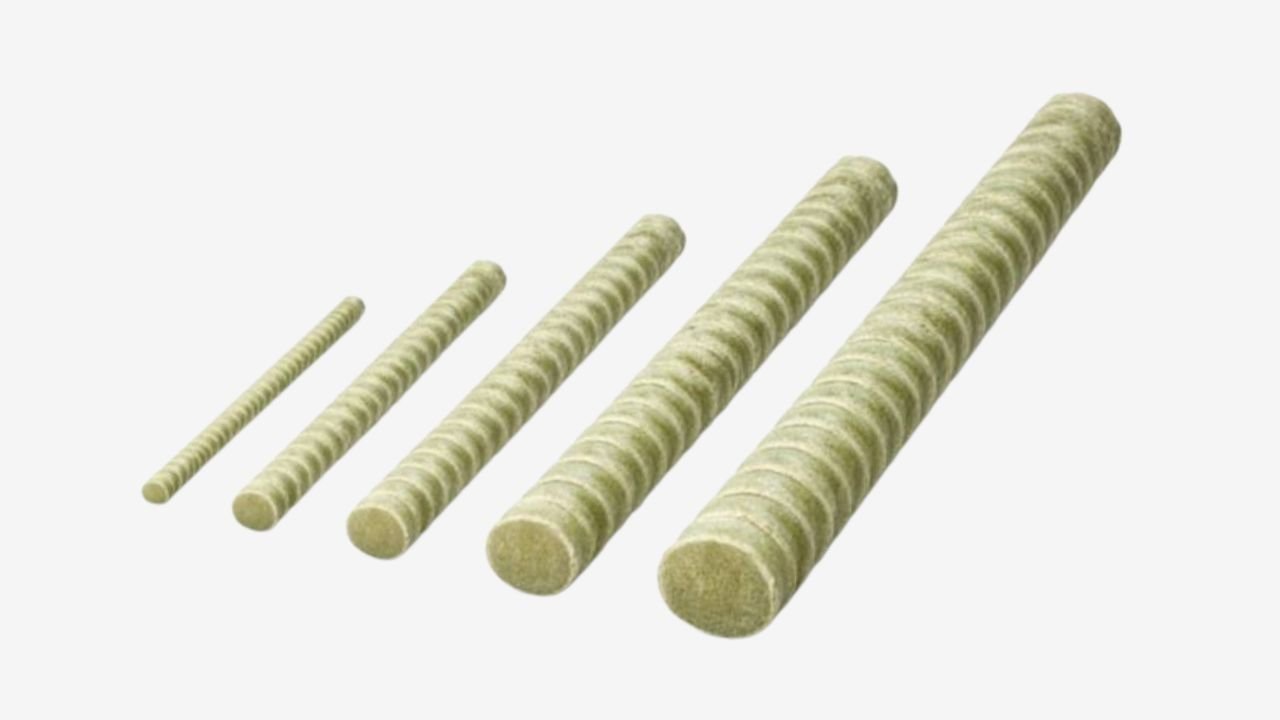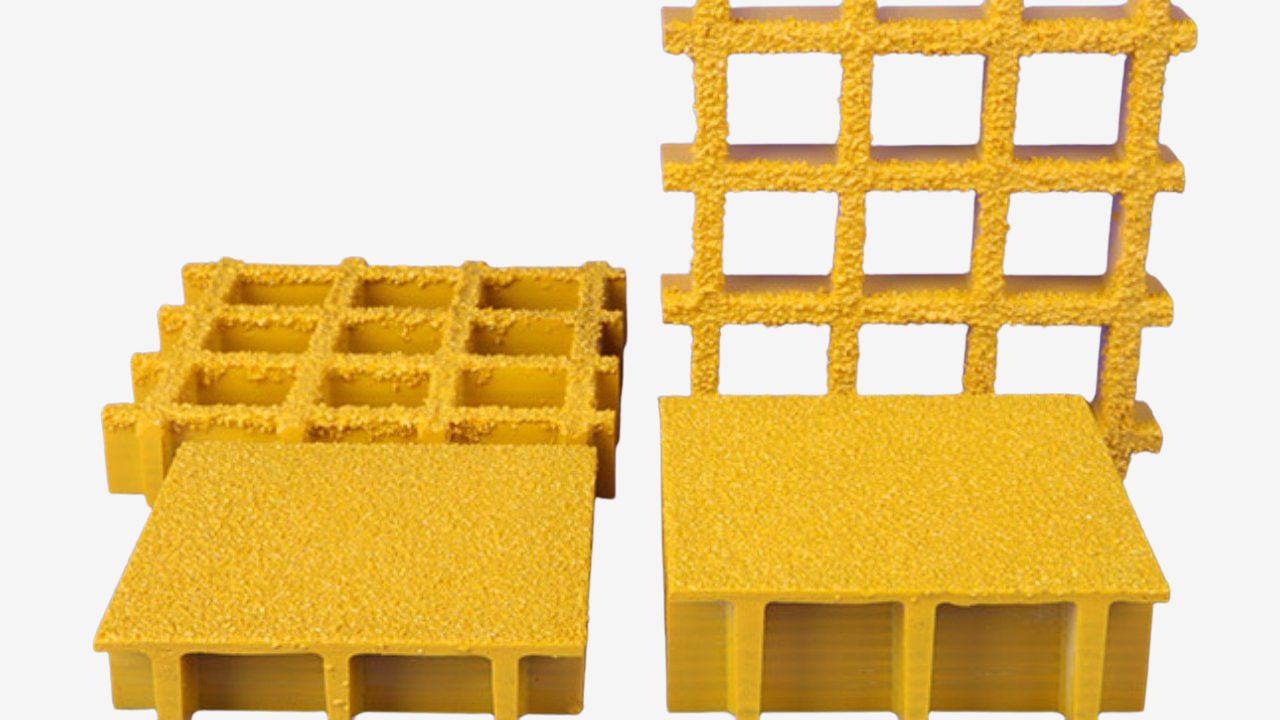
A grating panel involves issues related to safety, lifespan, maintenance frequency, and even the long-term cost of the whole project. FRP grating panels and steel grating panels have their own advantages: the former features corrosion resistance, slip resistance, lightweight, and ease of maintenance, while the latter features high rigidity and load suitability. So, what should you attach importance to when selecting gratings for projects? This article will clearly introduce to you.
Why Shouldn’t the Selection of Grating Only Rely on Price?
In many projects, grating panels are often regarded as “auxiliary materials” and receive little attention in the early stage. Besides, some people may regard the unit price as the primary factor for comparison when purchasing. However, when it comes to installation and application, many detailed problems often arise. For instance, corrosion-induced rust failure in corrosive environments, slip risks in damp areas, and the cost of frequent maintenance, will directly impact the safety of the platform, walkways and so on. Therefore, what you should consider regarding selection of FRP grating panels is never just about comparison of prices; Instead, it matters whether it is suitable for the on-site conditions and whether it can be used stably and continuously in the long run.
What’s the Essential Difference Between FRP Grating and Steel Grating?
From the perspective of material properties, the two belong to completely different systems. FRP grating panels are composite materials, usually made by combining glass fibers and resin; while steel grid panels are based on steel and are made in the way of welding and other methods. And it is the difference between their logical structures of the underlying materials that makes the two display different characteristics. The details are as followings.
The comparison of their key strengths: FRP grating performs better in corrosion resistance, slip resistance, insulation, lightweight, and low pressure in maintenance, while steel grating highlights high structural stiffness, excellent adaptability to heavy loads and more mature traditional application system. Therefore, what matters is not “which one is better”, but “which one is more suitable for your project”.
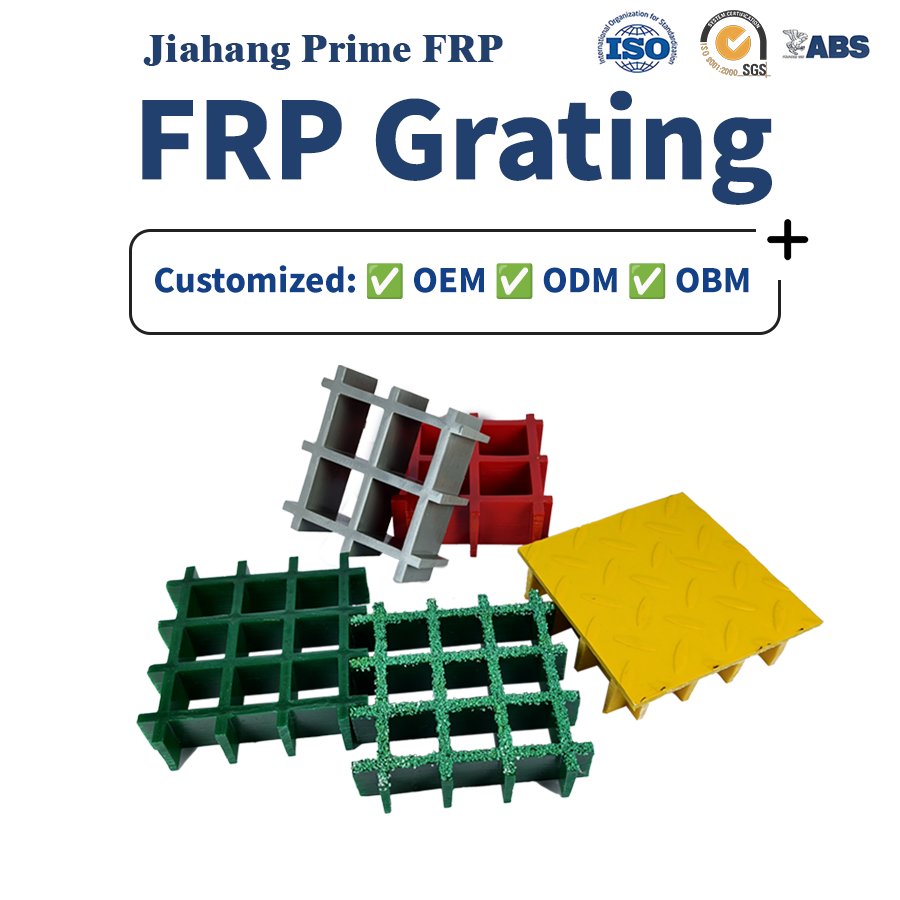
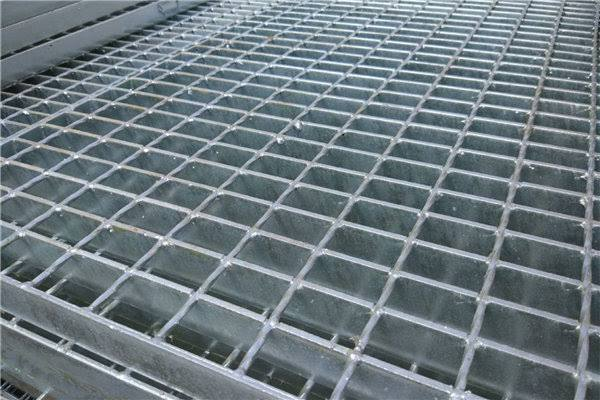
FRP Grating Panels Steel Grating Panels
The First Criterion for Selection: Corrosion Resistance
If your project is applied in environments with acid, alkali, salt, moisture, sewage, or high salt spray, the corrosion resistance is often the top priority for you to consider. In this regard, FRP grating plates usually perform better. Because it has a composite material system to resist corrosive environments, unlike traditional steel, which relies more on surface anti-corrosion coatings to resist external erosion. It is also the reason why FRP grating panels are increasingly applied in situations such as chemical plants, wastewater treatment plants, electroplating areas, environmental protection projects, and offshore platforms, etc.
In comparison, although steel grating panels can also enhance corrosion resistance by means of hot-dip galvanizing and so on, you need to consider the subsequent maintenance and replacement costs in advance if they are constantly exposed to highly corrosive conditions. In a word, if the environment of your project is harsher, damper and more corrosive, you should place emphasis on the corrosion resistance firstly.
The Second Criterion for Selection: Load Capacity
While selecting material, you might often ask, “Which material is tougher?” But from the perspective of engineering, it is not a professional criterion for judgment. In fact, what you should really consider is the load capacity and structural stiffness, not “whether it is tough”.
The main advantage of steel grating is that its metal structure has relatively high stiffness, making it particularly suitable for heavy-duty platforms, areas with obvious concentrated loads, and locations requiring high equipment load-bearing capacity.
In contrast, FRP grating is not “unable to bear weight”. It emphasizes that it is more suitable for conventional industrial applications such as platforms, walkways, stair treads, and trench covers under circumstances such as appropriate specifications, proper support spacing, and suitable operating conditions. Accordingly, you should not regard “which is tougher” as criterion, what you should really consider is the following points:
- Is it for personnel passage or for equipment to bear the load?
- Is it mainly static load or is there a significant impact from dynamic load?
- What is the span of the support?
- Is there partialconcentrated load?
The Third Criterion for Selection: Safety, Especially Slip Resistance
A lot of potential hazard in industrial plants doesn’t necessarily come from large equipment, but originates from the most ordinary areas — platforms, passageways, walkways, maintenance surfaces and so on. Slip resistance of fiberglass grating plates is directly related to the safety of pedestrians when they pass through the passages or walkways, especially in damp, waterlogged and oily environments. It’s also one of the reasons why FRP gratings are increasingly receiving attentions. Not only does it perform well structurally, but it has an excellent performance on slip resistance. Therefore, it outperforms in fields such as sewage treatment plants, chemical channels and outdoor walkways.
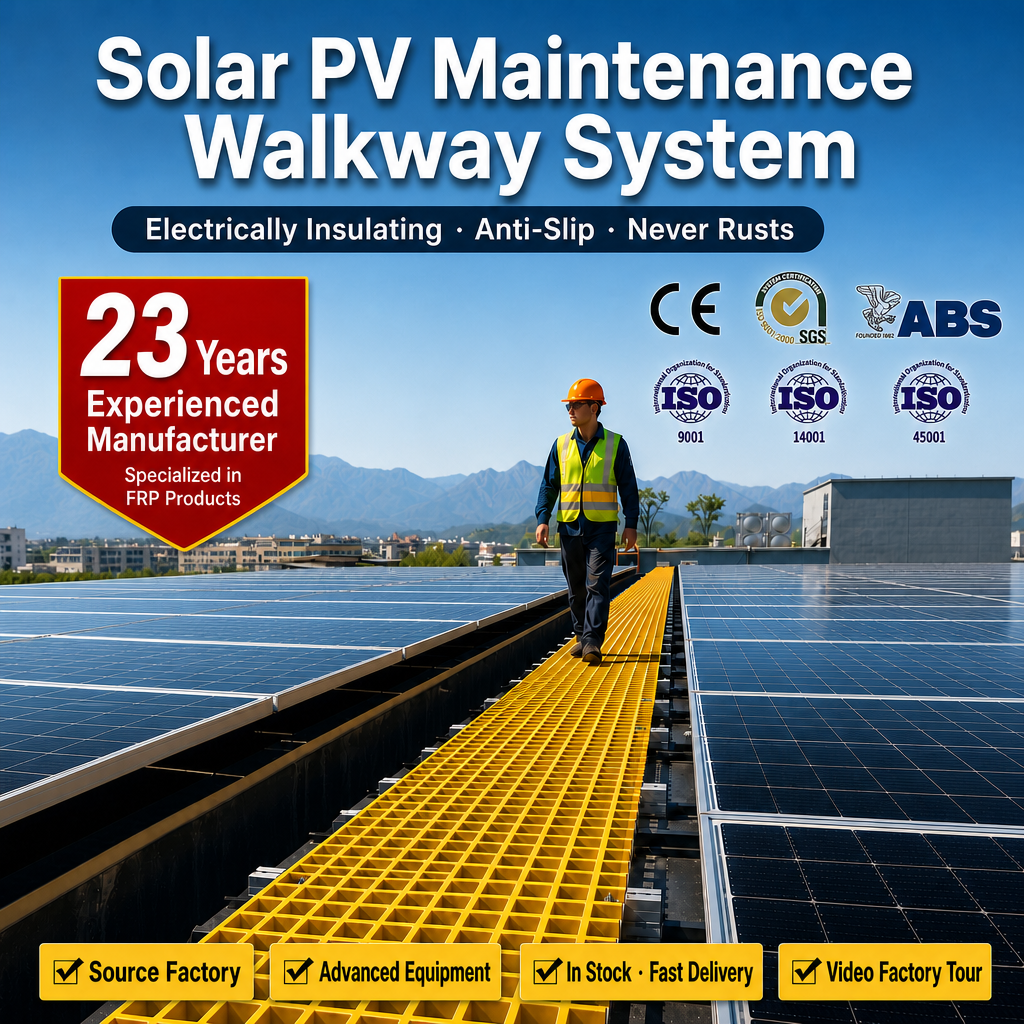
FRP Grating Walkway Platforms
The Fourth Criterion for Selection: Weight and Installation Efficiency
For some projects, when making the budget in the early stage, your focus may be on the price of the products. But it is not until the construction stage that you discover that transportation, cutting, handling, hoisting and installation also cost a lot. Boasting relatively lighter weight, FRP gratings are more convenient on transportation and installation. Such advantages will be more outstanding in situations such as renovation projects, high-altitude construction, areas with limited space, or sites where firework operations are not desired.
With higher self-weight, steel grating is certainly more stable in some heavy-load projects. Nevertheless, it may bring about higher requirements for handling and installation in terms of construction and on-site installation. Therefore, when selecting grating, you should not only pay attention to the price, but attach importance to the weight of the grating, efficiency of installation, and the on-site conditions.
The Fifth Criterion for Selection: Long-term Costs, not One-time Costs.
Concerning selecting gratings, a professional person never merely considers the “purchase price”, but rather focuses on the “total life cycle cost”. The latter means that besides your costs for gratings, it also contains later maintenance costs, replacement frequency, manual input, loss on work stoppages, the hidden costs brought about by safety risks. In a highly corrosive environment, if the grating requires frequent maintenance or has a short replacement cycle, your overall cost may not be lower although your purchase price is low.
In a word, what is really worthwhile for you to select is the one that can keep stable continuously and reduce some problems.
Other Key Points You Should Know
When selecting gratings, some of you may ask, “Which one is better, the FRP grating or steel grating?” However, what you should place emphasis on involves these issues as followings.
- If you use it in conditions with chemical corrosion, dampness or salt fog, you should choose FRP grating plates.
- If you require a lager span for supporting, you can choose steel grating plates.
- If your project has requirements on slip resistance, insulation and drainage, you are supposed to select FRP grating plates.
- If your application need the cover plates, FRP grating is a better choice.
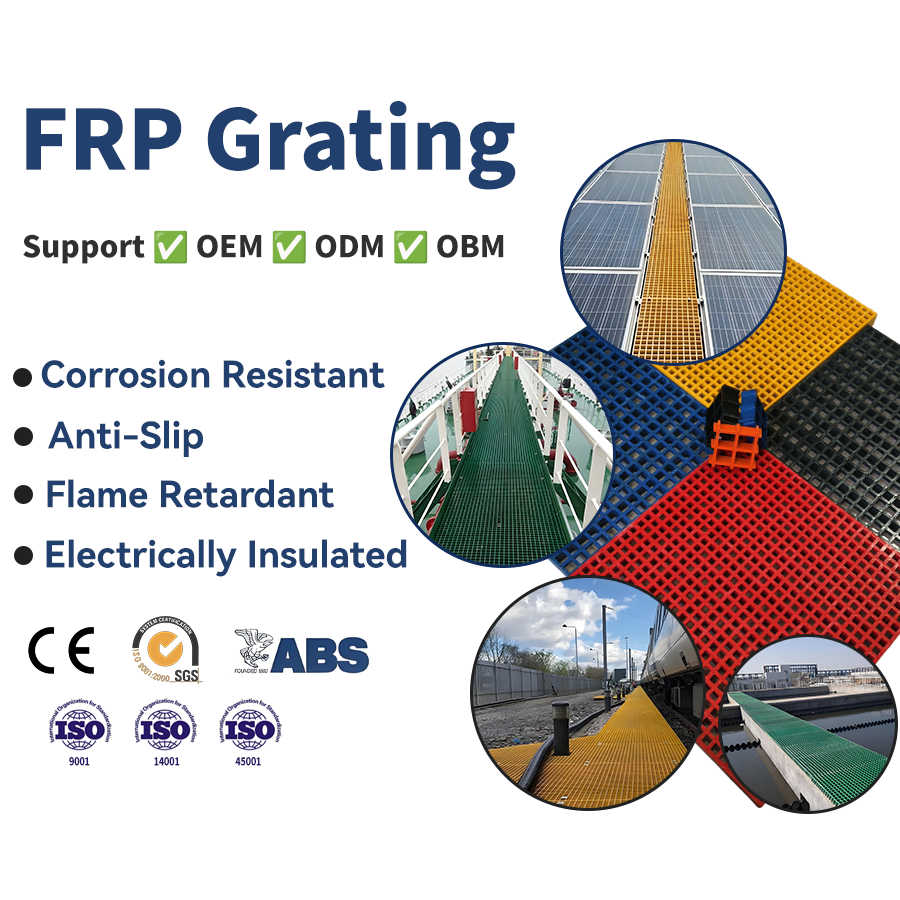
To conclude, you had better make a comprehensive judgment from four aspects: material properties, operation conditions, structural design and installation conditions.
Select FRP Grating or Steel Grating?—-Based on the Situations of Your Application
If the circumstance under which your project is carried out is damp, corrosive, oily and has requirements on slip resistance and insulation, and you intend to reduce the weight and lower the pressure for maintenance, you should give priority to FRP grating. In comparison, if your project involves high loads, high stiffness, heavy equipment and stricter requirements for compatibility with conventional steel structures, you are supposed to select steel grating.
What you should consider is whether the grating is suitable for your application and meet your requirements.
Frequently Asked Questions
1. Can the FRP grid be cut on-site?
Yes. FRP gratings can be cut based on the actual on-site dimensions to adapt to different installation areas. Moreover, after cutting, the cut edges should be appropriately treated to prevent the exposure of glass fibers and maintain the integrity of the product.
2. Do FRP grilles need to be treated for corrosion prevention on a regular basis?
It is usually not necessary. FRP grating has excellent corrosion resistance itself, not relying on surface anti-corrosion coatings. However, you had better clean the dirt of the surface and other attachments regularly during use.
3. What are the common types of FRP grating surface?
Common types of FRP grating surface include concave surfaces, smooth surfaces and gravel surfaces. As different surfaces have distinct characteristics, you can select based on the specific requirements of the project for drainage, cleaning and properties of surface .
4. Can the FRP grating be customized in size?
Yes. Besides the standard specifications, the FRP grating can also be customized according to the actual requirements of your projects, including length, width and some structural parts. Customized products can adapt to special installation areas better.
5. Can FRP grating be used for the cover plates of drainage ditches?
Yes. FRP grating can be used in areas such as drainage ditches and maintenance trenches where openings need to be covered. Its grating structure is conducive to drainage. You are supposed to select the appropriate specifications based on the trench size and installation requirements.
6. What’s the lifespan of FRP grating?
The lifespan of FRP grating depends on factors such as the types of resin, manufacturing quality, actual environments for application and so on. If you use it appropriately and maintain it regularly, high-quality FRP grating can maintain stable for a relatively long time.
Final Thoughts
FRP grating and steel grating respectively have their own advantages. Selecting the right one can promote the quality of your project. However, selecting the wrong one will lead to frequent maintenance, safety hazards and other issues. Therefore, you should pay much attention to the conditions of your project and make a sensible judgment. Jiahang Prime FRP specializes in offering one-stop solutions for composite materials. Welcome to visit our website — Jiahang Prime FRP and contact us.