Molded vs. Pultruded FRP Grating: Finding the Right Structural Match
Traditional steel grating fails when rust and corrosion take over. We offer high-performance fiberglass reinforced plastic (FRP) grating to solve these exact structural headaches. Choosing between molded and pultruded panels depends entirely on your specific load, layout, and environment.
Molded Fiberglass Grating: Two-Way Strength
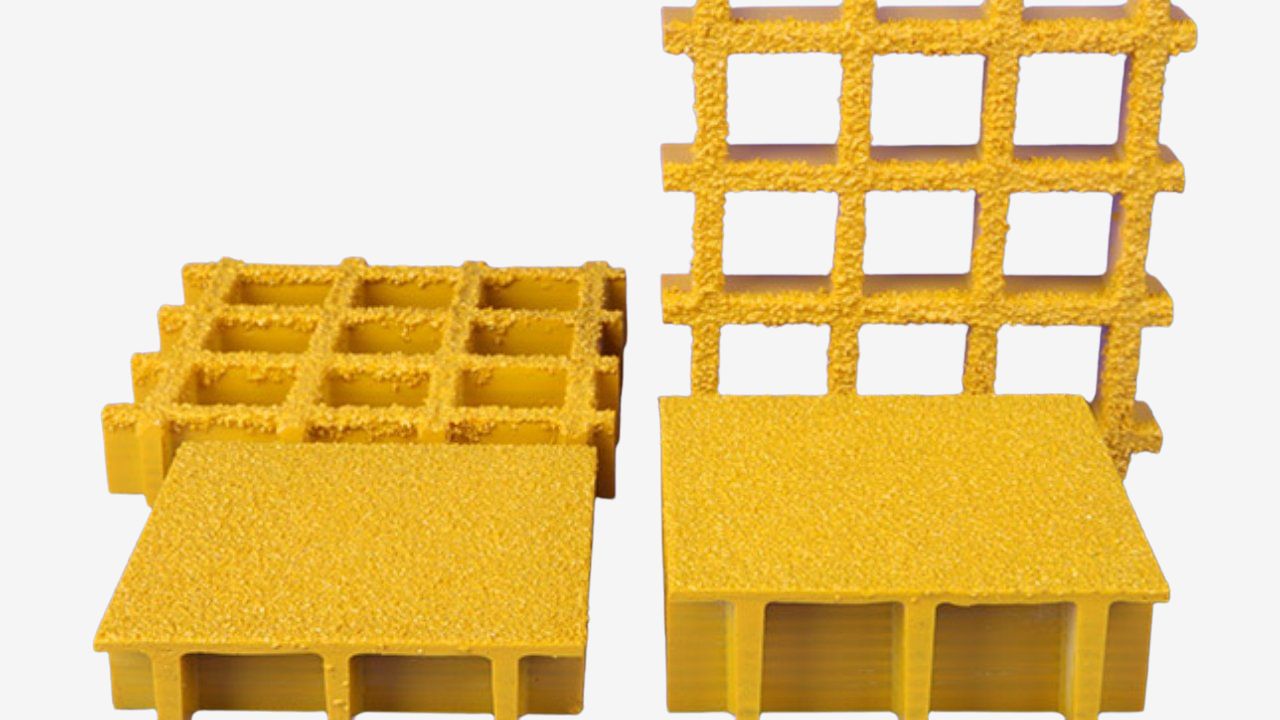
Molded fiberglass grating is manufactured by intertwining continuous glass fibers in a liquid resin matrix within an open mold. This process creates a bidirectional matrix that delivers equal strength in both directions.
- Complex cutting layouts: You can cut the mesh to fit intricate pipe networks and circular cutouts without losing structural integrity.
- Impact zones: High resin content allows the grid to deflect and bounce back from sudden heavy impacts.
- Chemical tanks: The thick resin layer completely seals the glass fibers, providing ultimate corrosion resistance against harsh acids and chemical spills.
Pultruded Structural Shapes: High Load Capacity
Pultruded grating utilizes continuous fiberglass rovings pulled through a heated die. This high-density glass content creates stiff, uni-directional panels designed for maximum rigidity.
- Heavy loads: Offers superior heavy-duty load-bearing capacity compared to molded alternatives.
- Long spans: Ideal for bridging wider gaps without bending or requiring extra supports.
- Structural platforms: Provides premium support for walkway panels where deflection must be kept to an absolute minimum.
Data Comparison: Quick Reference
| Feature | Molded FRP Grating | Pultruded FRP Grating |
|---|---|---|
| Strength Direction | Bidirectional (Two-Way) | Unidirectional (One-Way) |
| Glass Content | ~35% | ~65% |
| Impact Resistance | High (Flexes and recovers) | Moderate (Stiff) |
| On-Site Cutting | Easy (No edge sealing required) | Requires planning and edge sealing |
| Span Capability | Short to Medium | Long Spans |
| Upfront Cost | Lower | Higher |
| Best For | Chemical areas, catwalks, complex shapes | Heavy traffic, long bridges, platform bases |
Top 10 Core Applications of FRP Grating Across Industries
Fiberglass reinforced plastic (FRP) has quickly become the go-to alternative to heavy, rust-prone metal grids. Because it stands up to harsh weather, chemicals, and heavy wear, we see it deployed across a massive variety of commercial and industrial settings. Here are the top 10 core applications where our FRP grating makes the biggest impact.
1. Industrial Walkways and Catwalks
High pathways in factories and processing plants demand relentless slip resistance. Industrial catwalk systems made from molded fiberglass grating keep workers safe from falls, even when oil, water, or lubricants slick the surface.
2. Trench and Drain Covers
Managing moisture and chemical runoff ruins traditional steel grates in months. Heavy-duty FRP trench covers handle consistent liquid exposure and heavy traffic without buckling, flaking, or corroding.
3. Work Platforms and Framing Systems
Building elevated workspaces used to require heavy cranes and welding crews. By using lightweight FRP grating platforms, you get ultra-strong structural shapes that install with basic hand tools, saving massive amounts of field labor.
4. Stair Treads and Covers
Staircases in industrial environments take a beating from heavy foot traffic. Anti-skid stair treads built with a gritted surface ensure maximum grip, keeping workers upright in wet or oily conditions.
5. Marine Docks and Jetty Decking
Saltwater, constant sun, and rough waves destroy wood and steel docks. FRP panels thrive in marine settings, resisting rot, rust, and UV degradation while staying cool enough for barefoot walking.
6. Offshore Drilling Platforms
Offshore oil rigs face some of the most brutal weather on earth. Non-rusting composite floor panels provide high strength-to-weight ratios and fire retardant properties, ensuring long-term safety on open-ocean platforms.
7. Substation Fencing and Enclosures
Electrical utilities require materials that protect workers from shock hazards. FRP’s nature as a non-conductive structural material makes it the perfect choice for fencing, screening, and protective barriers around high-voltage equipment.
8. Cleanroom and R&D Raised Floors
Advanced tech labs and medical research centers need pristine, non-magnetic environments. FRP grids do not interfere with sensitive electronic instruments and won’t harbor bacteria or dust accumulation.
9. Rooftop Pavers and Substructures
Maintaining roof integrity while allowing fast water drainage is a balancing act. Lightweight fiberglass panels distribute walking loads evenly across the roof surface while preventing water pooling.
10. Fountain Drainage and Water Parks
Public water features need smooth, reliable drainage grids that won’t snag or scrape skin. Molded mesh grids offer a sleek, durable, and completely rust-free solution for barefoot walking zones.
Key Global Markets Driving FRP Grating Applications and Markets
The demand for fiberglass reinforced plastic solutions is surging globally. Industries are moving away from traditional materials like steel and embracing high-performance composites to slash maintenance costs and boost workplace safety.
1. Water and Wastewater Treatment Plants
Moisture, hydrogen sulfide, and water treatment chemicals destroy steel grating in no time. We supply heavy-duty wastewater treatment flooring that stands up to constant humidity and harsh chemicals without rusting. Our composite materials ensure long-term structural integrity in chlorine contact basins, filtration areas, and sludge drying beds.
2. Chemical Processing and Petrochemical Plants
Corrosive vapors and frequent chemical spills quickly eat away at iron and steel around mixing tanks and blending stations. Upgrading to FRP panels eliminates the risk of structural failure. Our high-performance grating integrates seamlessly alongside durable FRP chemical tanks to create a completely corrosion-resistant containment environment.
3. Oil and Gas Operations
On offshore rigs and in refinery zones, equipment faces extreme weather and high impact. We engineer our grating with a premium fire retardant resin to meet strict offshore safety standards. It delivers excellent impact strength on drilling floors, mud pits, and splash zones where steel fails.
4. General Manufacturing
Concrete and steel floors are brutal on workers’ joints. Our molded and pultruded panels offer a slight natural resilience that cuts worker fatigue on assembly lines. They double as slip-resistant floor panels that keep staff upright and productive in greasy or wet packaging areas.
5. Power Generation and Public Utilities
Safety near high-voltage equipment requires a non-conductive structural material. Our FRP grating stops electrical shocks completely, making it the perfect choice for:
- Substation walkways
- Transformer area fencing
- Cable trench covers
6. Civil Infrastructure and Public Transit
Cities need a low-maintenance galvanized steel grating alternative for public spaces. Our lightweight panels speed up installation for rail maintenance paths, bridge walkways, and drainage systems, keeping public infrastructure running smoothly with zero painting or scraping required.
The Total Cost of Ownership: FRP vs. Galvanized Steel
When evaluating materials for industrial flooring, looking only at the initial price tag misses the bigger picture. Fiberglass reinforced plastic (FRP) presents a completely different financial trajectory than traditional metal options. While metal might look cheaper on day one, the long-term expenses of maintenance quickly flip the script, making FRP the more cost-effective choice over time.
Upfront Costs vs. Lifespan Savings
Traditional steel installations trap you in a non-stop cycle of maintenance. Between sandblasting, painting, and replacing rusted sections, the ongoing costs pile up fast. Our composite solutions eliminate these maintenance demands entirely.
- Zero Rusting: FRP does not corrode, peel, or scale, even in highly acidic environments.
- No Maintenance Planners Needed: You can completely cut out the budget for rust-inhibiting coatings and structural scraping.
- When evaluating the FRP vs. steel grating debate, composite materials consistently deliver a much lower lifetime cost of ownership by eliminating operational downtime.
Quick and Simple Installation
Installing heavy steel requires specialized rigging, welding permits, and highly paid crews. FRP changes the entire installation workflow.
- No Hot Work Permits: You do not need torches or welding rigs on site.
- Basic Hand Tools: You can easily manage techniques for cutting FRP using standard circular saws and diamond blades right where you are working.
- Lightweight Efficiency: Because the material has an exceptional strength-to-weight ratio, two workers can lift and position panels without cranes or heavy machinery, drastically reducing labor hours.
Lifespan Outlook: Passing the 25-Year Mark
| Performance Factor | FRP Grating | Galvanized Steel |
|---|---|---|
| Average Lifespan | 25+ Years | 5–10 Years (in corrosive zones) |
| Corrosion Resistance | Immune to moisture and chemicals | Degrades over time |
| Scrap Value/Theft Risk | Zero risk | High target for theft |
| Impact Recovery | Flexes and returns to shape | Deforms permanently |
Composites easily pass the 25-year mark with zero structural degradation. While galvanized steel begins to break down the moment its zinc coating chips, our fire-retardant resin formulations maintain structural integrity for decades. This durability makes FRP the ultimate high-performance alternative for facilities focused on long-term reliability and safety.
Critical Selection Factors for Your Next Project
Choosing the right FRP grating applications and markets for your facility isn’t a one-size-fits-all decision. To get the best performance and longest lifespan out of your investment, you need to match the material specifications to your specific environment and load requirements.
Resin Selection: Picking the Right Chemistry
The environmental conditions of your job site dictate the type of resin system you need. Using the wrong resin can lead to premature degradation, while picking the right one ensures decades of maintenance-free service.
- Orthophthalic Polyester (Ortho): Ideal for light-duty, general-purpose areas where atmospheric corrosion is a minor concern, but direct chemical exposure is rare.
- Isophthalic Polyester (Iso): The industrial standard for moderate environments. It offers excellent built-in protection against industrial splashing and constant moisture.
- Vinyl Ester: The heavy hitter for harsh chemical processing zones. It provides maximum resistance to highly acidic or alkaline environments.
- Phenolic: Specifically engineered for low smoke and superior fire resistance, making it essential for offshore platforms and confined tunnels.
Load and Span Metrics: Engineering for Safety
Getting the right panel thickness and open area ensures your floor can handle the weight it encounters daily. You must differentiate between simple pedestrian foot traffic and heavy-duty vehicle loads.
| Load Type | Typical Application | Recommended Grating Thickness |
|---|---|---|
| Light Pedestrian | Catwalks, maintenance paths | 1 inch (25mm) |
| Heavy Pedestrian / Industrial | Work platforms, trench covers | 1.5 inches (38mm) |
| Vehicular / Rolling Loads | Forklift pathways, loading docks | 2 inches (50mm) or thicker |
Before finalizing your layout, always consult a comprehensive FRP grating selection guide to cross-reference your support span distances with the required deflection limits.
Surface Finishes: Maximizing Slip Resistance
The right surface texture prevents workplace injuries and keeps your team safe in slick conditions. Depending on your spill risks, you can choose between two primary finishes:
- Grit Top: A coarse quartz grit is baked into the resin during manufacturing. This creates a highly effective, rugged anti-slip grating surface that maintains traction even when covered in oil, grease, or water.
- Concave Top: A natural crescent-shaped meniscus edge formed during the curing process. It offers standard slip protection and is much easier to clean, making it a favorite for food processing and washdown areas.
FRP Grating Frequently Asked Questions
How long does fiberglass grating last compared to steel?
Fiberglass reinforced plastic outlasts traditional galvanized steel by decades, especially in highly corrosive environments. While steel often requires costly replacement, painting, or rust mitigation within 5 to 10 years, high-quality composite floor panels easily pass the 25-year service life mark with virtually zero maintenance. Over time, this durability significantly lowers the total lifetime cost of ownership.
Can you cut FRP grating on-site without special permits?
Yes, you can easily cut these panels on-site using standard handheld tools like a circular saw with a diamond-grit blade. Unlike steel, which requires hot-work permits, specialized welding equipment, and strict safety cordons, modifying fiberglass structures creates no sparks. This simplifies field adjustments during installation and keeps labor costs low. To learn more about selecting the right panel style for your layout, check out our guide on uses for frp grating.
Is FRP grating fire resistant?
Yes, specialized manufacturing options utilize fire retardant resin formulations to meet stringent safety codes. These composite materials are engineered to resist flame spread and self-extinguish according to industry-standard testing (such as ASTM E84 Class 1 ratings). This makes them a highly reliable choices for high-risk zones like offshore drilling platforms, chemical plants, and heavy industrial facilities.